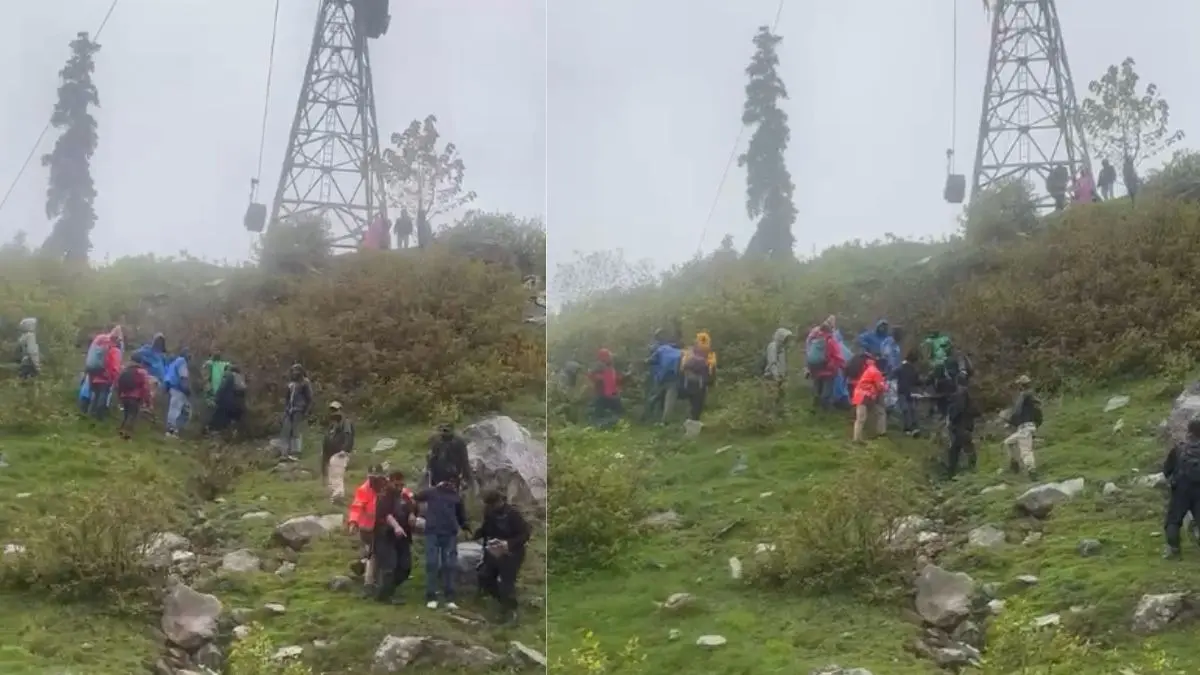
Rescue teams and the Indian Army executed a coordinated 7-hour operation to safely evacuate approximately 300 people stranded on the Gulmarg ropeway in Kashmir, according to reports of the incident.
The operation involved multiple agencies working in tandem to bring down passengers who were trapped on the cable car system. The Army’s rapid deployment and coordination with civilian rescue personnel demonstrated the military’s capacity for swift humanitarian response in challenging terrain.
Gulmarg, located in Baramulla district of Jammu and Kashmir, sits at an elevation of approximately 2,650 meters and is one of India’s premier skiing destinations. The ropeway system connecting the valley to higher elevations is a critical piece of civilian infrastructure serving both tourists and local residents.
The Indian Army maintains a significant presence across Kashmir and regularly conducts operations spanning disaster relief, medical evacuation, and infrastructure support. The service’s engineering units and mountain warfare specialists are routinely deployed for rescue operations in high-altitude regions where terrain and weather present substantial operational challenges.
Cable car systems operating in high-altitude areas face environmental stressors including temperature fluctuations, wind speeds, and snow accumulation. Rescue operations in such environments require specialized training and equipment to ensure passenger safety during evacuation procedures that may involve descent from considerable heights.
The successful evacuation without reported fatalities underscores the preparedness of response mechanisms in Kashmir. The Army’s Srinagar-based formations, including units of the Chinar Corps, maintain readiness for rapid deployment across the valley for civil emergency operations, particularly during winter months when weather-related incidents increase.
This operation reflects the broader pattern of civil-military coordination in Jammu and Kashmir, where the Army’s logistics infrastructure, helicopter assets, and trained personnel provide critical support for civilian emergencies beyond the scope of direct military operations.
-

-

-

-