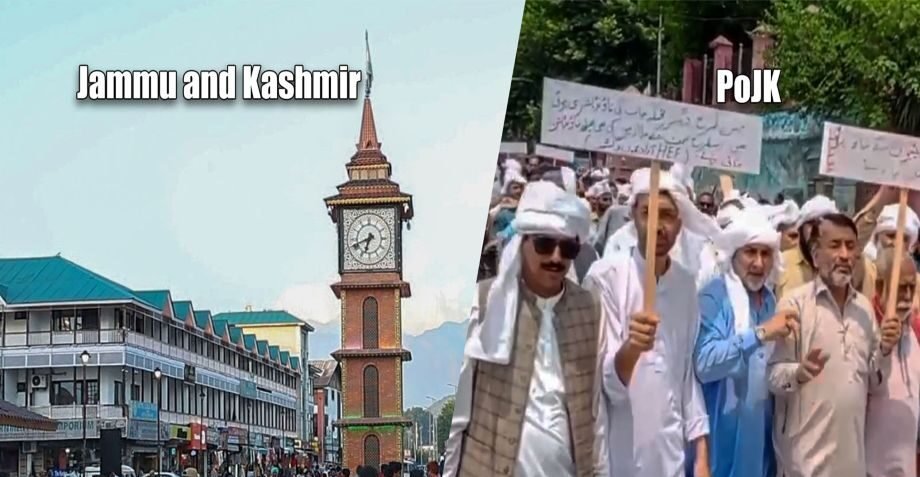
As India marks the seventh anniversary of the abrogation of Article 370, the contrast between the development trajectories of Jammu & Kashmir and Pakistan-Occupied Jammu & Kashmir (PoJK) has become a key point of discussion. While Jammu & Kashmir has witnessed sustained investments in infrastructure, connectivity, governance, and tourism since the constitutional changes of August 2019, PoJK continues to grapple with economic challenges, political unrest, and recurring public protests.
Over the past several years, the Union Territory has seen major improvements in road networks, rail connectivity, public infrastructure, digital services, and government-led development initiatives. Rising tourist arrivals, expanding economic activity, and increased public spending have been highlighted by the government as indicators of the region’s transformation. Officials maintain that these initiatives have strengthened governance and accelerated long-term economic growth.
In contrast, reports from PoJK point to persistent economic difficulties, unemployment, inflation, and repeated demonstrations over governance and public services. The region has experienced recurring protests linked to rising living costs and concerns over administrative policies, reflecting continued socio-economic pressures.
The anniversary has also renewed political debate over the impact of the 2019 constitutional decision. Supporters argue that the move has enabled greater national integration and faster development in Jammu & Kashmir, while critics continue to question its political and constitutional implications. Meanwhile, security remains heightened across the Union Territory as authorities monitor anniversary-related events and public gatherings.
Seven years after the historic constitutional change, the differing conditions on either side of the Line of Control continue to shape discussions on governance, economic progress, and regional stability, with Jammu & Kashmir and PoJK increasingly reflecting contrasting development models.
-

-

-

-