
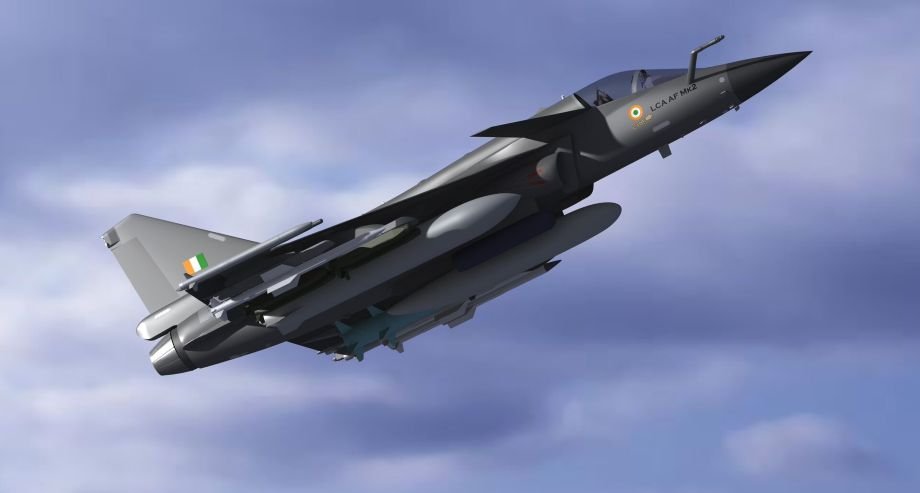
India’s ambitious fighter aircraft development programme is approaching an important stage, with the indigenous Light Combat Aircraft (LCA) Tejas Mk2 expected to move closer to its planned rollout in 2027. The aircraft is being developed by Hindustan Aeronautics Limited (HAL) to strengthen the Indian Air Force’s (IAF) combat capabilities and reduce dependence on foreign-made fighter aircraft.
Air Chief Marshal Ashutosh Dixit has highlighted the importance of indigenous aircraft programmes as part of the Indian Air Force’s long-term modernisation strategy. The Tejas Mk2, alongside the upgraded Tejas Mk1A and the Advanced Medium Combat Aircraft (AMCA), remains among the key priorities for developing India’s future combat fleet.
The Tejas Mk2 represents a significant development over the earlier Tejas variants. Designed as a medium-weight, multirole fighter, it is expected to offer improved operational range, greater weapons-carrying capacity and more advanced avionics. These improvements are intended to make the aircraft suitable for a wider range of air combat and strike missions.
The new fighter is being designed to incorporate modern radar systems, electronic warfare capabilities and advanced mission technologies. It is also expected to support the integration of indigenous weapons developed by the Defence Research and Development Organisation (DRDO), strengthening India’s ability to develop and operate combat systems using domestic technology.


The programme is particularly important as the Indian Air Force continues to address the gap between its authorised fighter squadron strength and its existing operational fleet. The retirement of older aircraft and delays in the delivery of replacement fighters have increased the importance of accelerating domestic aircraft development and production.
The Tejas Mk2 is intended to help replace several ageing fighter aircraft, including the Mirage 2000, Jaguar and MiG-29 fleets over time. However, its operational induction will depend on prototype development, flight testing, evaluation and the completion of the necessary certification processes.
According to recent programme updates, the first flight is planned for 2027, while the aircraft’s rollout is expected to take place ahead of its testing programme. These milestones will be important in determining how quickly the fighter can progress towards operational readiness.
The development effort also reflects the growing contribution of India’s domestic aerospace industry. HAL is working with a broad network of Indian research institutions, engineering organisations, laboratories and private-sector manufacturers. The Tejas programme has involved hundreds of work centres and laboratories, demonstrating the scale of cooperation required to develop a modern combat aircraft.
The experience gained through the Tejas programme is also expected to support India’s next-generation aviation projects, particularly the AMCA stealth fighter. Technologies, engineering expertise and indigenous systems developed for current aircraft can provide a foundation for more advanced platforms in the future.
With the Tejas Mk2 moving towards its next development milestone, India is seeking to strengthen its aerospace manufacturing capabilities and build a more self-reliant fighter fleet. Successful development, testing and eventual induction of the aircraft could become an important step in the Indian Air Force’s modernisation journey.



Facebook Comments