
India is preparing to strengthen its domestic industrial capabilities in response to China’s decision to introduce tighter export controls on specialised tunnelling equipment. Commerce and Industry Minister Piyush Goyal has indicated that India is ready to manufacture advanced tunnel-boring machines within the country rather than allow restrictions from foreign suppliers to affect important infrastructure projects.
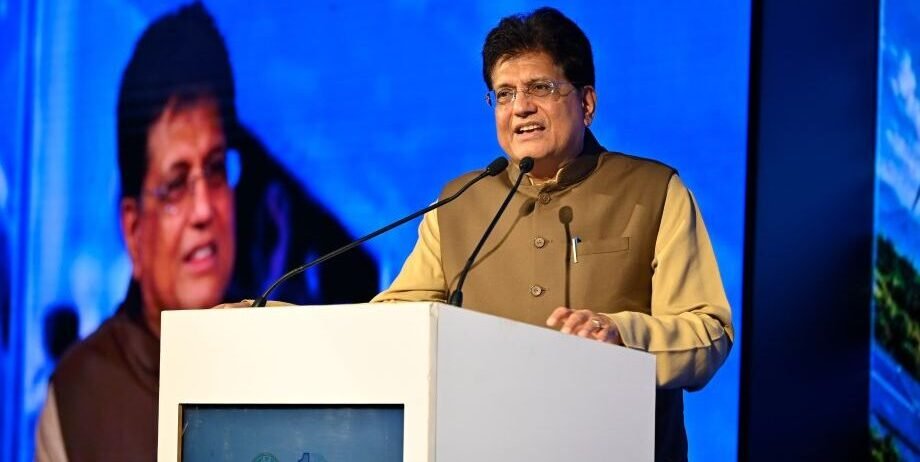
Addressing students at the Young Leaders Discourse Forum organised by Kirori Mal College in New Delhi on November 3, Goyal stressed that India’s development priorities would remain unaffected by external pressure. He said that although India favours stable economic relations with China, the country would explore domestic manufacturing solutions if access to essential machinery became restricted.
The statement comes at a time when Beijing is introducing additional controls on exports of tunnel-boring machines and associated technologies. China’s announcement, made on October 19, introduces licensing requirements for specified equipment from November 18, 2026. The decision has attracted attention because these machines are widely used in large-scale underground construction projects across several countries.
Tunnel-boring machines play a significant role in modern infrastructure construction. They are designed to excavate underground passages through different types of soil and rock, making them essential for metro rail networks, railway tunnels, highways and major water infrastructure projects. Their specialised engineering also makes them difficult to replace quickly when supply chains face disruption.


The issue has particular importance for India because of its expanding infrastructure network and the construction requirements of mountainous border regions. Tunnels can provide more reliable transportation routes through challenging landscapes, helping reduce travel time and improving connectivity in remote areas. Such infrastructure is also important for maintaining dependable logistical access along strategically significant stretches of the northern frontier.
India has already begun making efforts to reduce its dependence on imported tunnelling technology. Railway Minister Ashwini Vaishnaw has highlighted the country’s progress in manufacturing tunnel-boring machines domestically. Indian manufacturing capabilities now include machines with diameters of around eight metres, while work on substantially larger equipment, including 15-metre machines, has also progressed. A manufacturing facility in Tamil Nadu is expected to strengthen these capabilities further.
Goyal’s comments also reflect the government’s broader strategy of developing alternatives to imported technologies. He referred to India’s experience with rare-earth restrictions, explaining how domestic startups were encouraged to develop motors that could operate without relying on rare-earth materials. This approach demonstrates how external supply challenges can accelerate investment in local research, engineering and manufacturing.
For India’s infrastructure sector, building advanced tunnelling equipment domestically could provide long-term advantages. Local production would potentially improve supply-chain reliability, encourage technology development and create opportunities for Indian engineering companies. It could also help domestic manufacturers gain experience in producing increasingly sophisticated industrial machinery.
Nevertheless, establishing a competitive tunnel-boring machine industry requires more than assembling equipment locally. Indian manufacturers will need to strengthen their expertise in precision engineering, cutting systems, automation, electronic controls and specialised components. Continued investment in research and industrial partnerships will be important to achieving these objectives.
China’s latest export-control measures have therefore brought renewed attention to India’s dependence on critical foreign technologies. New Delhi’s response indicates that it intends to address such vulnerabilities through stronger domestic manufacturing rather than allow infrastructure development to become dependent on external supply decisions.
As India continues investing in railway connectivity, highways, metro systems and strategic border infrastructure, indigenous tunnel-boring technology could become an increasingly important part of its industrial development strategy.




Facebook Comments