
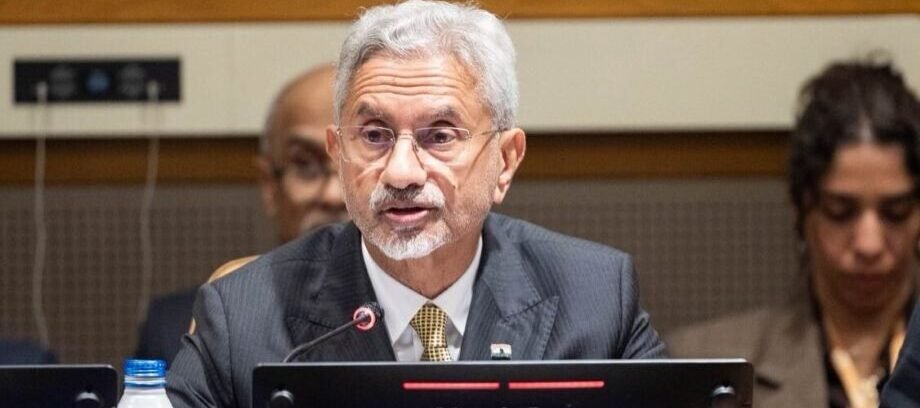
India’s External Affairs Minister S. Jaishankar has called for greater international cooperation and diplomatic engagement to resolve ongoing global conflicts, stressing that military action alone cannot provide lasting solutions to complex geopolitical challenges. Speaking at the G20 Foreign Ministers’ Meeting in Atlanta, United States, held on October 30–31, Jaishankar highlighted the growing impact of international conflicts on maritime security, energy supplies, food security and global trade.
The meeting, hosted by US Secretary of State Marco Rubio, brought together foreign ministers and senior representatives from G20 member countries to discuss major international developments and economic challenges. During the discussions, India emphasised the importance of dialogue and diplomatic channels in addressing conflicts, particularly those affecting international trade and regional stability.
Jaishankar highlighted India’s continued engagement with various countries, including Russia, Ukraine, European nations and the United States, to encourage constructive discussions and identify possible areas of cooperation. He stressed that diplomatic efforts should focus on reducing tensions, protecting civilian shipping and ensuring the uninterrupted movement of essential commodities across international trade routes.
Maritime security was among the major concerns raised by India during the meeting. Jaishankar underlined the importance of protecting commercial vessels and seafarers, particularly in conflict-affected regions where attacks on shipping can disrupt global trade. He also drew attention to the wider economic consequences of unsafe maritime routes, including rising transportation costs and interruptions in fuel, food and fertiliser supplies.


India also expressed concerns over the growing pressure on international energy markets. Disruptions to energy infrastructure and shipping networks can have serious consequences for countries that depend heavily on imported fuel. Jaishankar emphasised the need for reliable energy supplies and highlighted how geopolitical tensions can disproportionately affect developing economies and countries in the Global South.
Food security was another important subject during the discussions. Disruptions to grain exports from Russia and Ukraine, along with difficulties in transporting fertilisers through important maritime routes, have created additional challenges for global agricultural markets. India stressed the importance of maintaining stable supply chains to protect food availability and support developing economies.
The External Affairs Minister also called for more diversified global manufacturing and production networks. He pointed out that excessive dependence on a limited number of countries or suppliers can make international supply chains vulnerable to geopolitical tensions and unexpected disruptions. India advocated stronger manufacturing capabilities, improved connectivity and wider participation by developing countries in global trade.
Despite discussions on several significant international issues, the G20 Foreign Ministers’ Meeting concluded without a jointly agreed communique. The United States issued a chair’s statement outlining the discussions and priorities addressed during the meeting. The absence of a collective statement reflected continuing differences among major economies on geopolitical, economic and security matters.
Jaishankar’s remarks underline India’s consistent emphasis on diplomatic engagement, peaceful conflict resolution and the protection of international maritime trade. As geopolitical tensions continue to influence global energy markets, food supplies and economic stability, India is seeking stronger international cooperation to ensure that developing countries are not disproportionately affected by international crises.
Facebook Comments