
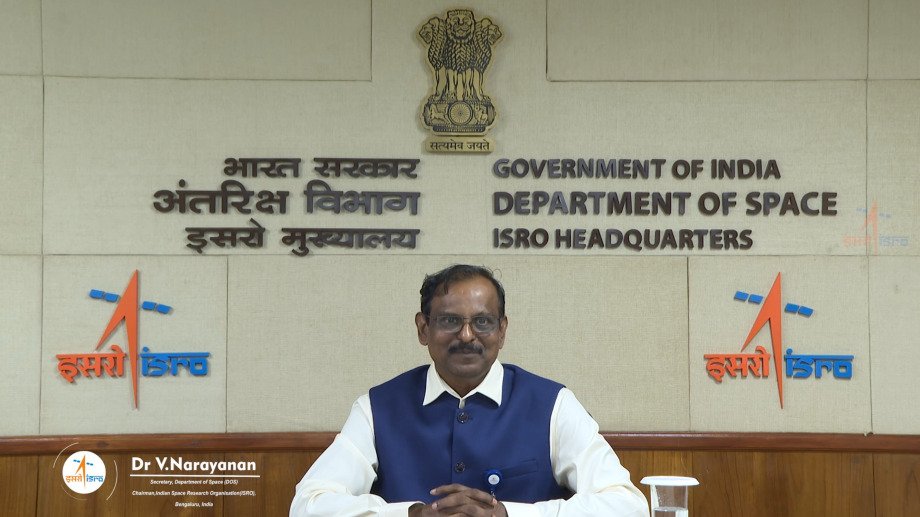
ISRO Chairman V. Narayanan has called for greater participation from Indian industry, startups and academic institutions to support the next phase of growth in the country’s space sector. Addressing the inaugural session of the ninth Bengaluru Space Expo 2026, Narayanan said India’s growing requirement for satellites and launch services cannot be met by the Indian Space Research Organisation alone.
Narayanan said India currently has 56 space assets serving the country, while the requirement could rise substantially over the next six to seven years. He stated that around 200 to 300 satellites may need to be built and launched during this period, making wider participation from the private sector and academia essential for meeting national requirements.
The ISRO Chairman highlighted the transformation of India’s space programme and the increasing role of domestic industry. He noted that around 80 per cent of the budget associated with PSLV, GSLV and LVM3 launches is invested in Indian industries, underlining the importance of industry partnerships in India’s launch programme. Around 450 companies are currently working with ISRO, reflecting the expanding industrial base supporting the country’s space activities.
Narayanan also pointed to the rapid expansion of India’s private space ecosystem. The country’s space startup sector has grown from a single startup in 2014 to more than 450 startups, according to IN-SPACe Chairman Pawan Goenka. The growth has been accompanied by increasing private investment and the development of indigenous launch and satellite technologies.


At the same time, Narayanan clarified that the growing role of private companies does not mean that ISRO is being privatised. He said ISRO remains a government organisation and will continue to carry out its core responsibilities, while the broader space ecosystem needs to expand to address the country’s growing requirements. His comments came amid concerns raised by employee associations over the increasing transfer of certain manufacturing and operational activities to private entities.
India is also seeking to substantially increase its launch frequency. Narayanan recalled that when he joined ISRO, launches were conducted approximately once every three years, followed later by a two-year cycle. India has now reached a stage where launches are taking place roughly once a month, but the national requirement is estimated at around 50 launches annually. Achieving such a scale, he said, will require coordinated efforts across government institutions, industry, startups and academia.
The Bengaluru Space Expo 2026 has provided a platform for government representatives, space agencies, private companies, startups, international partners and academic institutions to discuss India’s growing space economy. The event is focused on innovation, policy, commercialisation and the development of technologies that can strengthen India’s position in the global space sector. The official BSX 2026 platform lists 250 exhibitors, 12,000 business visitors, 1,000 conference delegates and participation from 20 countries.
The growing partnership between ISRO and private industry marks an important phase in India’s space programme. With rising demand for satellites, launch services and space-based applications, greater industrial participation is expected to help expand manufacturing capacity, accelerate technological development and increase India’s ability to serve both domestic and international space markets.




Facebook Comments