
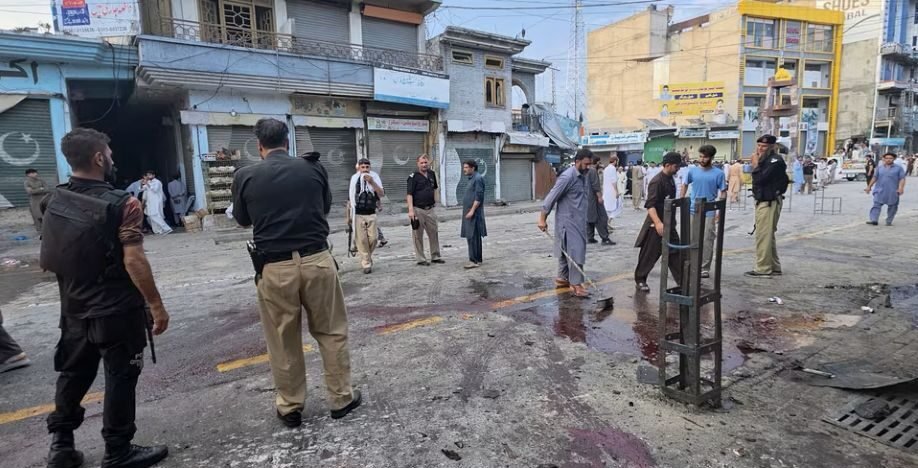
A suicide blast at a peace rally in Pakistan’s Khyber Pakhtunkhwa province has killed at least 13 people, underscoring the persistent security challenges in the region bordering Afghanistan.
The attack occurred during what organisers termed a peace rally, highlighting the volatile security environment in KP, a province that has long been a flashpoint for militant activity and cross-border tensions. The suicide bombing is the latest in a series of attacks that have plagued the region despite counter-terrorism operations by Pakistan’s security forces.
Khyber Pakhtunkhwa has remained a zone of intensive militant activity for over two decades. The province sits at the epicentre of Pakistan’s conflict with various armed groups, including the Tehrik-i-Taliban Pakistan (TTP) and affiliated factions. The mountainous terrain and porous Afghan border have historically enabled militant sanctuaries and transit routes for insurgent networks operating across South and Central Asia.
From India’s strategic perspective, stability in KP and Afghanistan’s broader security situation directly influences New Delhi’s own counter-terrorism posture. Pakistan-based militant groups and terrorist organisations have historically used the region as a staging ground for attacks on Indian territory. India’s defence and security agencies maintain close monitoring of militant activity in the region given the proximity to Jammu and Kashmir and the demonstrated capability of various groups to conduct cross-border operations.


The blast also reflects the limitations of Pakistan’s counter-insurgency strategy despite significant military investments. The Pakistani military has conducted multiple operations in KP, including in the Swat Valley and tribal areas, yet sporadic attacks persist. This pattern of sustained militant pressure despite military operations mirrors challenges faced across the broader region where terrorist networks continue to reconstitute after tactical defeats.
For India, such incidents reinforce the strategic rationale for enhanced border management, intelligence-sharing with regional partners, and continued investment in counter-terrorism capabilities. The Indian Army and paramilitary forces maintain heightened operational readiness along the LoC and International Border with Pakistan, particularly in Punjab and Jammu and Kashmir, to prevent infiltration and cross-border terrorism.
The attack also underscores the humanitarian cost of prolonged conflict in the region. Peace initiatives and civilian-led movements often become targets for militant groups opposed to conflict resolution, as witnessed by this blast during a peace rally. Such incidents typically trigger cycles of retaliation and security crackdowns that further destabilise civilian populations.




Facebook Comments