
China’s J-35 Stealth Fighter for Pakistan Reignites F-35 Debate in India
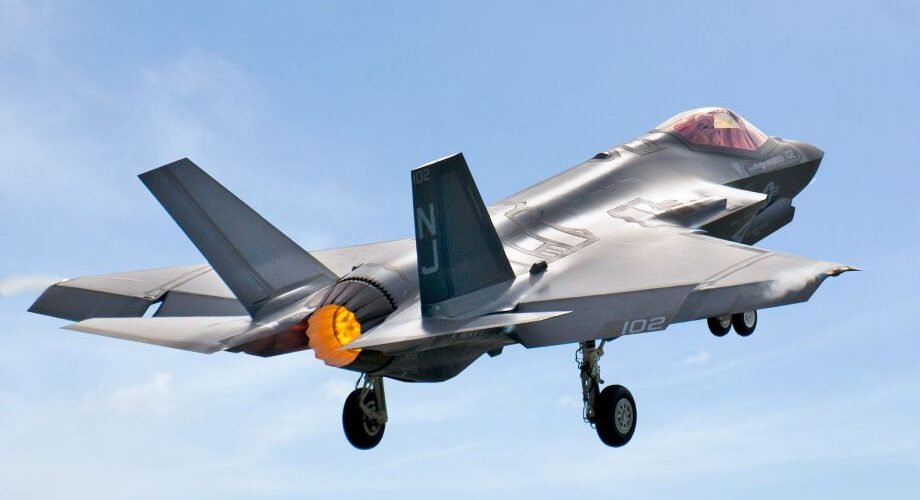
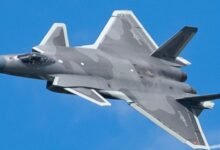
China’s decision to offer its J-35 stealth fighter to Pakistan has revived expert arguments for India to acquire the American F-35 Lightning II, despite New Delhi’s historical reluctance to procure the fifth-generation platform, according to defence analysts.
The strategic calculus centers on Pakistan’s access to a modern, Chinese-origin stealth fighter. The J-35 represents Beijing’s answer to advanced air combat requirements in the Indo-Pacific and offers Pakistan a capability gap-filler in its air force modernisation roadmap. India’s defence community views this development as a potential asymmetry that could tilt regional air superiority dynamics.
India’s Air Force currently operates the HAL Tejas Mark 1A as its indigenous light combat aircraft, with the Mark II variant under development. The Tejas programme, initiated in the 1980s under DRDO’s Aeronautical Development Agency, has produced an operational combat aircraft with supersonic capability, integrated avionics, and indigenous radar systems. However, neither the Mark 1A nor the Mark II possesses stealth characteristics comparable to fifth-generation platforms.
India’s previous stance on the F-35 centred on cost, operational independence, and the strategic imperative to develop indigenous combat aircraft. The Indian Air Force’s acquisition strategy has historically prioritized medium-range platforms like the Rafale and Su-30MKI over costly fifth-generation systems. Additionally, the F-35’s integration into the global American defence ecosystem raised concerns about operational sovereignty and data security among Indian military planners.
The broader context involves India’s Make in India defence policy and the government’s commitment to indigenous weapon system development. The Tejas Mark II programme aims to incorporate enhanced avionics, improved range, higher payload capacity, and reduced radar cross-section compared to the Mark 1A. DRDO has also been working on the Advanced Medium Combat Aircraft concept, though this remains in early conceptual phases.
Pakistan’s acquisition of the J-35, however, presents a different challenge. The J-35 offers stealth capabilities, a combat radius suitable for subcontinental operations, and operational costs lower than comparable Western platforms. This positions Pakistan with a modernized air asset that exceeds the technological envelope of its legacy F-16 fleet.
India’s Air Force is also pursuing the Multi-Role Transport Aircraft and next-generation air defence systems, but the absence of an operational stealth fighter remains a gap that defence experts argue requires urgent attention. Whether this translates into a policy shift toward F-35 procurement or accelerated development of indigenous stealth platforms remains to be seen within government planning circles.



Facebook Comments