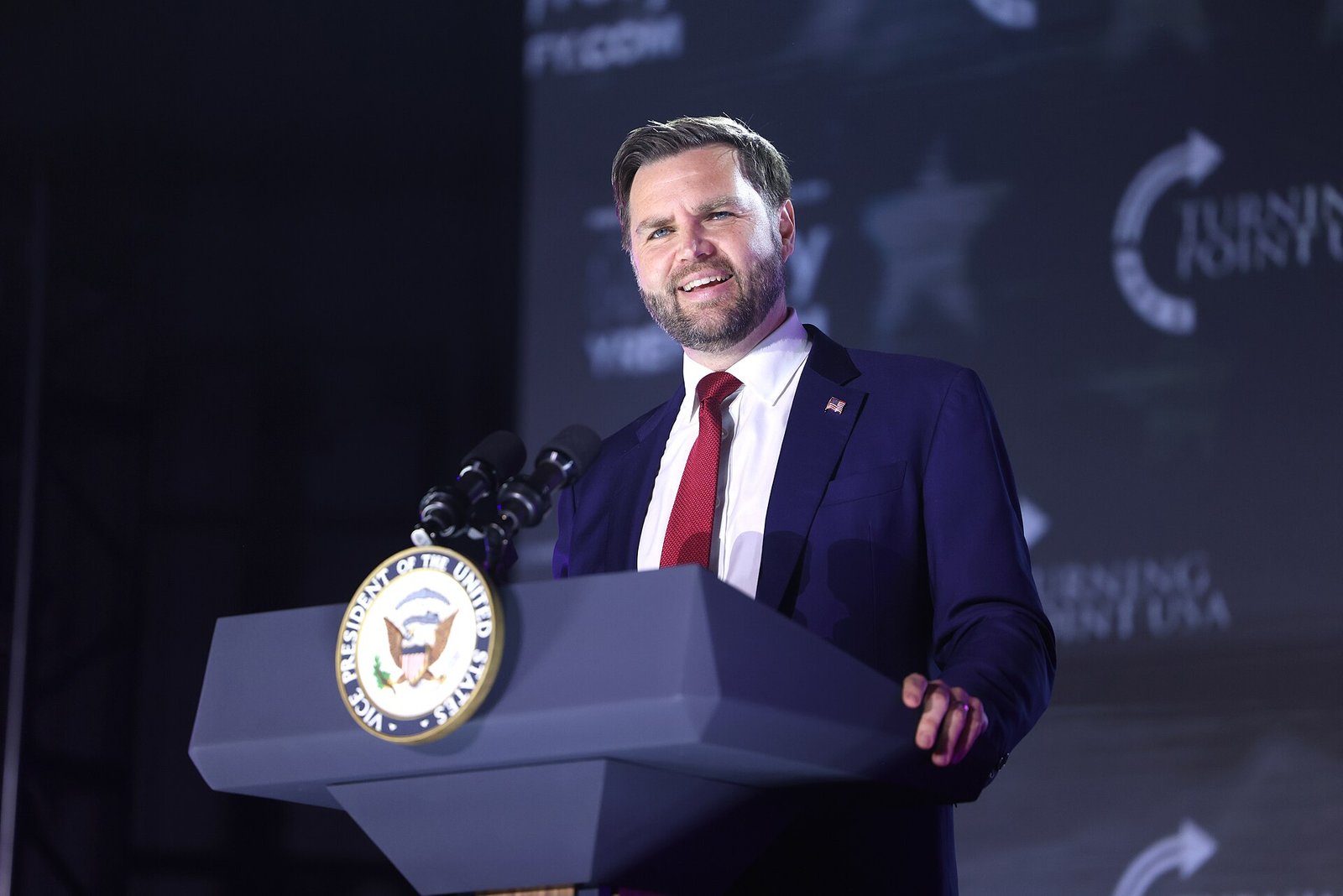
US Vice President-elect JD Vance has outlined potential conditions for a nuclear agreement with Iran, emphasising a complete prohibition on nuclear weapons development, unrestricted access to the Strait of Hormuz for international shipping, and economic incentives tied to compliance, according to reports.
Vance’s framework signals a hardline approach to Iran negotiations under the incoming Trump administration, contrasting sharply with the 2015 Joint Comprehensive Plan of Action (JCPOA) that the US withdrew from in 2018. The proposed terms reflect Washington’s focus on verifiable non-proliferation and freedom of navigation in one of the world’s most critical sea lanes.
For India, Iran’s nuclear trajectory and maritime access through the Hormuz Strait carry direct strategic weight. India imports roughly 8-10 percent of its crude oil from Iran, with shipments transiting the Strait of Hormuz. Any disruption to shipping lanes or escalation of tensions in the Persian Gulf directly impacts India’s energy security and inflation dynamics.
India has maintained a calibrated diplomatic posture on Iran sanctions, balancing US pressure with its own energy needs and historical ties to Tehran. New Delhi supported the JCPOA framework in 2015 and has been careful not to antagonise either Washington or Iran during successive sanctions cycles.
Vance’s emphasis on open Hormuz access aligns with India’s maritime interests. The Strait remains the chokepoint for roughly 21 percent of global oil trade. Any Iranian blockade or US-Iran military confrontation would severely constrain India’s crude imports and disrupt shipping across the Indian Ocean Region, India’s primary strategic theatre.
The Trump administration’s incoming stance suggests tighter enforcement of Iran sanctions, which could restrict India’s purchase of Iranian oil and force New Delhi to rely more heavily on Gulf producers and other suppliers. This scenario would likely increase India’s crude costs and complicate energy diplomacy.
India’s defence establishment has also tracked Iran’s missile and naval capabilities for regional stability assessment. An unchecked Iranian nuclear programme would alter the balance of power across the Arabian Sea and Gulf of Oman, affecting India’s naval operations and those of Indian-aligned powers like the UAE and Saudi Arabia.
The incoming administration’s framework suggests negotiations will be stricter than the JCPOA. Vance’s conditions on nuclear weapons, maritime access, and economic reciprocity indicate Washington will demand unprecedented transparency and compliance verification, likely including intrusive IAEA inspections and snap-inspection protocols.
India’s Ministry of External Affairs has not formally responded to Vance’s statements. However, New Delhi will monitor negotiations closely to assess implications for crude imports, shipping security, and regional stability in the Indian Ocean and Persian Gulf zones.
-

-

-

-