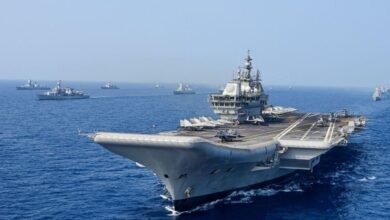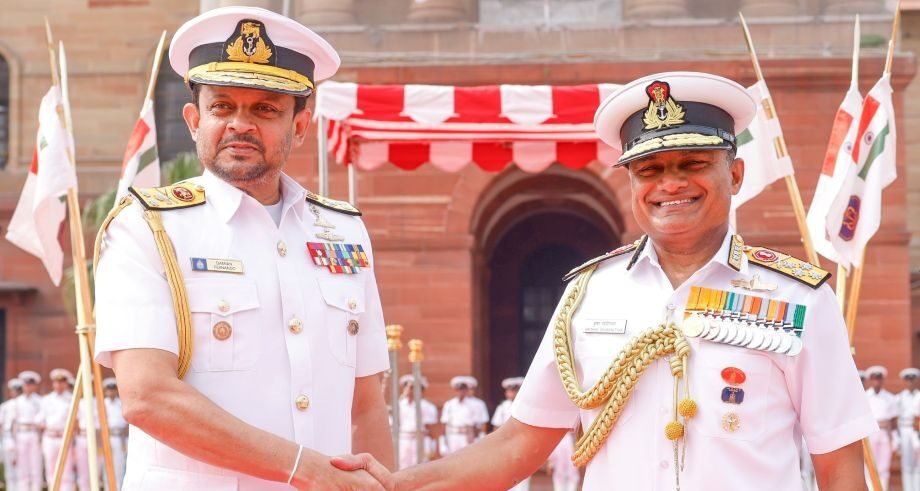
Sri Lanka Navy Commander Vice Admiral Damian Fernando chose India for his first overseas visit since taking charge, holding talks in New Delhi and Kochi from August 26-29 on joint operations, training and defence industry cooperation.
In New Delhi, Fernando held talks with the Chief of the Naval Staff, Admiral Krishna Swaminathan, on strengthening cooperation between the two navies, including joint operations, training, and capacity-building initiatives. The discussions also explored expanding training opportunities and professional exchanges in support of maritime security in the Indian Ocean Region.
He separately called on the Chief of Defence Staff, Gen. N.S. Raja Subramani, Defence Secretary Rajesh Kumar Singh and Vice Chief of the Air Staff Air Marshal Ashutosh Dixit. The engagements reviewed ongoing activities and projects under the Bilateral Defence Cooperation Plan, besides discussing joint training, capability enhancement and closer air and maritime cooperation.
The visit follows the 12th edition of the SLINEX bilateral naval exercise held in Colombo from August 14 to 18, in which INS Rana and INS Jyoti exercised alongside SLNS Gajabahu and Vijayabahu, with special forces teams from both navies also taking part. SLINEX has run since 2005 and remains the anchor exercise of the India-Sri Lanka maritime relationship.
Kochi Leg Revives Personal Training Ties
The Kochi leg of the visit focused on the longstanding training relationship between the two navies. Fernando visited INS Dronacharya, the Indian Navy’s gunnery and missile training establishment, where he had undergone specialist training earlier in his career and was adjudged the Best All Round Officer.
INS Dronacharya, commissioned in 1978 and based in Kochi, is designated the Centre of Excellence for Gunnery and Missile Warfare and trains officers and sailors from friendly foreign navies each year alongside Indian Navy and Coast Guard personnel. His return more than two decades later highlighted the depth of the professional military-to-military relationship between India and Sri Lanka.
In Kochi, Fernando also met Vice Admiral Sameer Saxena, Flag Officer Commanding-in-Chief of the Southern Naval Command, with discussions centred on existing naval training exchanges and expanding opportunities for professional development.
Fernando also engaged with India’s defence industry to explore potential areas of cooperation and gain an understanding of Indian capabilities and technologies relevant to the maritime and defence sectors. For India, Sri Lanka occupies a strategically important position astride major sea lanes in the Indian Ocean, making sustained naval cooperation, maritime domain awareness, and capacity building key pillars of the bilateral security relationship, particularly as India pursues its outreach under the SAGAR and MAHASAGAR frameworks for the region.
-

-
-
-