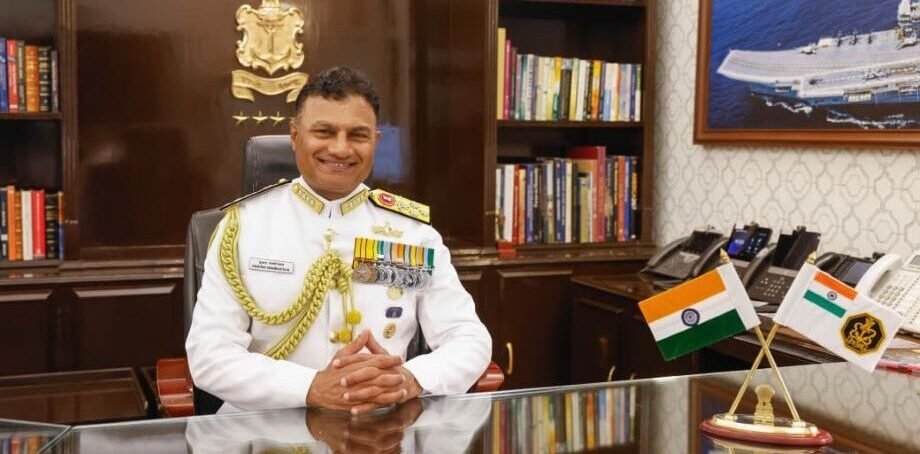
The Indian Navy has undergone a major transformation over the past four decades and is continuously strengthening its capabilities to address emerging security challenges. Chief of the Naval Staff Admiral Krishna Swaminathan has stated that the Navy is prepared to deal with present-day conflicts while actively developing the capabilities required for future warfare. His remarks highlight how technological developments and changing geopolitical conditions have significantly transformed the nature of modern military operations.
Speaking at the ANI National Security Summit 3.0 in New Delhi on November 16, 2026, Admiral Swaminathan explained that the character of warfare has changed considerably in recent years. He pointed towards the rapid evolution of international politics and the growing availability of advanced technologies, which have created new challenges for military forces across the world.
According to the Navy Chief, technological progress has made sophisticated capabilities more accessible than before. This development has expanded the range of participants involved in modern conflicts, including both state and non-state actors. Technologies that were once available primarily to powerful military organisations can now be obtained by a wider range of users through commercial markets and global supply networks. This growing accessibility has made security threats more complex and unpredictable.
Admiral Swaminathan also discussed the increasing importance of space-based capabilities in modern warfare. The widespread use of surveillance satellites has significantly improved the ability to monitor activities across the Earth’s surface. These developments have made the modern battlefield considerably more transparent, allowing military forces to gather information and track developments across wider geographical areas.
Reflecting on his four decades of service, the Navy Chief described the Indian Navy’s development as remarkable. He explained that the difference between the naval platforms operated during the early years of his career and those currently deployed in the Indian Ocean Region is substantial. Improvements in ship construction, stealth technology, surveillance capabilities, weapon systems and operational range have strengthened the Navy’s overall effectiveness.
The transformation is not limited to the development of new warships. Modern naval operations increasingly depend on advanced sensors, integrated surveillance networks, information-sharing capabilities and sophisticated weapons. These improvements allow naval forces to maintain better awareness of maritime developments and respond more effectively to potential threats.
The changing international security environment has also made continuous technological adaptation essential. Military forces must be capable of responding to developments across traditional and emerging domains of warfare. As a result, maintaining operational readiness requires regular improvements in equipment, training, technology and strategic planning.
The Indian Navy’s expanding capabilities are particularly important because of India’s strategic interests in the Indian Ocean Region. Protecting maritime trade routes, monitoring regional naval activity and maintaining security across important sea lanes remain key responsibilities of the force.
Concluding his remarks, Admiral Swaminathan expressed confidence in the Navy’s ability to address current and future security challenges. He emphasised that the service is already prepared for the wars of today while continuing to prepare for the conflicts of tomorrow.
His statement reflects the Indian Navy’s commitment to continuous modernisation, technological advancement and operational preparedness as warfare evolves.