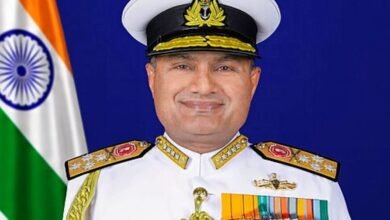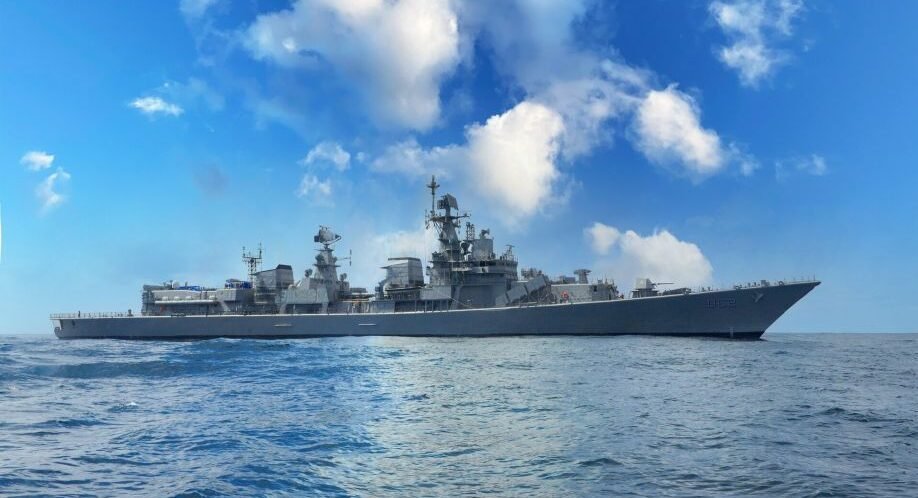
The Indian Navy is strengthening its indigenous shipbuilding capabilities, with all 49 warships currently on order being constructed in Indian shipyards, Navy Chief Admiral Krishna Swaminathan said on November 16, 2026. His remarks at the ANI National Security Summit 3.0 in New Delhi highlighted India’s growing capabilities in domestic naval design, construction and defence manufacturing.
Admiral Swaminathan stated that the Indian Navy has moved away from its earlier dependence on foreign shipbuilders and has evolved into a force increasingly capable of designing and building its own naval platforms. He noted that the Navy has already commissioned more than 100 indigenously designed and constructed ships, marking a significant milestone in India’s naval industrial development.
According to the Navy Chief, all frontline ships currently operated by the Indian Navy are indigenous, while the 49 vessels in the existing order pipeline are being built at shipyards across India. This ongoing construction programme reflects the growing role of domestic shipbuilding infrastructure, engineering expertise and industrial partnerships in supporting the Navy’s modernisation plans.
The Navy Chief also highlighted the commissioning of India’s indigenous aircraft carrier, INS Vikrant, in 2022 as an important achievement in the country’s naval shipbuilding journey. The carrier represents a major advancement in India’s ability to design and construct complex naval platforms domestically. India is among a limited number of countries capable of designing and building an aircraft carrier and a nuclear-powered ballistic missile submarine within its own industrial ecosystem.
India’s naval shipbuilding journey has developed over several decades. The country built its first indigenous warship in 1960 and established the Central Design Office in 1964 to strengthen naval vessel design capabilities. Since then, domestic shipyards and defence industries have steadily expanded their contribution to the construction of warships and other naval platforms.
However, Admiral Swaminathan acknowledged that indigenous shipbuilding does not mean complete technological independence across every naval system. The Navy continues to rely on foreign sources for certain components and technologies, including marine propulsion systems, selected weapons, sensors and other specialised capabilities. Addressing these gaps remains an important part of the Navy’s broader self-reliance strategy.
To overcome these challenges, the Indian Navy is working alongside the Ministry of Defence, public-sector enterprises and private-sector manufacturers to develop a stronger domestic defence manufacturing ecosystem. The objective is to increase indigenous production of critical systems, components and technologies required for future naval platforms.
The Navy has set a broader target of achieving complete self-reliance by 2047, in line with India’s national vision of Atmanirbhar Bharat. The initiative is expected to encourage innovation, strengthen domestic industrial capabilities, support defence supply chains and reduce dependence on imported technologies.
With all 49 warships currently on order being constructed in Indian shipyards, the Navy’s ongoing programme reflects the increasing importance of indigenous design and manufacturing in India’s maritime strategy. The continued expansion of domestic capabilities is expected to play a significant role in shaping the Indian Navy’s future fleet and strengthening the country’s maritime defence preparedness.