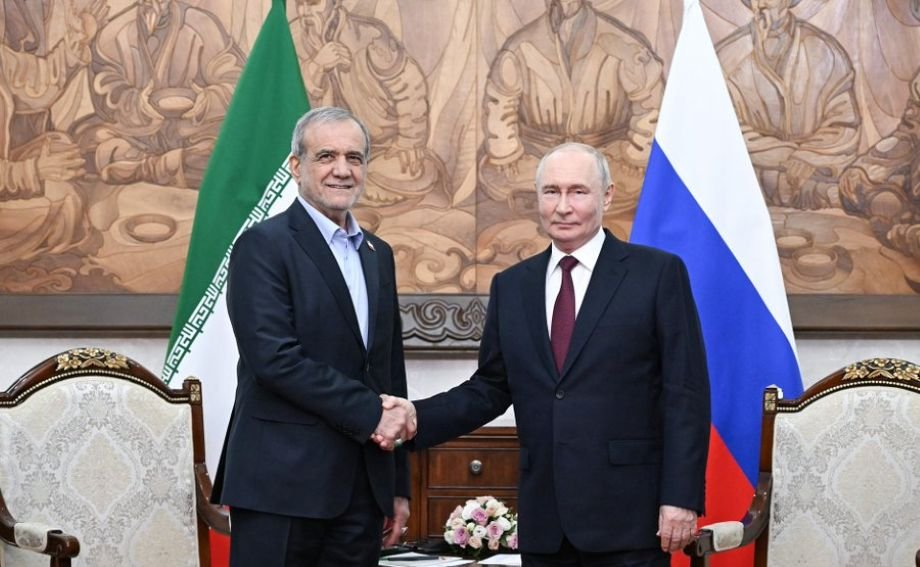
Russia has reportedly been providing technical assistance to Iran as Tehran works on a new generation of supersonic cruise missiles, according to a recent investigation by the Financial Times. The cooperation is centred on a classified programme identified as C430L, which could give Iran access to advanced propulsion expertise and strengthen its ability to develop high-speed precision-strike weapons.
The reported programme has been underway since 2023 and involves Russian missile specialists working with Iranian counterparts. Documents examined by the Financial Times indicate that the cooperation has continued into 2026, highlighting the increasingly close defence relationship between Moscow and Tehran.
At the centre of the reported effort is ramjet propulsion technology. Unlike conventional rocket propulsion, a ramjet uses the missile’s forward movement to compress incoming air before combustion, allowing the weapon to maintain very high speeds during flight. Such technology is particularly valuable for cruise missiles designed to approach targets at speeds above Mach 1.
Iran has been working to expand its indigenous missile capabilities for years, including efforts to improve propulsion, guidance and long-range strike systems. The reported Russian assistance could help Tehran overcome some of the technical challenges associated with developing a reliable supersonic cruise missile.
The potential significance of the programme extends beyond Iran’s missile inventory. A mature supersonic cruise missile capability could provide Tehran with an additional weapon for targeting high-value military and maritime assets across the Middle East. US naval forces and other military installations operating in and around the Persian Gulf could potentially face a more demanding threat environment if such a system becomes operational.
The reported cooperation also illustrates how defence ties between Russia and Iran have expanded beyond conventional military exchanges. Iran has previously supplied drones to Russia, while Moscow and Tehran have increasingly developed strategic links in areas including defence technology and military cooperation. The C430L programme, if the reported details are accurate, would represent a deeper form of technological collaboration.
According to the available reporting, Iran has already tested aspects of its ramjet technology. However, there is currently no confirmed indication that a fully operational missile developed under the C430L programme has entered service with the Iranian military.
The reported development comes at a time when military tensions involving Iran and US forces in the Middle East remain elevated. The emergence of a new Iranian supersonic cruise missile could therefore have wider implications for regional air defence, naval operations and strategic planning.
For Russia, the reported cooperation could further strengthen its strategic partnership with Tehran while allowing Moscow to expand its influence in a region where the United States maintains significant military interests. For Iran, access to Russian technical expertise could accelerate efforts to achieve greater self-reliance in sophisticated missile technologies.
The C430L programme remains largely shrouded in secrecy, and important details about the missile’s final configuration, range, speed and operational status have not been publicly confirmed. Nevertheless, the reported Russian involvement indicates that Moscow-Tehran defence cooperation is continuing to move into increasingly advanced areas of military technology.
-

-

-

-