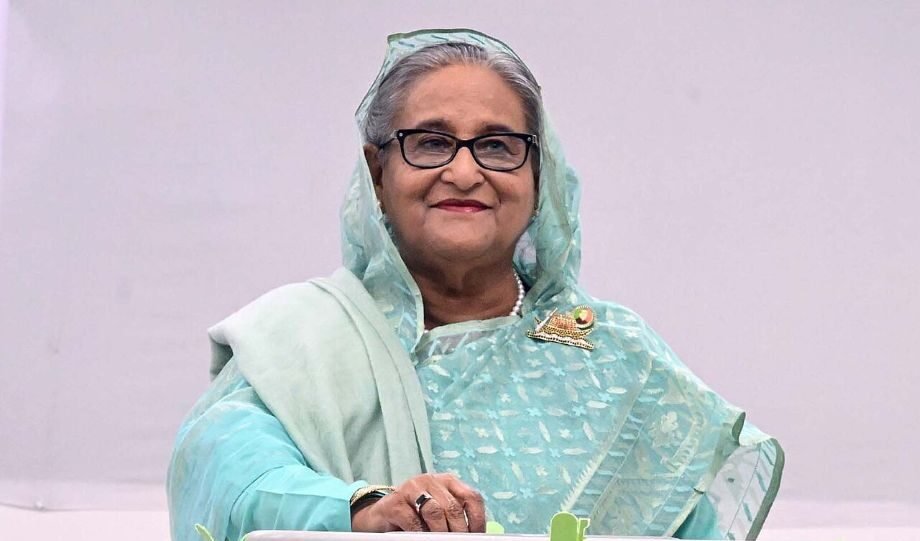
Bangladesh has strongly rejected former Prime Minister Sheikh Hasina’s reported plan to return from India on December 16, warning that she can only be brought back through extradition and under strict security arrangements. The latest statement from Dhaka has added another dimension to the growing political and diplomatic tensions between Bangladesh and India.
On November 24, Bangladesh’s State Minister for Foreign Affairs, Humaiun Kobir, responded to reports that Hasina intended to return to her home country on Victory Day, which marks Bangladesh’s independence victory over Pakistan in 1971. Speaking to reporters, Kobir dismissed the possibility of her returning as an ordinary passenger and maintained that she would have to face the legal process in Bangladesh.
The minister described Hasina as a convicted fugitive and used strong language while discussing her possible return. He said that she could only be brought back through the extradition process, adding that she would have to return in handcuffs or under strict surveillance. His remarks reflected the government’s firm position against allowing the former leader to enter the country without addressing the pending legal proceedings.
Hasina’s proposed return has gained attention after her spokesperson, Syed Mozammel Ali, told Reuters that she wanted the Bangladeshi government to arrange transportation from New Delhi to Dhaka through the country’s national carrier, Biman Bangladesh Airlines. According to her spokesperson, since Hasina was taken to India aboard a Bangladeshi aircraft on August 5, 2024, the government should facilitate her return on December 16.
However, Bangladesh’s leadership has rejected the request, arguing that her return must follow the established legal and extradition procedures. The government has also indicated that it expects India to cooperate with its request for her extradition under the existing agreement between the two neighbouring countries.
Sheikh Hasina has been living in India since August 2024, when a student-led uprising forced her to leave office after nearly 16 years in power. The protests began over government job quota reforms but eventually developed into a wider movement demanding political change. The United Nations estimated that up to 1,400 people were killed during the unrest and the subsequent crackdown.
In November 2025, Bangladesh’s International Crimes Tribunal sentenced Hasina to death in absentia over charges connected to the deadly suppression of the protests. She has rejected the allegations and challenged the proceedings, maintaining her position from India.
The political situation has remained sensitive since her departure. Bangladesh’s Awami League, the party led by Hasina, has also faced restrictions, while disagreements over her legal status and possible return continue to influence the country’s political environment.
India’s position will remain an important factor in determining how the extradition issue develops. New Delhi has previously acknowledged receiving Bangladesh’s extradition request and said it was examining the matter. However, India has not publicly announced a decision on the latest developments.
With December 16 approaching, Hasina’s proposed homecoming has become a significant diplomatic and political issue. Bangladesh’s latest statement makes clear that her return will not be treated as a routine journey. Whether the matter progresses through formal diplomatic channels or leads to further political tensions will depend largely on the decisions taken by Dhaka and New Delhi in the coming weeks.