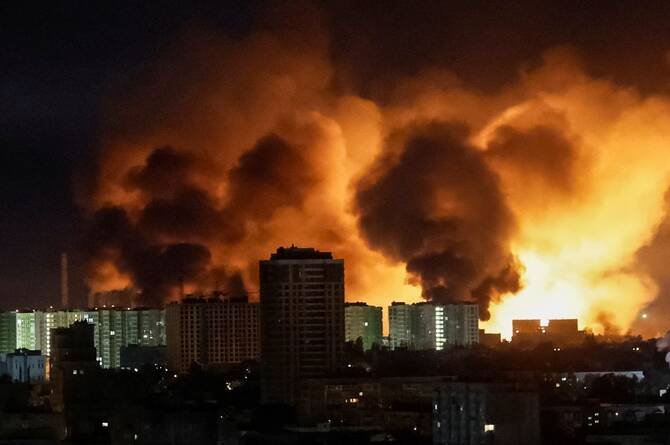
Moscow has issued an evacuation order for foreign nationals in Kyiv, a move widely interpreted as a precursor to a major Russian offensive against Ukraine’s capital, according to multiple reports.
The Russian Foreign Ministry’s directive to citizens and diplomats to leave the Ukrainian capital signals preparation for a significant escalation in military operations. Such evacuation notices typically precede major kinetic campaigns, as they reduce civilian casualties that could invite international backlash.
Russia has employed similar tactics at previous inflection points in the conflict. The evacuation order issued in February 2022, weeks before the full-scale invasion, served a dual purpose: reducing collateral damage claims and signaling intent to adversaries and neutral parties.
Ukraine’s defences around Kyiv have been substantially reinforised since the initial Russian assault in 2022. The city’s air defence architecture includes a multi-layered network of Soviet-era S-300 systems, supplemented by more modern Western platforms supplied through NATO partnerships. Ground defences feature hardened positions, anti-tank obstacles, and mechanised reserves positioned in depth.
Western military analysts have noted that any renewed Russian push toward Kyiv would face far greater resistance than earlier stages of the conflict. Ukrainian forces have had nearly three years to entrench, establish supply lines, and integrate Western weapons systems including HIMARS, anti-tank javelin systems, and advanced air defence radars.
From India’s strategic perspective, the Russia-Ukraine conflict remains a critical barometer for global great-power dynamics. New Delhi has maintained strategic autonomy on the issue, abstaining from UN votes condemning Russian aggression while avoiding explicit military support to either side. However, Indian defence planners monitor Russian military capabilities demonstrated in Ukraine closely, as these insights inform assessments of threats across the Indo-Pacific and South Asia.
The conflict has also accelerated India’s own defence modernisation timelines. Lessons from Ukraine’s defence against superior firepower have reinforced New Delhi’s focus on air defence integration, rapid ammunition production, and drone warfare capabilities within indigenous programmes.
An escalated Russian campaign in Ukraine would likely tighten global defence procurement markets and complicate India’s ongoing acquisitions from both Western and Russian sources, adding pressure to accelerate domestic defence manufacturing under the Make in India framework.
-

-

-

-