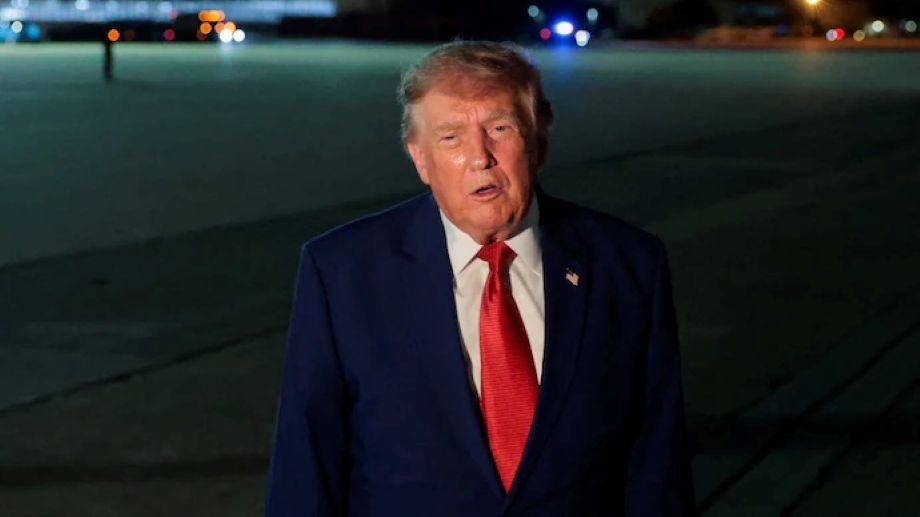
US President Donald Trump has welcomed the new defence agreement between Saudi Arabia, Türkiye and Pakistan, calling it a “big, bold and important first step” toward stronger collective security in the region.
The Mecca Joint Defence Agreement, signed in Saudi Arabia, establishes a framework for deeper military cooperation among the three countries. A key provision states that an armed attack against any one of the signatories will be considered an attack against all three, creating a collective-defence commitment.
Trump praised the agreement in a statement, saying he was pleased to see Saudi Arabia, Türkiye and Pakistan move forward with the pact. His comments come as regional countries seek stronger security arrangements amid continuing tensions across the Middle East.
The agreement is expected to expand cooperation between the three armed forces through joint military exercises, greater coordination between political and military leadership, and collaboration across land, maritime, air and cyber domains. Emerging defence technologies, including unmanned systems, electronic warfare and artificial intelligence, are also expected to form part of the broader cooperation agenda.
Defence-industrial cooperation could become another important component of the partnership. The three countries are looking at opportunities involving joint development, defence production and technology cooperation, potentially strengthening their domestic defence capabilities.
The pact also builds on the growing defence relationship between Türkiye and Pakistan, while Pakistan has maintained longstanding military ties with Saudi Arabia. Türkiye’s advanced defence industry and Pakistan’s military experience could provide additional capabilities to the emerging framework.
The development is also significant for India, as Pakistan and Türkiye are both participants in the new arrangement. New Delhi is likely to closely monitor how the agreement develops and whether its collective-defence provisions translate into deeper operational and defence-industrial cooperation.
The long-term significance of the agreement will depend on its implementation. If the three countries establish regular exercises, intelligence-sharing mechanisms and joint defence projects, the pact could become an important element of the evolving security architecture in the region.
-

-

-

-