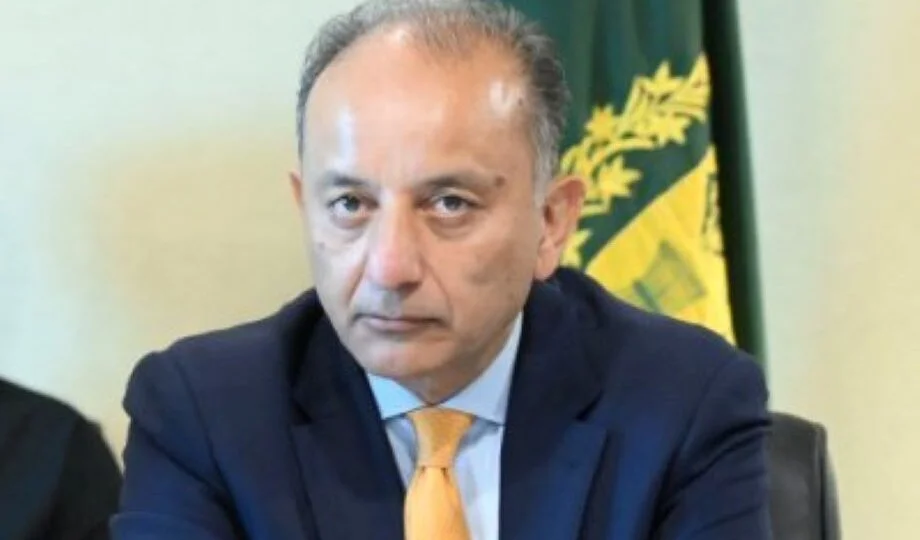
Pakistan’s participation in a regional cultural gathering in New Delhi has drawn attention beyond the event’s official agenda, as Federal Minister for Climate Change and Environmental Coordination Dr Musadik Masood Malik faced questions from Indian journalists about his previous statements on water-sharing and relations between the two neighbouring countries. His visit has brought several unresolved diplomatic issues back into the spotlight, particularly the future of the Indus Waters Treaty and Pakistan’s approach towards dialogue with India.
Malik arrived in India on November 20, 2026, to attend the Shanghai Cooperation Organisation (SCO) Civilisational Dialogue Forum. His three-day visit was particularly significant as it marked the first visit by a Pakistani federal minister to India since the military confrontation between the two countries in May 2025.
Although the gathering was organised around cultural and civilisational cooperation, the minister’s presence attracted attention because of his earlier comments on India’s decision to place the Indus Waters Treaty (IWT) in abeyance. The agreement, which governs the sharing of river waters between India and Pakistan, has remained a major point of disagreement between the two countries.
On June 29, Malik had issued a strong warning concerning Pakistan’s water interests, stating that any attempt to interfere with Pakistan’s water would invite retaliation. His remarks generated controversy and further intensified the political debate surrounding the treaty.
During his interactions with Indian media representatives on November 22, the Pakistani minister was questioned about those statements and the possibility of discussing the water dispute with Indian officials. Malik responded by pointing out that his invitation was specifically for the SCO Civilisational Dialogue Forum. He indicated that discussions on other bilateral matters would require a separate invitation.
His response highlighted the limited diplomatic scope of the visit, which was primarily intended for participation in a multilateral cultural event rather than formal negotiations between New Delhi and Islamabad.
Questions about terrorism also featured during his media interactions. Malik maintained that discussions on terrorism should be supported by evidence and that Pakistan was prepared to present its position through appropriate bilateral and multilateral platforms. He suggested that both countries should bring forward relevant evidence if they genuinely wanted to address the issue through dialogue.
The SCO Civilisational Dialogue Forum provided an opportunity for member countries to engage on subjects including shared heritage, cultural traditions, languages, architecture and historical connections. India’s invitation to all SCO member states enabled Pakistan to participate in the gathering despite the continuing diplomatic difficulties between the two neighbours.
However, Malik’s visit should not be interpreted as a breakthrough in India-Pakistan relations. Tensions following the May 2025 military confrontation, disagreements over cross-border terrorism and the Indus Waters Treaty continue to complicate bilateral engagement.
The minister’s remarks have once again demonstrated how water security and terrorism remain central to the political relationship between the two countries. While participation in international forums creates opportunities for limited engagement, meaningful progress will depend on addressing the longstanding disagreements through diplomatic channels.
For India and Pakistan, the challenge remains finding a way to manage their differences while maintaining regional stability. Malik’s New Delhi visit has renewed public discussion on these issues, but whether it leads to any broader diplomatic engagement remains uncertain.
-
-

-

-