Nepal Prime Minister Balendra Shah has arrived in New Delhi for a two-day state visit aimed at strengthening diplomatic and economic engagement between Nepal and India. The visit, taking place from November 22 to 23 at the invitation of Indian Prime Minister Narendra Modi, represents Shah’s first bilateral visit abroad since taking office in March 2026.
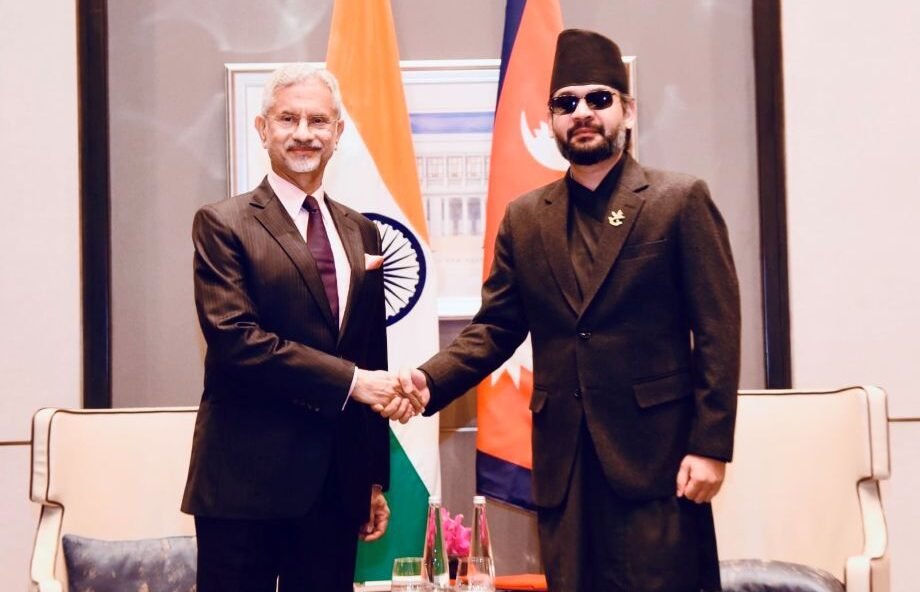
The Nepalese Prime Minister began his diplomatic programme on Sunday with a meeting with India’s External Affairs Minister S. Jaishankar at the Taj Mahal Hotel in New Delhi. The discussions covered several important dimensions of the India-Nepal partnership, including cross-border connectivity, trade, transit arrangements, commerce, energy cooperation, education, culture, sports and people-to-people relations.
Following the meeting, Jaishankar welcomed Shah’s visit and highlighted the longstanding friendship between the two neighbouring countries. He also expressed his anticipation for the Nepalese leader’s forthcoming engagement with Prime Minister Modi. The discussions reflected the shared interest of both governments in expanding cooperation and maintaining regular high-level diplomatic communication.
Shah received a formal welcome at Indira Gandhi International Airport upon his arrival. India’s Minister of State for Commerce and Industry, Jitin Prasada, received the visiting leader alongside senior diplomatic representatives and government officials from both countries. The Nepalese delegation includes senior ministers and officials responsible for foreign affairs, finance and other important government portfolios.
A significant part of the visit is centred on Shah’s scheduled bilateral meeting with Prime Minister Narendra Modi on November 23. The two leaders are expected to examine the overall progress of India-Nepal relations and discuss opportunities for cooperation on regional and international matters. Their discussions are also expected to provide direction for future diplomatic and economic engagement.
Infrastructure and economic development are likely to remain central subjects during the talks. Both countries have a strong interest in improving road and railway networks, facilitating cross-border trade, strengthening energy partnerships and encouraging investment. Hydropower development is particularly important for Nepal, which has considerable potential to expand electricity production and strengthen its energy trade with neighbouring markets.
Connectivity initiatives are another major area of mutual interest. Better transportation links between the two countries could improve commercial movement, tourism and access to important religious and cultural destinations. The proposed Ayodhya-Janakpur connectivity initiative has also drawn attention as part of wider efforts to strengthen links between communities with longstanding cultural connections.
The visit also comes against the backdrop of Nepal’s infrastructure reconstruction requirements following severe flooding in August 2026. Cooperation with India on development assistance, transport infrastructure and disaster recovery is therefore an important consideration in the broader bilateral relationship.
Apart from economic and infrastructure matters, the two governments are looking to expand engagement in technology, education, sports and cultural exchanges. These sectors offer opportunities to strengthen cooperation beyond traditional diplomatic and commercial relations.
Shah is also scheduled to meet Indian President Droupadi Murmu during his stay in the capital. His engagements with India’s senior leadership underline the importance Nepal attaches to its relationship with New Delhi.
As the two neighbouring countries continue their diplomatic engagement, the outcomes of Shah’s visit are expected to shape discussions on future cooperation. Stronger economic ties, improved connectivity and sustained political dialogue remain important priorities for both Nepal and India.
-
-

-
-