Pakistan has accelerated development of nuclear-capable delivery systems and expanded its fissile material stockpile following a military clash with India in May 2025, according to the Stockholm International Peace Research Institute (SIPRI).
The assessment underscores the escalating nuclear dimension of South Asian strategic competition, with Pakistan prioritising both air and missile-based delivery architectures amid heightened border tensions with New Delhi.
SIPRI, the independent Swedish research body that tracks global military expenditure, arms transfers, and nuclear arsenals, monitors Pakistan’s nuclear weapons programme as part of its annual Nuclear Forces assessment. Pakistan’s nuclear arsenal has grown steadily over the past two decades, driven by its strategic competition with India and perceived security threats from both New Delhi and militant groups operating across its territory.
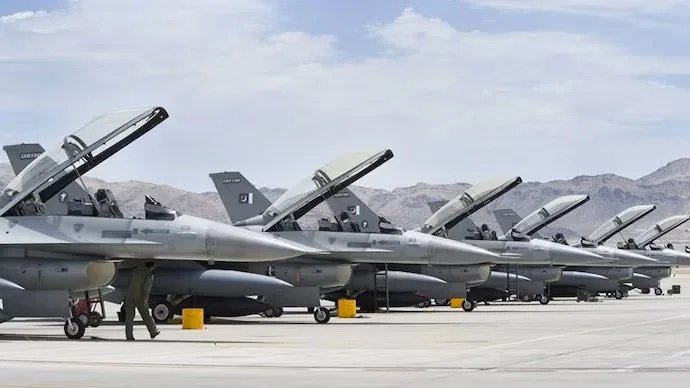
Pakistan operates a triad of nuclear delivery platforms spanning air, land, and sea domains. Its air arm includes F-16 fighter-bombers, which remain the backbone of Pakistan Air Force’s tactical nuclear strike capability. Land-based systems encompass the Ghauri and Shaheen missile families, with variants offering ranges from 300 kilometres to over 2,700 kilometres. Pakistan has also pursued submarine-launched ballistic missile (SLBM) capabilities through the Babur cruise missile programme adapted for undersea platforms.
The May 2025 clash referenced in the SIPRI report represents a significant escalation in Indo-Pakistan military tensions. While specific operational details remain classified, such incidents historically trigger doctrinal reviews and accelerated weapons development cycles across both nations’ defence establishments.
India’s response posture centres on its own credible minimum deterrent, operationalised through the Agni ballistic missile family, Brahmos cruise missiles, and submarine-launched platforms including the INS Arihant class. India’s nuclear doctrine emphasises no-first-use (NFU), though strategic planners maintain capability for massive retaliation if nuclear weapons are used against Indian territory or forces.
SIPRI’s tracking of Pakistan’s fissile stockpile expansion indicates both uranium enrichment activity at facilities such as Kahuta and plutonium production at Khushab, consistent with defence ministry statements that Pakistan maintains sufficient material for a growing warhead inventory. The Institute estimates Pakistan possessed approximately 170 warheads as of its 2024 assessment, though recent production rates suggest this figure has likely increased.
The acceleration of Pakistan’s nuclear delivery platform development reflects strategic doctrine emphasising rapid response and survivability. Pakistani military planners have historically sought to offset India’s conventional military superiority through lower thresholds for nuclear weapon employment, a posture complicated by India’s conventional rapid-strike capabilities and ballistic missile defence investments.
SIPRI’s findings carry weight in international security circles and inform threat assessments by NATO, ASEAN, and key Indo-Pacific powers monitoring nuclear risks in South Asia. The assessment reinforces the urgency of bilateral confidence-building measures and international non-proliferation efforts in the region.
-

-

-

-