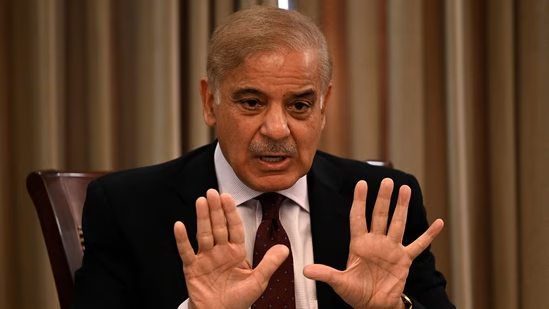
Iran has formally distanced itself from a ceremony announced by Pakistan Prime Minister Shehbaz Sharif for June 19, leaving Islamabad in diplomatic discomfort over what appears to be a premature or unauthorised public declaration.
According to reports, Sharif had announced a significant bilateral event scheduled for mid-June, framing it as a landmark occasion. Iran’s swift denial of any such scheduled ceremony has raised questions about coordination between the two neighbouring nations on matters of apparent strategic importance.
The timing of Iran’s public rebuttal underscores the fragility of Pakistan-Iran relations despite their geographic proximity and historical ties. Both nations share a 959-kilometre border and have collaborated on regional security matters, yet diplomatic messaging often operates through parallel rather than coordinated channels.
Pakistan’s announcement without prior Iranian confirmation reflects either a breakdown in inter-governmental communication or an attempt to present a fait accompli that Tehran was unwilling to accept. The latter scenario is particularly significant in the context of Iran’s broader regional posture, where it maintains calculated distance from Pakistan’s internal political cycles and competing power blocs.
Sharif’s government, which took office in March 2024, has sought to stabilise Pakistan’s fractured economy and international standing following political upheaval. High-profile bilateral events are typically leveraged to signal normalcy and renewed engagement. However, the failure to secure Iranian buy-in before public announcement suggests either insufficient diplomatic groundwork or differing assessments of the timing’s appropriateness.
Iran’s response also reflects its cautious approach to Pakistan during periods of internal Pakistani instability. Tehran has historically avoided being drawn into Pakistan’s domestic political disputes, particularly when civilian governments face institutional pressure from the military establishment and judiciary.
The incident illustrates the asymmetry in Pakistan-Iran bilateral engagement. While Pakistan often initiates public diplomatic gestures aimed at international audiences or domestic constituencies, Iran tends toward quieter, more methodical diplomacy. Public denials of Pakistani announcements, as witnessed here, are Iran’s preferred mechanism for resetting expectations without creating permanent ruptures.
For Islamabad, the immediate consequence is reputational damage in terms of planning credibility and diplomatic competence. For the broader South Asian strategic environment, it underscores the unpredictability embedded in Pakistan’s institutional decision-making and the limits of its influence over neighbours who prefer autonomous agency in bilateral affairs.
-

-

-

-