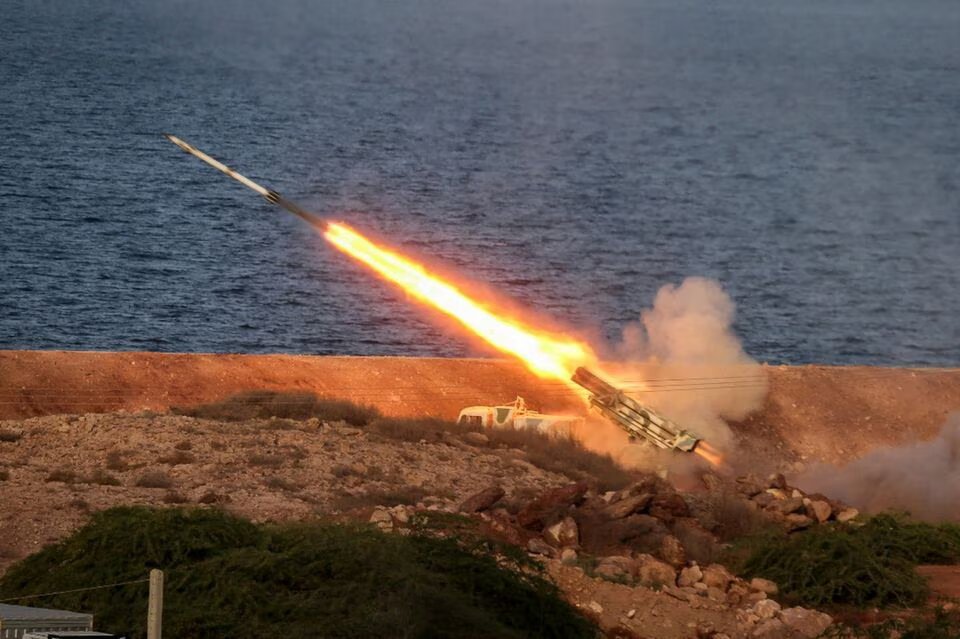
Iran announced the development of a new air defence system, marking another claimed advancement in Tehran’s military capabilities amid heightened regional tensions and international sanctions.
Iran‘s announcement of its new Arash-e Kamangir air defence system is highly significant because it demonstrates that Tehran has retained the resilient capability to repel advanced Western aircraft despite enduring months of heavy US and Israeli airstrikes on its military infrastructure.
The system proved its operational value earlier this week by successfully shooting down a US MQ-9 Reaper drone near Qeshm Island in the hyper-sensitive Strait of Hormuz.
The broader significance of Iran’s evolving air defense architecture, particularly the Arash-e Kamangir and companion systems like the Ghaem-118, spans several key military and strategic dimensions:
1. Proven Resilience Against Suppression Air Campaigns
- Surviving Airstrikes: Western military planners previously estimated that months of bombardment had severely degraded Iran’s air defense grid. The introduction and immediate combat success of Arash-e Kamangir proves that Iran’s defense industry can rapidly replenish, adapt, and field new systems under fire.
- Decentralised Doctrine: Rather than relying on a fragile, centralized radar network that can be knocked out easily, Iranian military strategy focuses on highly mobile, independent, and resilient launch units designed to withstand heavy air campaigns.
2. Targeting Advanced Stealth Platforms
- The F-35 Threat: Alongside drone interceptions, Iran’s indigenous air defense platforms (specifically the Ghaem-118) have actively tracked and reportedly damaged an American F-35 Lightning II stealth fighter near Bandar Abbas.
- Counter-Stealth Technology: The Arash-e Kamangir is explicitly touted by Iranian state media as possessing advanced stealth-detection capabilities, designed specifically to challenge the invisible edge of fifth-generation Western fighters.
3. Asymmetric Economic and Political Leverage
- Strait of Hormuz Hegemony: By placing these new systems on islands like Qeshm, Iran effectively creates an anti-access/area-denial (A2/AD) bubble over the Strait of Hormuz.
- Ceasefire Bargaining Chip: Proving it can reliably shoot down multi-million-dollar US platforms allows Tehran to dictate stronger terms in ongoing 60-day ceasefire negotiations, raising the cost of any potential escalation for the US and its allies.
4. Proliferation and Regional Power Shifts
- Tech Export Capacity: Iran’s confidence in its domestic air defense tech is growing so rapidly that it has begun exporting other new platforms, such as the silent Majid AD-08 short-range system, directly to foreign partners like Armenia. This indicates a robust manufacturing pipeline unaffected by international sanctions.
The strategic context matters considerably. Iran faces credible air power threats from the United States, Israel, and Gulf allies. Israel has conducted multiple air strikes against Iranian positions in Syria with relative impunity over the past decade, exploiting gaps in Syrian air defences. This has driven Iranian efforts to develop redundant, networked systems less vulnerable to penetration or suppression.
The announcement reflects Iran’s longstanding effort to build indigenous air defence networks capable of countering threats from adversaries equipped with modern aircraft and cruise missiles. Iran has invested heavily in layered air defence architecture over the past two decades, combining Soviet-era systems with domestically developed platforms.
Iran’s air defence posture centres on a multi-tier approach. The backbone consists of older Russian-supplied systems like the S-200 (Sagardemiri) and Tor-M1, supplemented by indigenous developments including the Khordad, Talash, and Bavar series. The Bavar-373, which Tehran claims matches the capabilities of the Russian S-300, represents the country’s most significant domestic effort. These systems are designed to engage fixed-wing aircraft, helicopters, and cruise missiles across varying altitude envelopes.
From a technical standpoint, Iranian air defence claims warrant careful assessment. While Tehran has demonstrated genuine indigenisation capabilities in specific domains, independent verification of system performance remains limited. Specifications announced by Iranian military officials often reflect design aspirations rather than proven operational characteristics. However, Iran’s integration of multiple radar types, command centres, and launcher units into a coordinated network does enhance overall air defence resilience through redundancy.
-

-

-

-