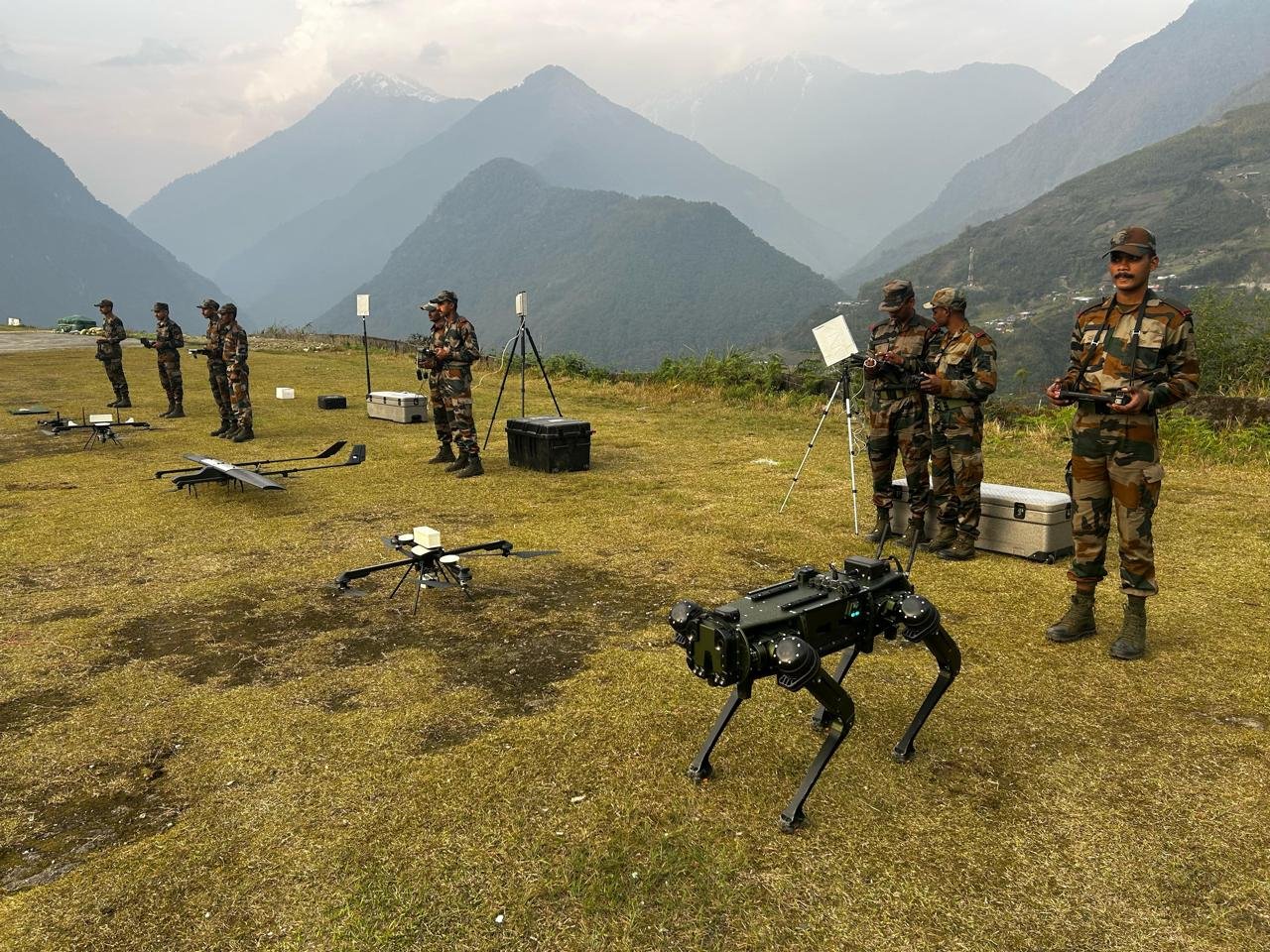
The Indian Army has commenced field trials of next-generation indigenous defence technologies under simulated combat conditions across multiple locations nationwide, according to reports from Akashvani News.
The trials represent a significant milestone in India’s push toward self-reliance in defence manufacturing. Field evaluation of new weapon systems and platforms under operational stress conditions is critical before induction into active service, allowing the Army to validate performance metrics, reliability, and integration with existing force structures.
India’s defence modernisation strategy has increasingly prioritized indigenous development through DRDO and the Defence Research and Development Organisation’s network of laboratories and testing facilities. The nationwide scope of these trials underscores the breadth of the modernisation agenda spanning multiple weapon categories and combat domains.
Field trials of this nature typically involve Army personnel from different commands, geographic regions, and operational roles testing systems in terrain and climate conditions matching their deployment zones. This distributed approach ensures technologies perform across diverse operational environments, from high-altitude mountain warfare to desert and coastal operations.
India has accelerated indigenous defence development cycles over the past decade, moving from platform conceptualization to field validation more rapidly. Recent successful trials of systems including advanced artillery rounds, drone technologies, and surveillance platforms have demonstrated DRDO’s capability to deliver operationally-relevant solutions aligned with Army requirements.
The emphasis on simulated combat conditions during these trials is particularly significant. Rather than conducting tests in controlled laboratory settings, the Army is evaluating systems under dynamic scenarios that replicate actual threat environments, adversarial tactics, and operational constraints faced in border areas and other deployment zones.
This trial phase typically informs final design modifications before seeking Army headquarters approval for limited or full-scale production orders. Successful completion strengthens India’s case for reducing import dependence on foreign defence suppliers while building domestic industrial capacity in advanced technologies.
The nationwide geographic spread also signals coordination between Army commands and DRDO test ranges, including facilities at Chandipur in Odisha, Pokharan in Rajasthan, and dedicated trial areas operated by individual commands. Such multi-location validation ensures technologies are battlefield-ready across the diverse operational landscape India’s forces may encounter.
-

-

-

-