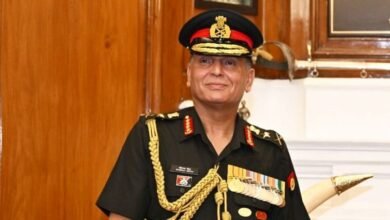
The Indian Army is prepared to conduct Operation Sindoor 2.0 should the strategic situation warrant such action, Chief of Army Staff General Upendra Dwivedi said, underscoring the force’s operational readiness along the northern frontier.
General Dwivedi’s statement reflects the Army’s sustained capability to execute large-scale counter-offensive operations in high-altitude terrain. The original Operation Sindoor, conducted in 1962-1963 following India’s border war with China, demonstrated the Indian Army’s ability to launch coordinated multi-divisional operations in the Himalayas at altitudes exceeding 10,000 feet.
The Army Chief’s assertion signals institutional readiness rather than an imminent operational posture. It underscores the force’s modernisation trajectory, which has focused on mechanisation, air mobility, and sustained logistics capability in mountainous terrain. These remain critical vulnerabilities in high-altitude warfare, where supply lines extend across snow-bound passes and operational windows remain constrained by seasonal weather.
India’s border management along the LAC (Line of Actual Control) has evolved substantially since 2020, following the Galwan Valley clash and subsequent military standoffs in eastern Ladakh. The Indian Army has augmented forward deployment, enhanced air support infrastructure, and improved inter-service coordination through exercises like Fire and Fury, conducted jointly with the Indian Air Force in the Ladakh region.
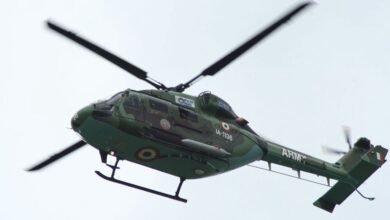
Operation Sindoor 2.0, should it materialise, would differ markedly from its namesake. Modern operations would leverage precision-guided munitions from both air and ground platforms, integrated surveillance through unmanned systems, and real-time command-and-control networks. The induction of platforms like the Apache attack helicopter, Chinook heavy-lift aircraft, and Akash surface-to-air missile systems has substantially raised the force’s operational envelope in contested airspace.
General Dwivedi’s statement also reflects India’s doctrinal shift toward proactive defence postures in border management. Since 2020, the Army has emphasised credible deterrence through forward positioning, rapid response capability, and demonstrated operational intent. The Ladakh standoff exposed logistical constraints and response timelines, triggering accelerated infrastructure development, including forward airfields, ammunition storage, and fuel depots in sensitive sectors.
The Army’s readiness posture extends across multiple operational theatres. Concurrent challenges in the northeastern sector, the Indo-Pacific maritime domain, and internal security operations demand distributed force capability and flexible command structures. The assertion of Operation Sindoor 2.0 readiness, therefore, must be contextualised within the Army’s broader force structure, which remains constrained by sanctioned strength and modernisation funding.
General Dwivedi’s remark aligns with ministerial statements on India’s strategic autonomy in border management. Defence Minister Rajnath Singh and National Security Advisor Ajit Doval have both emphasised India’s right to take necessary measures to protect territorial integrity and protect national interests, without external constraint.
-
-
-

-