
India Advances Quantum Technology as Ajay Kumar Sood Visits QpiAI Foundry
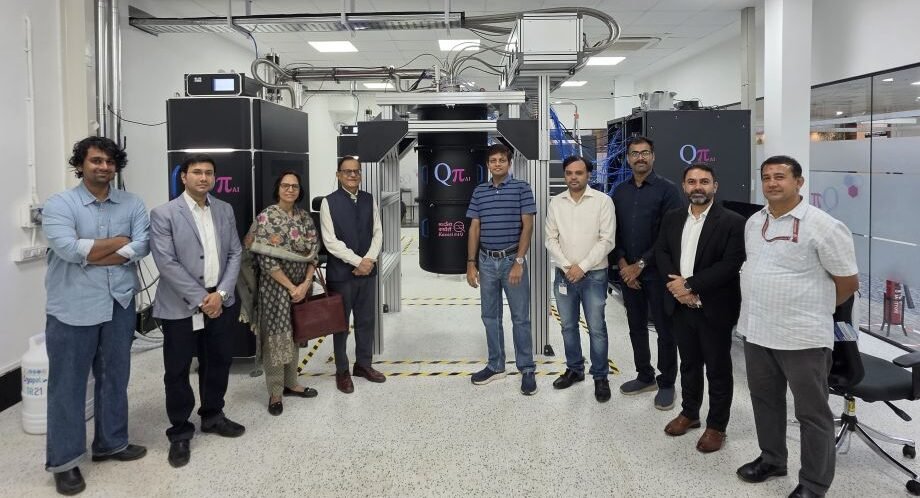
India is strengthening its position in advanced computing technology as Professor Ajay Kumar Sood, Principal Scientific Adviser to the Government of India, visited QpiAI’s Quantum Chip Foundry in Bengaluru following the inauguration of its Phase 2 facility on November 15, 2026. The visit highlighted the country’s growing focus on developing indigenous quantum hardware and reducing dependence on overseas technology infrastructure.
During the visit, Prof. Sood was accompanied by Nagendra Nagaraja, Founder and CEO of QpiAI, who provided an overview of the company’s quantum computing development programme and manufacturing capabilities. The delegation toured the facility and discussed India’s progress in establishing a stronger domestic ecosystem for quantum research, processor development and advanced manufacturing.
A major feature of the facility is its advanced 8-inch cleanroom infrastructure, designed to support the fabrication of flip-chip superconducting quantum processors. According to the information shared by QpiAI and the Office of the Principal Scientific Adviser, the facility is equipped to manufacture quantum processors with capabilities of up to 128 physical qubits. This infrastructure represents an important development for India’s ambitions to build and manufacture advanced quantum computing hardware within the country.
The foundry supports QpiAI’s indigenous processor development programme, which includes its QVidya, Indus, Kaveri and Yukti processor lines. The company’s upcoming 128-qubit Ganges processor is another important milestone in its roadmap. The development of these processors is expected to strengthen India’s domestic expertise in quantum chip design, fabrication and scaling.
Quantum computing is considered an important emerging technology because it can address certain complex computational problems that are difficult for conventional computers. Its potential applications include scientific research, materials science, optimisation, artificial intelligence and advanced industrial development. Building domestic manufacturing infrastructure is therefore essential for countries seeking to establish long-term capabilities in this strategically important field.
QpiAI’s expansion plans also include a third phase of development, targeted for completion in 2027. The proposed expansion aims to increase the facility’s manufacturing capabilities and support the longer-term development of quantum processors targeting the 10,000-qubit scale. This is an ambitious roadmap objective rather than an indication that such processors are already operational.
The Quantum Chip Foundry is also expected to contribute to the broader Quantum Supremacy Centres (QSC) programme by providing infrastructure for the development of successive generations of indigenous quantum processors. Such facilities can help connect research activities with hardware development, technological innovation and future commercial applications.
Prof. Sood’s visit comes at a time when India is placing increasing emphasis on strengthening its capabilities in critical and emerging technologies. The National Quantum Mission, approved by the Union Cabinet in April 2023 with a financial outlay of Rs 6,003.65 crore for 2023–24 to 2030–31, reflects the government’s commitment to developing a competitive domestic quantum technology ecosystem.
The visit to QpiAI’s Bengaluru facility underscores the importance of collaboration between government institutions and private technology companies in advancing India’s research and manufacturing capabilities. With further infrastructure development and indigenous processor programmes underway, India’s quantum computing sector is working towards a stronger role in the global advanced technology landscape.




Facebook Comments