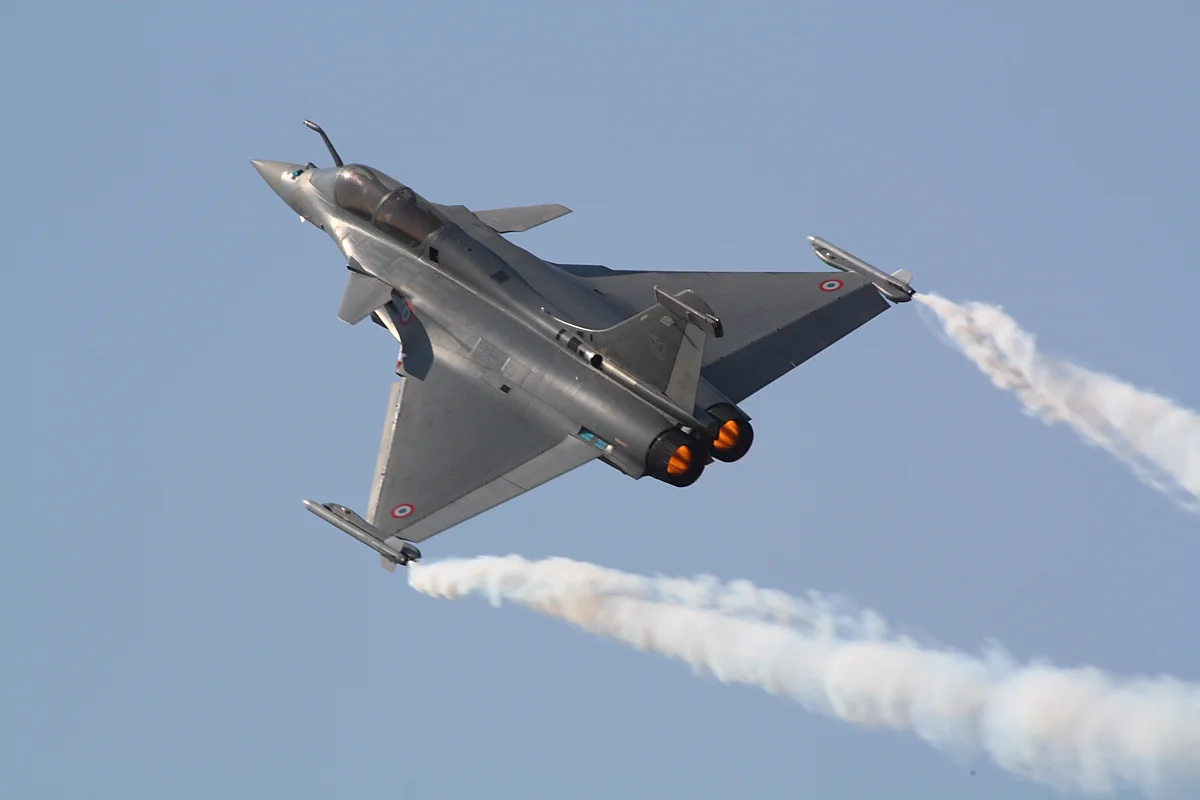
India’s Rafale fighter jets are set to participate in a multi-national air combat exercise in Australia, marking another step in the Indian Air Force’s integration with allied air forces in the Indo-Pacific region.
The Rafale, France’s delta-canard multirole combat aircraft, has become one of the IAF’s primary air superiority platforms since the first batch arrived in 2020. The aircraft combines supersonic speed, advanced avionics, and a versatile weapons suite capable of engaging targets across air, sea, and ground domains.
Australia hosts several major air exercises annually under the Five Eyes alliance framework and bilateral partnerships. These drills provide allied air forces the opportunity to conduct dissimilar air combat training, test interoperability protocols, and validate tactics in complex operational scenarios.
The IAF currently operates 36 Rafale aircraft across two squadrons: No. 17 Golden Arrows at Ambala and No. 71 Eagle Strikers at Hasimara. Each aircraft is equipped with the RBE2 AA active electronically scanned array radar, Spectra electronic warfare suite, and can deploy the METEOR beyond-visual-range air-to-air missile, making it competitive with contemporary fourth-generation fighters across the Indo-Pacific.
India’s participation in exercises hosted by Western allies reflects the broadening of India’s defence partnerships outside traditional frameworks. The IAF has progressively expanded its engagement with air forces from the United States, France, Japan, and Australia, conducting exercises such as Cope India with the US, Varuna with France, and regular bilateral air drills with other Indo-Pacific nations.
For the Rafale fleet, such exercises serve dual purposes: pilot skill development in contested environments and demonstration of India’s capability to operate modern combat aircraft seamlessly within allied air operations. This is particularly significant as India continues modernising its air fleet while simultaneously maintaining indigenous aircraft development programmes through HAL, including the Tejas light combat aircraft.
The exercise also carries strategic weight. As China’s military modernisation and assertiveness in the South China Sea and along the India-China border intensify, India’s visible participation in allied air operations signals its commitment to maintaining the balance of power in the region and its readiness to operate within coalition frameworks if required.
-

-
-
-