
HAL Tejas MK-1A Demonstrates Mid-Board Drop Tanks for Enhanced Combat Range
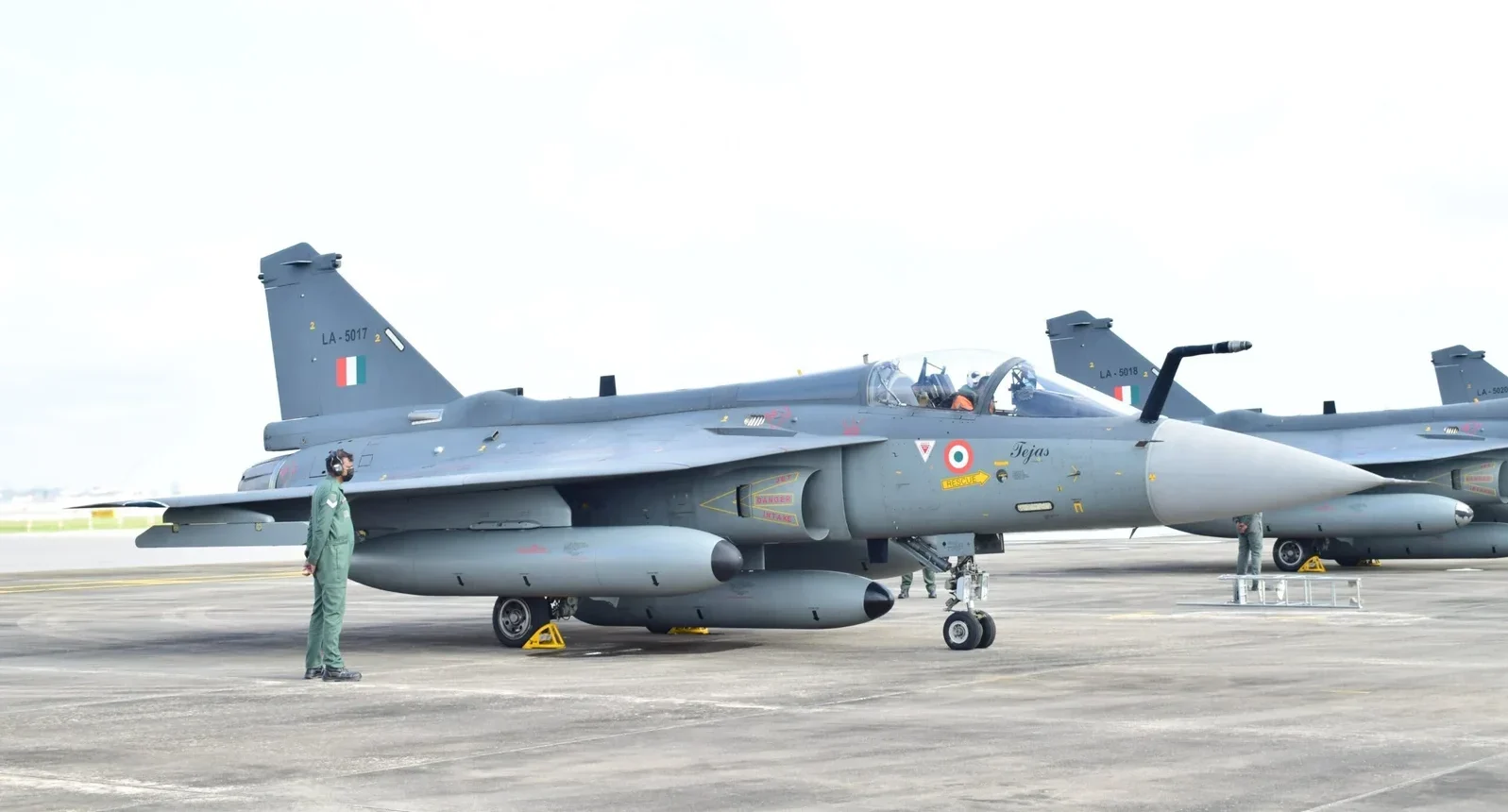
The HAL Tejas MK-1A has successfully showcased mid-board drop tank integration, a capability that extends the light combat aircraft’s operational range and paves the way for twin ASTRA air-to-air missile racks on the future MK-2 variant, according to development officials.
The mid-board drop tank configuration addresses a critical operational requirement for the Tejas fleet. These fuel tanks, mounted on the fuselage between the wing and fuselage hardpoints, provide additional internal fuel capacity without sacrificing the external weapon stations required for air combat missions.
The Tejas MK-1A, which entered Indian Air Force service in 2021, has undergone successive capability enhancements since the baseline MK-1 variant achieved initial operational clearance in 2019. The aircraft’s original design prioritised manoeuvrability and payload flexibility over range, a trade-off inherent to light combat aircraft architecture.
Integration of mid-board drop tanks represents a refinement of the airframe’s external stores management system. These tanks enable the Tejas to extend combat radius for strike and air defence missions while maintaining access to hardpoints for the ASTRA beyond-visual-range missile, the HAL-developed air-to-air weapon now operational on Indian fighter fleets.

The demonstration holds direct relevance for the Tejas MK-2, a substantially redesigned variant under development. The MK-2 programme incorporates lessons learned from the MK-1A’s operational deployment, including enhanced engine thrust via an uprated General Electric F414 powerplant, an Active Electronically Scanned Array radar, and expanded weapons integration capability.
Twin ASTRA racks on the MK-2 represent a significant air defence upgrade. The ASTRA missile, developed indigenously by Defence Research and Development Organisation, features a solid-state phased array seeker and all-aspect engagement capability. Deploying two ASRAAMs per sortie substantially increases the platform’s air superiority potential in contested airspace.
The mid-board drop tank architecture also demonstrates HAL’s iterative approach to airframe optimisation without requiring fundamental redesign. The MK-1A production line, which has delivered aircraft to the IAF’s No. 45 Squadron and subsequent conversion units, can potentially integrate this enhancement across the fleet through upgrade kits or retrofit programmes.
India’s domestic fighter development relies on such incremental capability maturation. The Tejas programme, initiated in the 1980s under the light combat aircraft project, has progressed from technology demonstrator to operational fighter-bomber within the past five years, establishing HAL’s production and integration capability for advanced aerospace systems.
The MK-2 variant is scheduled for prototype development through 2025, with preliminary design review milestones already underway. Integration of proven subsystems from the MK-1A, including mid-board fuel management and multi-hardpoint stores architecture, accelerates MK-2 certification timelines and reduces developmental risk.


Facebook Comments