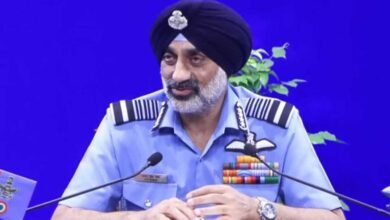
Hindustan Aeronautics Limited is moving to expand manufacturing capacity as supply constraints on the General Electric F404 turbofan engine ease for the Tejas MK-1A combat aircraft, the HAL Chief has indicated.
The engine supply chain, a longstanding constraint in Tejas production, has been a critical dependency since the aircraft’s development phase. The F404, a military turbofan powerplant, has powered the Tejas since the programme’s inception and remains the only certified engine for India’s light combat aircraft.
HAL, India’s primary aerospace manufacturer and a public sector defence undertaking, has been operating under engine availability constraints that throttled delivery schedules for both the original Tejas MK-1 and the more advanced MK-1A variant. The MK-1A incorporates enhanced avionics, internal fuel capacity, and improved air-intake geometry compared to its predecessor, demanding higher production throughput to meet Indian Air Force requirements.
The easing of engine supplies marks a pivotal shift in the fighter programme’s trajectory. The Indian Air Force has committed to inducting multiple squadrons of Tejas MK-1A aircraft to address the force’s combat jet deficit, a strategic priority for India’s air defence posture. Each squadron typically comprises 16 aircraft, with the IAF’s overall requirement spanning 83 Tejas MK-1A airframes.
Capacity expansion signals HAL’s confidence in sustained demand and improved supply chain resilience. The manufacturer has been ramping production infrastructure at its Bangalore facility, where final assembly and testing of Tejas variants occurs. Increased capacity will also support export considerations, as multiple nations have expressed interest in the Tejas for their fighter fleets.
The F404 engine, produced by General Electric under licence or through direct supply arrangements, has been a perennial constraint in India’s fighter aircraft induction cycles. Resolving this dependency is central to India’s broader indigenisation strategy under the Make in India initiative, though the Tejas remains dependent on the American turbofan for the foreseeable future.
HAL’s capacity push reflects confidence that the worst of the supply crisis has passed, enabling the company to align production rates with Air Force induction timelines and accelerate the fielding of India’s homegrown combat jet platform across multiple operational squadrons.
-

-

-

-