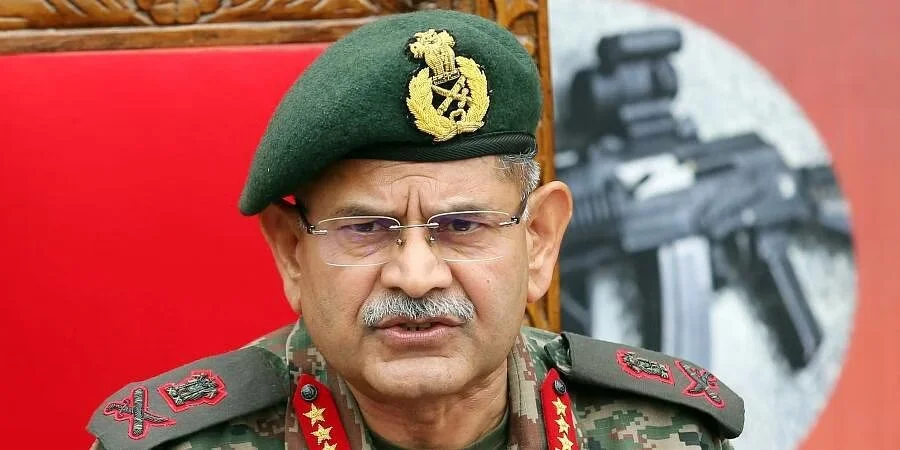
General Upendra Dwivedi, the 29th Chief of Army Staff, has stepped down from his position after a tenure marked by operational readiness along India’s northern and eastern borders and modernisation of the force structure. In his valedictory address, the outgoing Army Chief cautioned that future conflicts will be increasingly theatre-oriented, requiring integrated deployment across multiple geographical zones simultaneously.
The warning signals a fundamental shift in Indian Army’s strategic doctrine. Rather than localised border skirmishes, the service anticipates adversaries will attempt coordinated multi-front operations designed to stretch India’s military response capabilities across terrain as varied as the high-altitude Himalayan region, the Indo-Gangetic plains, and the northeastern frontier.
General Dwivedi’s tenure coincided with sustained modernisation of the Indian Army’s combat platforms and weapons systems. The force inducted new artillery systems including the Advanced Towed Artillery Gun System (ATAGS) developed by DRDO, expanded its unmanned systems fleet, and accelerated procurement of anti-tank guided missiles and air defence systems to plug capability gaps identified during operational reviews.
The theatre-oriented warfare model reflects lessons drawn from global conflicts of the past decade, including operations in Syria, Ukraine, and the Middle East, where adversaries have demonstrated the ability to conduct distributed operations across large geographical areas using air power, missiles, and unmanned platforms in coordination with ground forces.
For the Indian Army, this assessment underscores the criticality of recent force restructuring initiatives, including the raising of integrated theatre commands and enhanced inter-service coordination mechanisms. The service has been progressively shifting toward a network-centric warfare posture, with emphasis on real-time information sharing, rapid decision-making cycles, and seamless integration of air support, artillery, and cyber capabilities.
The outgoing Chief’s emphasis on theatre-level operations also aligns with India’s ongoing procurement of long-range air defence systems, enhanced surveillance infrastructure, and advanced command-and-control networks. These capabilities are essential to detect and respond to multi-directional threats in an environment where an adversary might simultaneously threaten multiple sectors of India’s extended border.
General Dwivedi’s warning arrives as India continues negotiations for advanced weapon systems from strategic partners, including air defence systems, transport aircraft, and precision-guided munitions that would enhance the Army’s ability to operate across dispersed theatres with sustained logistical support and firepower.
-
-

-
-