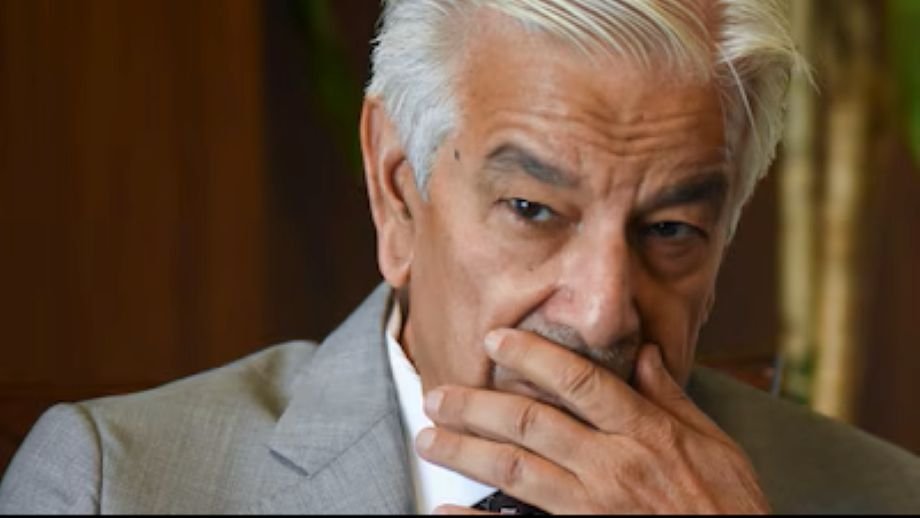
Pakistan’s Defence Minister Khawaja Asif has connected India’s Operation Sindoor with the newly signed Makkah Joint Defence Agreement, bringing the India-Pakistan security dimension into the discussion surrounding the new regional defence partnership.
Pakistan Defence Minister Khawaja Asif has linked India’s Operation Sindoor with the newly signed Makkah Joint Defence Agreement between Pakistan, Saudi Arabia and Türkiye, adding a significant India-related dimension to the emerging regional security arrangement.
The agreement was signed in Mecca on August 7, 2026, by Pakistan, Saudi Arabia and Türkiye. The three countries described the pact as a mechanism for strengthening collective deterrence and expanding defence cooperation, with the agreement stating that an armed attack against any one of the participating countries would be regarded as an attack against all three.
Asif’s remarks have drawn attention because they place Operation Sindoor within the broader strategic context of Pakistan’s evolving defence relationships. His comments come more than a year after India launched Operation Sindoor in May 2025 following the Pahalgam terror attack. The operation involved precision strikes against terrorist infrastructure in Pakistan and Pakistan-occupied Jammu and Kashmir and was followed by a serious military escalation between the two nuclear-armed neighbours.
The reference to Operation Sindoor is particularly significant because Pakistan continues to view the 2025 confrontation as an important factor in its security calculations. By bringing the operation into the discussion surrounding the Makkah agreement, Asif has highlighted how Pakistan perceives its expanding defence partnerships in relation to its regional security environment.
The Makkah agreement represents a further development in the longstanding defence relationship between Pakistan and Saudi Arabia, while Türkiye’s participation gives the arrangement a broader regional dimension. The agreement seeks to enhance cooperation across defence areas and establish a collective deterrence framework among the three countries.
For India, the development is significant because Saudi Arabia and Türkiye both maintain important diplomatic and economic relationships with New Delhi. India has also been expanding its strategic engagement with Gulf countries, while continuing to closely monitor developments involving Pakistan and the wider West Asian security environment.
The new pact does not formally name India as a target. The three participating countries have presented the arrangement as a defensive mechanism intended to strengthen collective security rather than an alliance directed against a particular country. However, Asif’s decision to reference Operation Sindoor has inevitably brought India into the strategic discussion surrounding the agreement.
The development comes as Pakistan continues to strengthen its defence partnerships and seek a greater role in regional security arrangements. Türkiye’s participation could add another layer to Pakistan’s existing military relationships, while Saudi Arabia’s involvement gives the agreement additional geopolitical significance because of Riyadh’s broader ties across South Asia and the Middle East.
India, meanwhile, continues to pursue military modernisation across air, land and maritime domains, including advanced fighter aircraft, missile systems, unmanned platforms and air-defence capabilities. The strategic implications of new defence arrangements involving Pakistan will therefore remain an important consideration for Indian security planners.
Asif’s comments indicate that Operation Sindoor continues to influence Pakistan’s strategic narrative more than a year after the confrontation. The Makkah defence pact now provides a new framework through which Islamabad is discussing its security partnerships, while its reference to Operation Sindoor has ensured that the agreement is also being viewed through the lens of India-Pakistan strategic competition.
The long-term impact of the Makkah Joint Defence Agreement will depend on how Pakistan, Saudi Arabia and Türkiye translate the agreement into practical military cooperation. For India, the evolving partnership will remain an important regional development to watch as defence alignments across South Asia and West Asia continue to change.
-

-

-

-