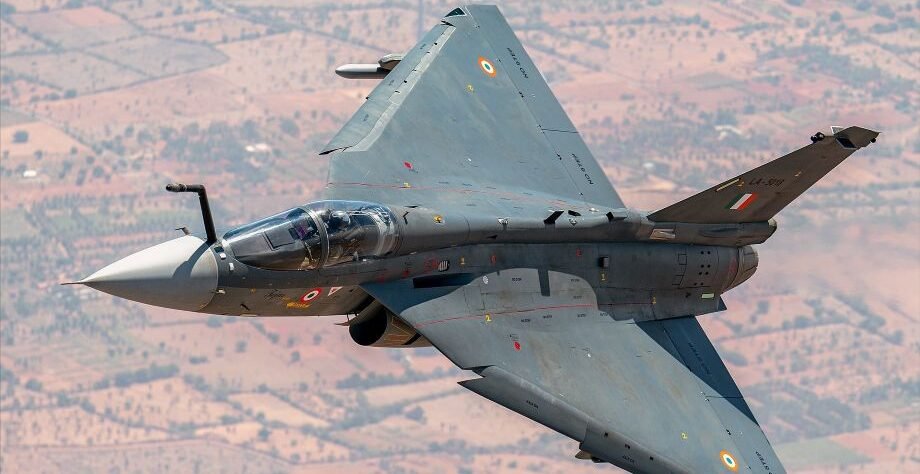
India’s indigenous Tejas Mk-2 fighter programme is moving ahead with the integration of additional domestically developed avionics, with Bharat Electronics Limited (BEL) working on communication and night-flying Line Replaceable Unit (LRU) systems for the aircraft’s prototypes. The development represents another step in strengthening the indigenous systems content of India’s next-generation medium-weight fighter.
The Tejas Mk-2, also known as the Medium Weight Fighter, is being developed for the Indian Air Force as a more capable successor within the Tejas family. The aircraft is designed to combine improved range, payload capacity and multirole capability with an advanced avionics architecture. Its development involves the Aeronautical Development Agency and Hindustan Aeronautics Limited, along with a wider network of Indian defence organisations and industry partners.
One of the key elements being incorporated into the Mk-2 is an indigenous communication architecture. The aircraft is reported to feature the Software Defined Radio-2 (SDR-2), while BEL is developing communication-related equipment and night-flying LRUs for the prototype aircraft. Such modular systems are important in modern combat aircraft because they can be integrated, maintained and upgraded without requiring extensive changes to the overall airframe.
The inclusion of these systems during prototype development could also provide engineers with an opportunity to evaluate the aircraft closer to its intended operational configuration. This can be particularly useful during systems integration and flight testing, when communication, navigation, cockpit and other avionics have to operate together reliably.
The Tejas Mk-2 is a significant evolution of the original Light Combat Aircraft design. Compared with the Tejas Mk-1 series, the Mk-2 features a larger airframe and is intended to carry more internal fuel and weapons. The aircraft is also being developed around the GE F414 engine and is expected to incorporate advanced sensors, electronic warfare capabilities and an indigenous AESA radar.
The fighter is intended to undertake multiple combat roles, including air defence, air superiority and precision strike missions. Its development is therefore closely linked to the Indian Air Force’s long-term effort to modernise its fighter fleet and increase the proportion of indigenous aircraft and systems in service.
BEL’s participation in the programme also highlights the expanding role of India’s defence electronics industry in fighter development. The company has already contributed various electronic and avionics systems to the Tejas programme, and its involvement in the Mk-2 further demonstrates the push towards greater domestic ownership of critical aircraft technologies.
For the Tejas Mk-2 programme, incorporating indigenous communication and night-flying systems could provide advantages beyond reducing dependence on imported equipment. Domestic control over key avionics can make future upgrades easier to manage while supporting the development of a wider industrial ecosystem capable of producing and maintaining sophisticated military electronics.
The use of LRU-based architecture is also relevant from a maintenance perspective. Individual units can be removed and replaced when required, helping simplify troubleshooting and servicing during aircraft testing and, eventually, operational deployment.
As prototype integration progresses, the focus will increasingly shift towards ground testing, system validation, flight trials and certification. The successful integration of communication, night-flying and other mission-critical systems will be an important part of demonstrating the aircraft’s overall readiness.
The latest BEL development therefore adds another piece to the Tejas Mk-2 programme as India works toward a domestically developed medium-weight fighter with a high level of indigenous technology. If integration and testing proceed as planned, the use of production-relevant systems in the prototypes could help create a smoother path from development and flight testing toward operational clearance.
-

-
-

-