
G20 Atlanta Talks Expose Global Divisions as India Calls for Energy Security and Stronger Supply Chains
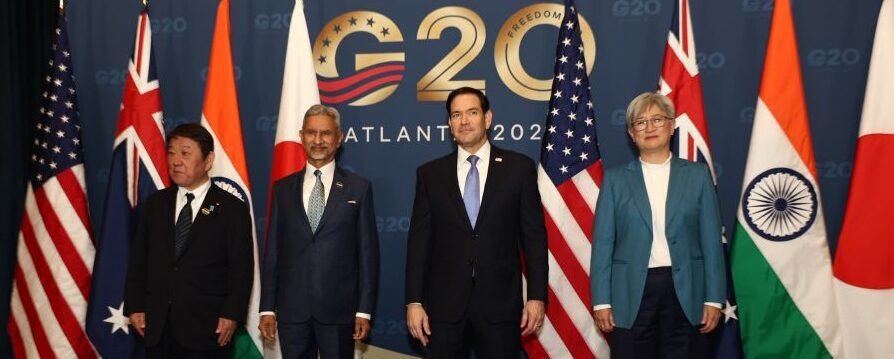
The G20 Foreign Ministers’ Meeting in Atlanta, United States, concluded on October 31 after two days of discussions marked by differences among major world powers over international security, ongoing conflicts and global economic challenges. Although participating nations discussed several shared priorities, the meeting ended without a joint communique, highlighting the continuing diplomatic divisions within the G20.
Held under the United States’ G20 presidency on October 30–31, the meeting brought together senior diplomatic representatives to discuss energy security, food supplies, geopolitical tensions and the resilience of international supply chains. US Secretary of State Marco Rubio hosted the discussions, which were intended to strengthen cooperation on issues affecting global economic stability.
Representing India, External Affairs Minister S. Jaishankar used the platform to underline the importance of diplomacy, predictable energy markets and international cooperation. He highlighted how conflicts and disruptions to critical trade routes are creating economic difficulties, particularly for developing countries that have limited capacity to absorb rising energy and commodity costs.
During discussions on energy security, Jaishankar raised concerns about attacks on energy infrastructure and disruptions to international energy trade. He argued that market instability caused by sanctions, geopolitical tensions and restrictions along important maritime routes was increasing uncertainty in global energy supplies. He also emphasised India’s requirement for dependable and affordable liquefied petroleum gas (LPG) supplies to support its clean cooking initiatives.

Jaishankar further highlighted India’s National Mission on Critical Minerals, which focuses on strengthening the country’s capabilities across mineral exploration, processing and recycling. He proposed a G20 Critical Minerals Circularity Initiative to encourage cooperation in sustainable resource management and improve the availability of essential minerals. These resources are increasingly important for advanced manufacturing, clean energy technologies and industrial development.
The Indian minister also stressed the need to protect international shipping and freedom of navigation in accordance with international law. Disruptions in strategic waterways, including the Strait of Hormuz and the Bab el-Mandeb Strait, have wider implications for energy transportation, commercial shipping and the movement of essential goods. India maintained that secure maritime routes are fundamental to international trade and economic stability.
Supply chain resilience emerged as another major subject during the Atlanta discussions. Jaishankar advocated diversifying manufacturing capabilities and reducing excessive dependence on limited production centres. He argued that stronger and more transparent supply networks would help countries manage geopolitical disruptions and protect their economic interests. His position also reflected India’s broader efforts to strengthen domestic industrial capacity while expanding international economic partnerships.
However, the meeting exposed significant differences among participating countries, particularly over Russia’s war in Ukraine and other international security developments. Disagreements surrounding Russia’s participation also affected the proceedings, with European representatives raising objections to the presence of Russian Foreign Minister Sergey Lavrov. The traditional group photograph of foreign ministers was subsequently cancelled.
With no common position emerging on several major security questions, the United States released a Chair’s Statement instead of a joint communique. The statement outlined areas where G20 members recognised the importance of cooperation, including affordable energy, secure supply chains, critical minerals and freedom of navigation. It also emphasised the need for investment, greater transparency and partnerships between governments and the private sector to strengthen international economic resilience.
Despite the differences, the discussions provided an opportunity for India to engage with several international partners. Jaishankar held bilateral meetings with foreign ministers and senior representatives from various countries, including Russia, Canada, Australia, Germany, Brazil, Mexico, Argentina and Poland. These engagements provided an opportunity to exchange views on bilateral relations, regional developments and broader international concerns.
The Atlanta meeting now shifts attention towards the G20 Leaders’ Summit scheduled for December 14–15, 2026, in Miami, Florida. The summit, to be hosted by US President Donald Trump, is expected to provide another opportunity for world leaders to address economic challenges and strengthen cooperation on issues affecting international stability.
For India, the Atlanta discussions reinforced the importance of diplomatic engagement, secure maritime trade routes, affordable energy and diversified supply chains. While the foreign ministers could not bridge their differences on several geopolitical issues, India’s participation highlighted New Delhi’s continued emphasis on economic resilience and constructive international cooperation.


Facebook Comments