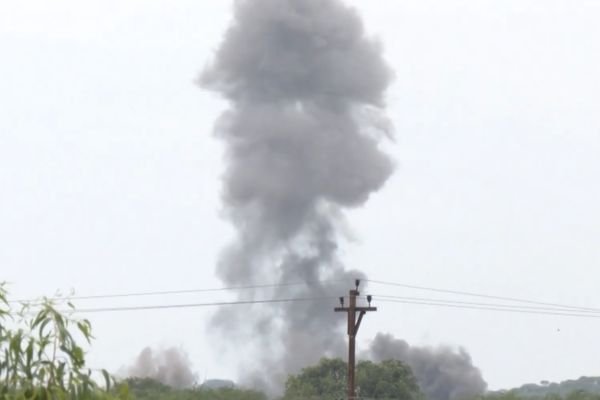
The Defence Research and Development Organisation (DRDO) has successfully conducted a test of a high-calibre bomb at the Terminal Ballistics Research Laboratory (TBRL) facility in Haryana, according to official reports. The test validates the weapon system’s operational readiness and adds to India’s growing indigenous munitions capability.
TBRL, located in Chandimandir near Panchkula, is one of DRDO’s premier facilities specialising in ballistics research, impact dynamics, and ammunition development. The laboratory has historically served as the testing ground for India’s conventional and specialised ordnance programmes, ensuring that indigenous weapon systems meet rigorous military performance standards before induction into service.
High-calibre bomb development reflects India’s strategic push toward self-reliance in defence manufacturing under the Make in India initiative. The ordnance sector has seen accelerated indigenous development over the past decade, reducing dependence on foreign suppliers and enabling faster customisation to match operational requirements of the Indian Army and Indian Air Force.
India’s ammunition and bomb manufacturing base historically relied on OFB (Ordnance Factory Board) facilities, but DRDO’s parallel development of advanced munitions has created redundancy and competition that improves quality and innovation. Recent years have witnessed successful induction of indigenous unguided bombs, precision-guided munitions, and cluster munitions into active service across multiple military branches.
High-calibre bombs serve multiple operational roles, from ground strike missions to air-to-ground employment by fighter aircraft. The test protocol at TBRL typically evaluates penetration characteristics, blast yield, fuzing reliability, and compatibility with existing delivery platforms. For air-launched variants, tests also assess separation dynamics and aerodynamic stability.
TBRL’s test infrastructure includes impact ranges, detonation chambers, and ballistic measurement systems capable of validating munition performance across diverse target scenarios. The facility’s involvement in this test signals that the weapon system has progressed beyond design phases into validation and is on track toward production and operational deployment.
This development aligns with India’s broader ammunition modernisation agenda, which prioritises indigenous solutions to bridge capability gaps and reduce foreign exchange outflow. The Indian military’s operational demands, shaped by diverse terrain and potential adversarial scenarios, require tailored munition designs that DRDO’s programmes increasingly provide.
-
-

-

-