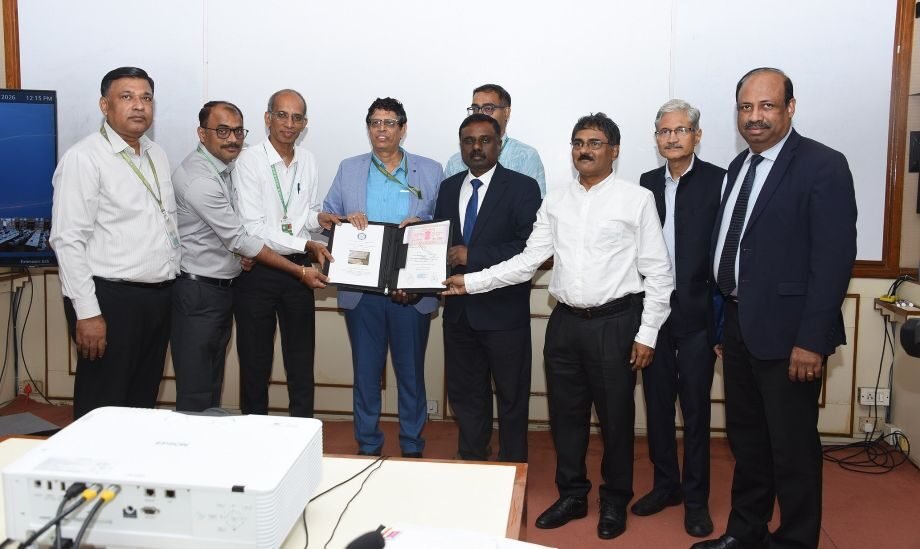
The Defence Metallurgical Research Laboratory (DMRL), a DRDO laboratory under the Ministry of Defence, has transferred advanced naval steel technologies to Steel Authority of India Limited (SAIL), marking a significant step toward indigenous production of high-grade marine-grade steels for naval shipbuilding programmes.
DMRL, based in Hyderabad, has long served as the nodal centre for metallurgical research and development supporting India’s defence forces. The transfer of naval steel technology to SAIL represents a structured effort to shift defence-critical material production from laboratory prototyping to large-scale industrial manufacture within India’s state-owned steel sector.
Naval-grade steels are critical inputs for warship construction. These materials must meet exacting standards for corrosion resistance, weldability, and structural integrity under the extreme operational stresses of a marine environment. India’s major shipyards, including Cochin Shipyard Limited (CSL) and Mazagon Dock Shipbuilders Limited (MDL), rely on such materials for building destroyers, frigates, corvettes, and other surface combatants.
The technology transfer to SAIL aligns with India’s broader Make in India and Atmanirbhar Bharat initiatives, which seek to reduce dependence on imported defence materials and build sovereign indigenous capability across the defence industrial base. Previously, India relied significantly on imported naval steels or limited indigenous sourcing, creating both supply chain vulnerabilities and foreign exchange outflows.
DMRL has historically developed and qualified several specialised steel grades for naval and aerospace applications. The laboratory’s expertise spans development of high-strength low-alloy (HSLA) steels, austenitic stainless steels, and martensitic grades used in propulsion systems and hulls. By transferring these formulations and manufacturing protocols to SAIL, the technology moves from DRDO’s research domain into production-ready industrial scale.
SAIL operates multiple integrated steel plants across India, with modern facilities capable of handling complex alloy chemistry and quality control regimes demanded by naval specifications. The transfer enables SAIL to qualify and produce these steels for captive use by Indian shipyards, shortening procurement cycles and reducing costs compared to import routes.
This development also supports India’s ongoing and future naval modernisation programmes. The Navy’s ambitious shipbuilding roadmap includes construction of multiple guided-missile frigates, corvettes, and submarine-related platforms over the coming decade. Assured indigenous supply of naval-grade steels removes a critical bottleneck in indigenous warship production timelines.
The transfer reflects a collaborative model between DRDO laboratories and production PSUs that has proven effective in other defence sectors. Similar technology handovers from DRDO to Ordnance Factory Board (now OFB) and other units have accelerated production of munitions, explosives, and other materials, reducing India’s import burden in defence manufacturing.
-

-

-

-