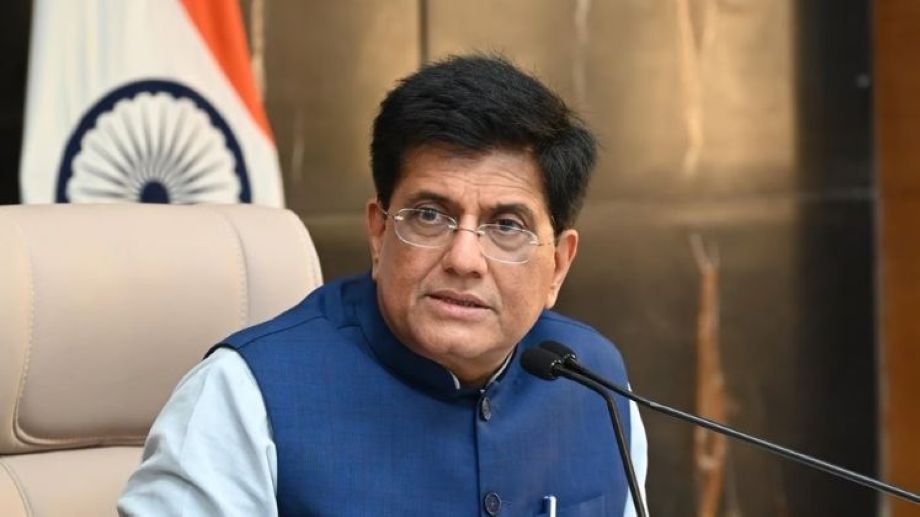
India’s growth trajectory will be powered by innovation, deep-tech capabilities, and quality manufacturing, according to the Union Commerce and Industry Minister Piyush Goyal. The statement underscores the government’s strategic push to position India as a self-reliant defence manufacturing hub, aligning with the broader Make in India agenda in the defence sector.
This emphasis on innovation and manufacturing excellence reflects India’s shift toward reducing dependence on imported defence systems and building indigenous production capacity. Over the past decade, India has invested heavily in defence indigenisation through DRDO, Ordnance Factory Board, and a growing ecosystem of private defence manufacturers.
The focus on deep-tech is particularly significant in the context of emerging military domains. India’s defence modernisation roadmap now spans hypersonic weapons, autonomous systems, artificial intelligence-enabled command and control, and advanced materials science. DRDO’s ongoing programmes in areas such as long-range cruise missiles, naval platforms, and air defence systems all hinge on indigenous deep-tech development.
Quality manufacturing has been a persistent challenge in India’s defence production. Historically, Indian ordnance factories faced criticism over timeliness and consistency. Recent reforms, including the corporatisation of defence PSUs and greater involvement of private sector players like Bharat Dynamics Limited, BrahMos Aerospace, and HAL, have begun to address these gaps. Quality certifications and adherence to international standards are now being embedded into procurement specifications.
The statement also reflects India’s experience with bilateral defence partnerships. Programmes involving Russia, France, and Israel have demonstrated that India can absorb advanced manufacturing techniques and translate them into indigenous capability. The Brahmos missile, a joint Indo-Russian venture, exemplifies how technology transfer and local manufacturing can coexist to produce world-class systems at scale.
India’s defence budget for FY2024-25 stood at approximately 7.2 trillion Indian rupees, with a growing share allocated to capital acquisition and indigenous R&D. The government has set ambitious targets for defence exports, aiming to position India as a net exporter of defence systems rather than a consumer market. Achievement of this goal depends directly on the innovation and manufacturing quality metrics highlighted by the Minister.
The emphasis on these three pillars also signals intent to compete in emerging defence sectors. Space-based systems, cyber warfare capabilities, and unmanned platforms require both cutting-edge innovation and production discipline. India’s approach aims to combine DRDO’s research strengths with OFB and private sector manufacturing capabilities to deliver integrated solutions.
-

-

-

-