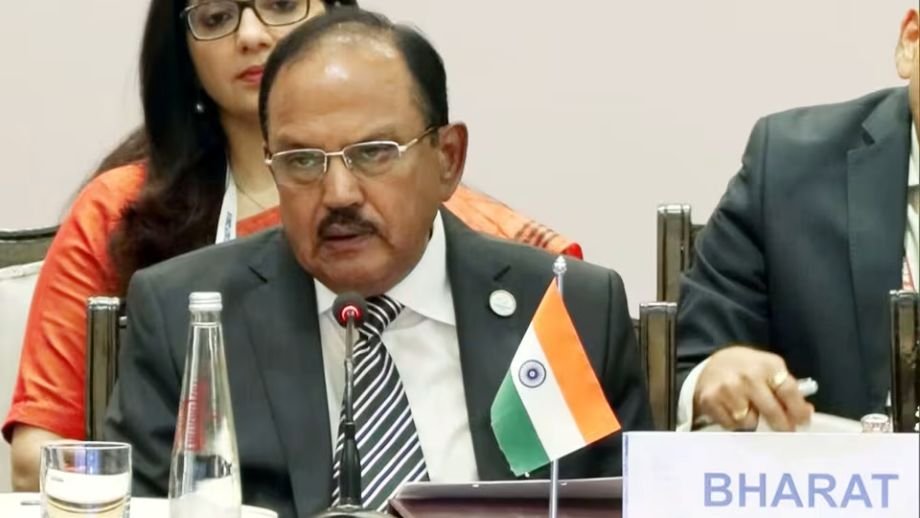
India-China relations are back in focus as National Security Adviser Ajit Doval reaches Beijing for a crucial round of talks with Chinese Foreign Minister Wang Yi on the long-standing boundary question. The 25th round of Special Representatives (SR) talks is scheduled for August 25 and comes at a sensitive stage in efforts by both countries to maintain peace along the Line of Actual Control (LAC).
Doval and Wang Yi are the designated Special Representatives for the India-China boundary mechanism, which was established in 2003 to work towards a comprehensive settlement of the border dispute. Although the mechanism has not produced a final solution to the boundary question, it has remained an important channel for diplomatic engagement and for managing tensions between the two countries.
The latest meeting is particularly significant because India and China have been working to stabilise ties after the prolonged tensions that followed the 2020 border crisis. Maintaining peace and tranquillity along the frontier remains a central concern for New Delhi, with Indian officials repeatedly stressing that the condition of the border will have a major bearing on the broader relationship with Beijing.
The talks are also taking place ahead of the BRICS summit scheduled to be held in New Delhi on September 12 and 13. Chinese President Xi Jinping is expected to attend the summit, although Beijing has not officially confirmed his participation. If the visit goes ahead, it could provide an opportunity for high-level engagement between India and China, including a possible meeting between Xi Jinping and Prime Minister Narendra Modi.
Border-related developments have added further importance to the discussions. India has continued to underline the need for stability along the LAC, while Beijing has also said that the border situation is generally stable and that both sides should maintain communication through diplomatic and military channels.
Arunachal Pradesh remains another sensitive issue in the wider India-China relationship. New Delhi has firmly rejected Chinese claims over the state and has maintained that Arunachal Pradesh is an integral and inalienable part of India. Disagreements over geographical names and territorial claims continue to remain part of the broader strategic friction between the two countries.
For India, the immediate priority will be to ensure that the relative calm along the border is sustained and that existing mechanisms continue to prevent incidents from escalating. For China, maintaining communication with New Delhi is also important as both countries manage their wider strategic and economic relationship.
The Doval-Wang talks therefore carry significance beyond the boundary dispute itself. Their outcome could provide an indication of whether the recent improvement in India-China ties can be consolidated and whether both sides are prepared to move towards a more stable framework for managing their differences.
With the BRICS summit approaching and the possibility of further high-level India-China engagement, the 25th round of Special Representatives talks will be closely watched for signs of progress on border stability and the broader relationship between New Delhi and Beijing.
-

-

-

-