
IIT Madras-Backed AstraYAN Makes Major Stride in India’s Naval Defence Sector
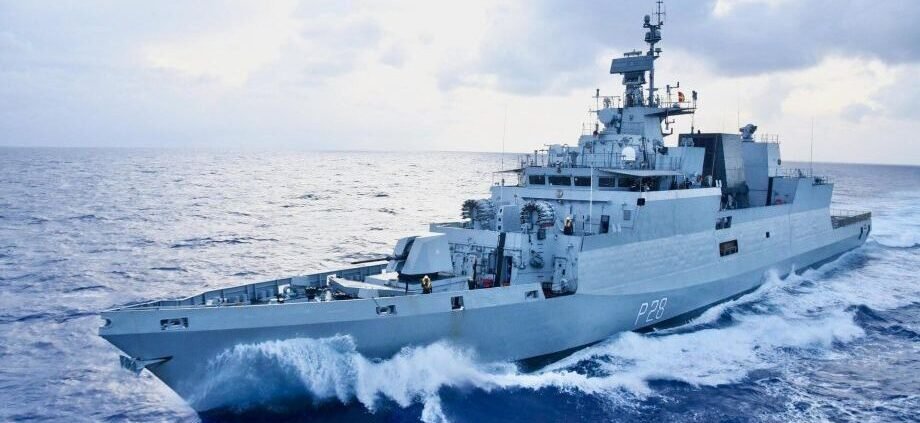
India’s efforts to strengthen indigenous defence manufacturing have received a significant boost as AstraYAN, a Chennai-based deep-tech start-up incubated at the Indian Institute of Technology Madras (IIT Madras), has emerged as the lowest bidder (L1) for a major Indian Navy warship programme. The company has qualified for the propulsion system integration work for five Next Generation Corvettes (NGCs) being constructed by Garden Reach Shipbuilders and Engineers (GRSE).
The development represents an important achievement for India’s growing defence start-up ecosystem, particularly in the specialised field of naval engineering. AstraYAN reportedly secured the L1 position after competing against established international companies, including Italy’s Fincantieri, Germany’s RENK and Spain’s Navantia. The tender initially attracted five participants, with three companies progressing to the final evaluation stage. AstraYAN emerged as the only Indian company to qualify for the final round and subsequently secured the lowest bidder position.
According to reports, the selection process extended over more than a year and involved technical assessments by the Indian Navy, the Naval Science and Technological Laboratory (NSTL), operating under the Defence Research and Development Organisation (DRDO), and the participating shipyards. The process evaluated the technical and commercial suitability of the competing companies before determining the L1 bidder.
The assigned work involves integrating the propulsion machinery, transmission architecture and control systems into a unified operational arrangement. The five corvettes will feature a Combined Diesel and Gas Turbine-Cross Connect (CODAG-CC) propulsion configuration. This arrangement combines diesel engines and gas turbines to provide different levels of power according to operational requirements. Diesel engines support economical cruising, while gas turbines provide additional power when higher speeds are required.


Successful integration of these components is essential for ensuring reliable propulsion performance, efficient power transmission and coordinated operation of the vessels’ machinery. It also requires specialised engineering capabilities to ensure that different propulsion components function together effectively under demanding naval conditions.
AstraYAN’s achievement comes at a significant time for India’s naval modernisation programme. On November 2, 2026, the Ministry of Defence signed contracts worth Rs 53,866.50 crore with GRSE and Goa Shipyard Limited (GSL) for the construction of eight Next Generation Corvettes for the Indian Navy. Under the programme, GRSE will construct five warships, while GSL will build the remaining three.
The upcoming corvettes will incorporate advanced weapons, missiles and sensor systems, allowing them to undertake missions across air, surface and underwater operational environments. Their intended roles include anti-surface warfare, anti-submarine operations, coastal defence, maritime surveillance and protection of important sea routes.
AstraYAN founder Amit Batra highlighted the importance of developing sovereign control over critical ship technologies, noting that India’s shipbuilding capabilities have advanced considerably but certain specialised technologies continue to depend on foreign suppliers. Greater participation from domestic technology companies could help address these gaps.
The company’s emergence as L1 demonstrates the increasing role of Indian start-ups in sophisticated defence engineering projects. However, L1 status represents the lowest evaluated bid rather than confirmation of a completed contract award. A formal award for the propulsion integration work remains an important next step.
Overall, this development highlights the potential of India’s domestic deep-tech industry to contribute to advanced naval programmes and support the country’s long-term objective of achieving greater self-reliance in defence technology.

Facebook Comments