
Indian Navy Chief Flags Low Ocean Research Funding, Calls for Greater Indo-Pacific Cooperation
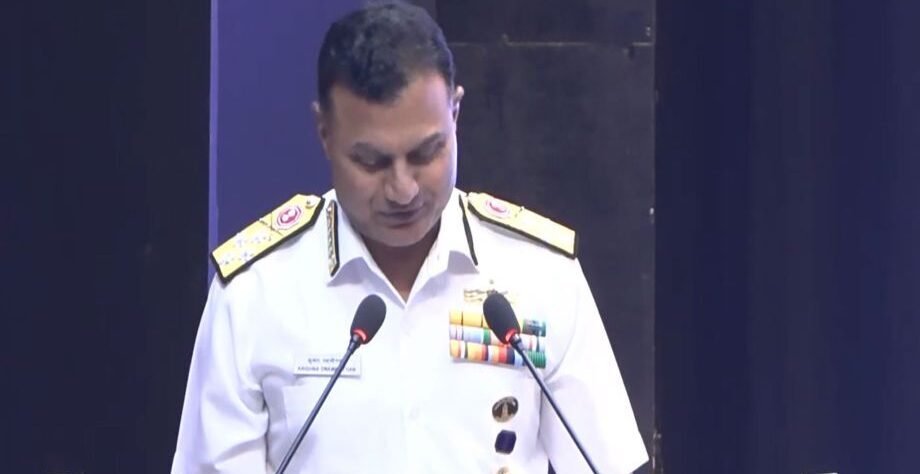
Investment in ocean science remains insufficient despite the growing importance of oceans in global security, climate stability and economic development, Indian Navy Chief Admiral Krishna Swaminathan has highlighted. Addressing the Indo-Pacific Regional Dialogue (IPRD) 2026, he called for greater regional cooperation and stronger scientific investment to tackle emerging maritime and environmental challenges.
Speaking at the dialogue on November 4, Admiral Swaminathan drew attention to the increasing pressures on the world’s oceans, including rising sea levels, warming waters, changing rainfall patterns, stronger cyclones and marine pollution. He stressed that these challenges do not remain restricted to individual countries and require coordinated international responses.
The Navy Chief pointed out a significant imbalance in global ocean research capabilities. According to the figures highlighted in his address, the annual median share of national research budgets allocated to ocean sciences remains below one per cent. He also noted that just 10 countries operate approximately two-thirds of the world’s research vessels, demonstrating the unequal distribution of scientific infrastructure.
The disparity is also visible in the availability of skilled researchers. Admiral Swaminathan observed that the number of researchers per million people ranges from fewer than 100 in some regions to more than 4,000 in others. Such differences can limit the ability of developing countries to independently study marine ecosystems, monitor ocean conditions and respond effectively to environmental threats.

He also raised concerns about the way technology transfer is approached internationally. Acquiring advanced equipment alone does not necessarily create long-term scientific capabilities. Countries receiving such technologies can remain dependent on external partners for operation, maintenance and upgrades if sufficient emphasis is not placed on training, technical knowledge and local expertise.
Admiral Swaminathan called for a broader approach to scientific education and research, suggesting that traditional STEM disciplines should evolve towards a more inclusive STEAM framework. Integrating arts, humanities, life sciences and social sciences with physical sciences can encourage interdisciplinary thinking, creativity and practical solutions to complex maritime problems.
His remarks come at a time when the Indo-Pacific region is facing increasingly interconnected maritime challenges. Ocean warming, extreme weather events, pollution and changing marine conditions have implications for coastal communities, fisheries, trade routes and regional security. Improved scientific observation, information sharing and joint research programmes are therefore becoming increasingly important.
India has also been strengthening its ocean research and deep-sea exploration capabilities through indigenous technology and international partnerships. The government’s Deep Ocean Mission, along with the development of advanced submersible systems and oceanographic research infrastructure, reflects the country’s growing focus on exploring and understanding marine resources.
At IPRD 2026, the wider discussion on ocean cooperation highlighted the importance of shared knowledge, scientific collaboration and equitable access to technology. Greater investment in research vessels, ocean observation systems, skilled personnel and regional data-sharing networks could help countries improve forecasting, protect marine ecosystems and strengthen their preparedness for ocean-related emergencies.
The Navy Chief’s observations underline an important challenge for the international community: ocean science must receive greater attention and sustained financial support if countries are to manage the growing pressures on marine environments. Stronger Indo-Pacific partnerships and the development of independent scientific capabilities will be essential for building a safer, more sustainable and resilient maritime future.

Facebook Comments