
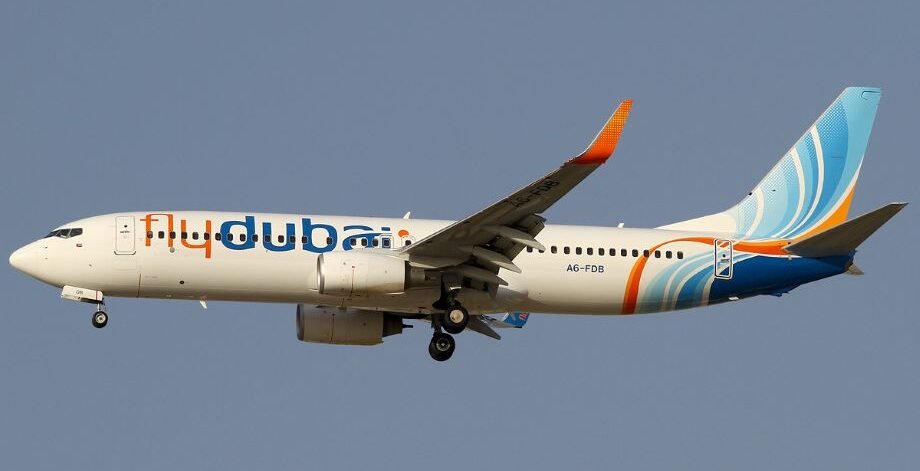
A serious mid-air emergency aboard Flydubai Flight FZ1073 from Dubai to Tel Aviv on September 30 has drawn attention to the role of aircraft emergency transponder signals after the flight transmitted the codes 7700 and 7500 during a cockpit crisis.
The Boeing 737 flight was cruising at around 34,000 feet when it began a dramatic descent over Saudi Arabia. Flight-tracking data showed significant changes in altitude and direction before the aircraft transmitted 7700, the internationally recognised code for a general emergency. The transponder later changed to 7500, a code indicating unlawful interference with an aircraft.
The signals provided an important indication to air traffic controllers that the aircraft was experiencing a serious emergency. However, available information does not conclusively establish which pilot entered the individual codes. Aviation experts cited in media reports have suggested that Captain Smit Machchhar may have changed the transponder code while dealing with the cockpit confrontation, but this remains an interpretation rather than a confirmed finding.
The incident involved Indian Captain Smit Machchhar, who was reportedly attacked and seriously injured by his co-pilot. According to passenger accounts and statements from Israeli officials, Machchhar managed to open the cockpit door despite his injuries, allowing passengers and crew members to enter the cockpit and help restrain the other pilot.


The aircraft subsequently requested an emergency landing and was diverted to Tabuk in northwestern Saudi Arabia, where it landed safely. A reserve Flydubai crew member who was travelling on the flight was among those who helped take control of the aircraft. The passengers were later assisted in Saudi Arabia before continuing their journey to Israel.
The use of Squawk 7700 and 7500 became a key part of the incident because these codes can communicate critical information to air traffic controllers without relying solely on voice communication. 7700 indicates a general emergency, while 7500 indicates unlawful interference. The latter can trigger heightened security procedures because it is associated with a possible hijacking or other unlawful interference with an aircraft.
Captain Machchhar’s actions during the emergency have since received widespread attention. Reports identified him as an Indian national and a former SpiceJet pilot who joined Flydubai in 2022.
Flydubai has said that the underlying reasons and motives behind the incident remain unknown and are subject to investigation. The airline has also urged caution against premature speculation while authorities work to establish the precise sequence of events inside the cockpit.
The Flydubai incident has highlighted how emergency transponder codes can play an important role when an aircraft faces an unexpected crisis. While the investigation continues, the transmission of 7700 and 7500 gave air traffic authorities an immediate indication that Flight FZ1073 was dealing with an exceptional emergency and required urgent attention.




Facebook Comments