
D-Propulse Achieves TRL-5 Milestone With Indigenous Rotating Detonation Engine
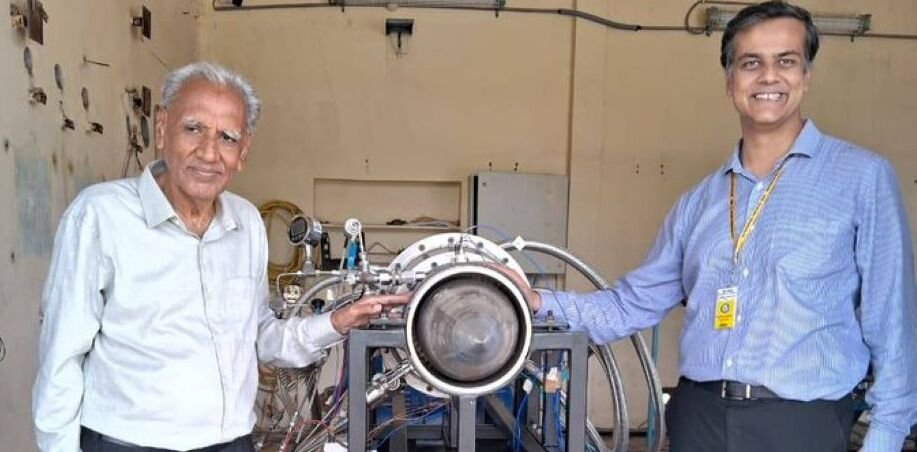
D-Propulse has achieved Technology Readiness Level 5 (TRL-5) with an indigenous rotating detonation engine featuring an aerospike nozzle, marking a significant advance in India’s propulsion technology development.
The milestone indicates the company has successfully demonstrated the core propulsion technology at a scale approaching prototype maturity. Rotating detonation engines represent a fundamentally different combustion approach compared to conventional turbofan or ramjet designs, with potential applications across aerospace and defence platforms.
The aerospike nozzle integrated into the design is a key innovation in thrust vectoring and efficiency. Unlike traditional bell nozzles, aerospike nozzles maintain optimal expansion ratios across a wider range of altitudes and flight speeds, improving performance envelope and fuel economy. This configuration has long interested space agencies and advanced propulsion programmes globally.
India’s defence and aerospace sector has increasingly focused on indigenous propulsion development as a strategic priority. The Defence Research and Development Organisation (DRDO) has pursued multiple engine development pathways across supersonic, hypersonic, and space launch applications. Private sector participation, as demonstrated by D-Propulse, strengthens India’s capacity to explore high-risk, high-reward propulsion concepts that may take years to reach operational deployment.


Rotating detonation technology offers theoretical advantages in combustion efficiency and power density compared to conventional deflagration-based engines. However, the engineering challenges are substantial: managing the extreme pressure and temperature gradients, controlling detonation wave stability, and scaling from laboratory prototypes to flight-weight systems remain complex problems.
TRL-5 places this engine at the laboratory-to-field prototype transition. The next phases, up to TRL-9 (full operational deployment), will involve ground testing at progressively higher power levels, thermal management validation, integration with fuel and ignition systems, and eventual flight test campaigns on subscale or experimental vehicles.
India’s engine development roadmap extends across multiple classes: DRDO’s Kaveri programme for fighter aircraft, GSLV upper-stage engines for space lift, and hypersonic propulsion research for advanced air-breathing systems. Private sector ventures like D-Propulse indicate growing confidence in India’s technical ecosystem to tackle frontier propulsion challenges and reduce dependence on foreign engine imports.
The aerospike nozzle integration within an indigenous rotating detonation architecture demonstrates systems-level design maturity beyond simple combustor development. Such achievements typically attract interest from aerospace OEMs and government agencies evaluating propulsion options for next-generation platforms.




Facebook Comments