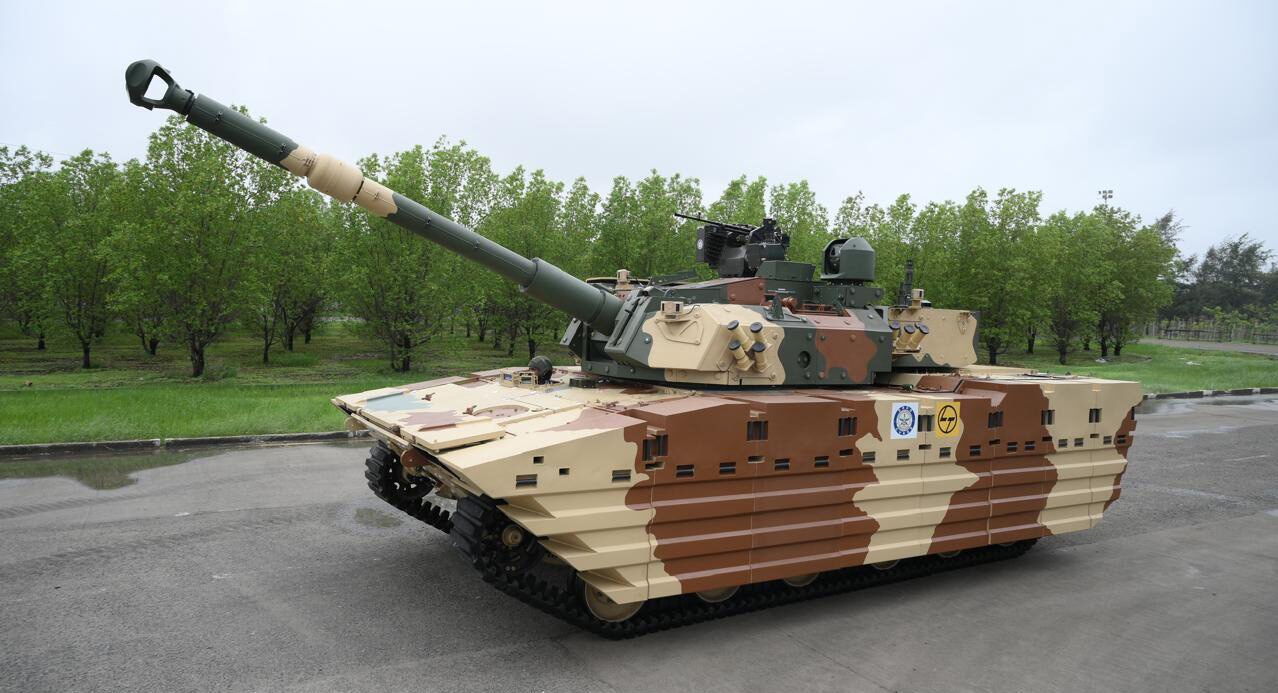
India’s Zorawar light tank programme faces a strategic inflection point as defence planners reassess the platform’s design philosophy and operational requirements.
The Zorawar, developed by DRDO’s Combat Vehicles Research and Development Establishment (CVRDE) in Chennai, represents India’s effort to field an indigenous light tank designed for high-altitude and challenging terrain operations. The platform was conceived to bridge the capability gap between wheeled armoured vehicles and heavier tracked combat platforms, particularly for deployment in mountainous regions along the northern frontiers.
Equipped with a 105 mm rifled gun, a coaxial machine gun and a remote weapon station, the Zorawar has been designed to deliver substantial firepower while retaining the mobility required for operations in difficult terrain. Its power pack is optimised for sustained performance in high-altitude environments, where reduced oxygen levels can affect conventional armoured vehicle engines. The platform has undergone trials at multiple military testing facilities as part of its ongoing development programme.
The platform’s current positioning reflects a broader challenge within India’s defence modernisation efforts: balancing indigenous design and manufacturing with the operational requirements of the armed forces. While light tanks offer advantages in mobility and deployment flexibility, they must also provide sufficient protection and firepower to meet evolving battlefield demands.
India’s operational requirements for mountain warfare have created a need for a platform capable of operating effectively in areas where heavier armoured vehicles face mobility and logistical constraints. The Zorawar has been designed with this objective in mind, combining reduced weight, adequate firepower and enhanced crew protection for deployment in high-altitude sectors.
The ongoing reassessment is understood to focus on refining the platform’s final specifications in line with user feedback and evolving operational requirements. The Indian Army has been evaluating prototype vehicles across a range of scenarios to assess their performance, survivability and integration with existing armoured formations. Any design modifications could influence production schedules and programme costs before large-scale induction.
DRDO continues to position the project as a key component of India’s broader defence indigenisation strategy. The programme reflects the government’s emphasis on developing advanced military platforms within the country while strengthening the domestic defence industrial base.
The long-term success of the Zorawar programme will ultimately depend on its ability to deliver the right balance of mobility, protection and firepower. If the ongoing review results in a platform that meets the Indian Army’s operational expectations while preserving its indigenous design objectives, the Zorawar could become a significant addition to India’s future armoured capabilities.
-
-
-

-