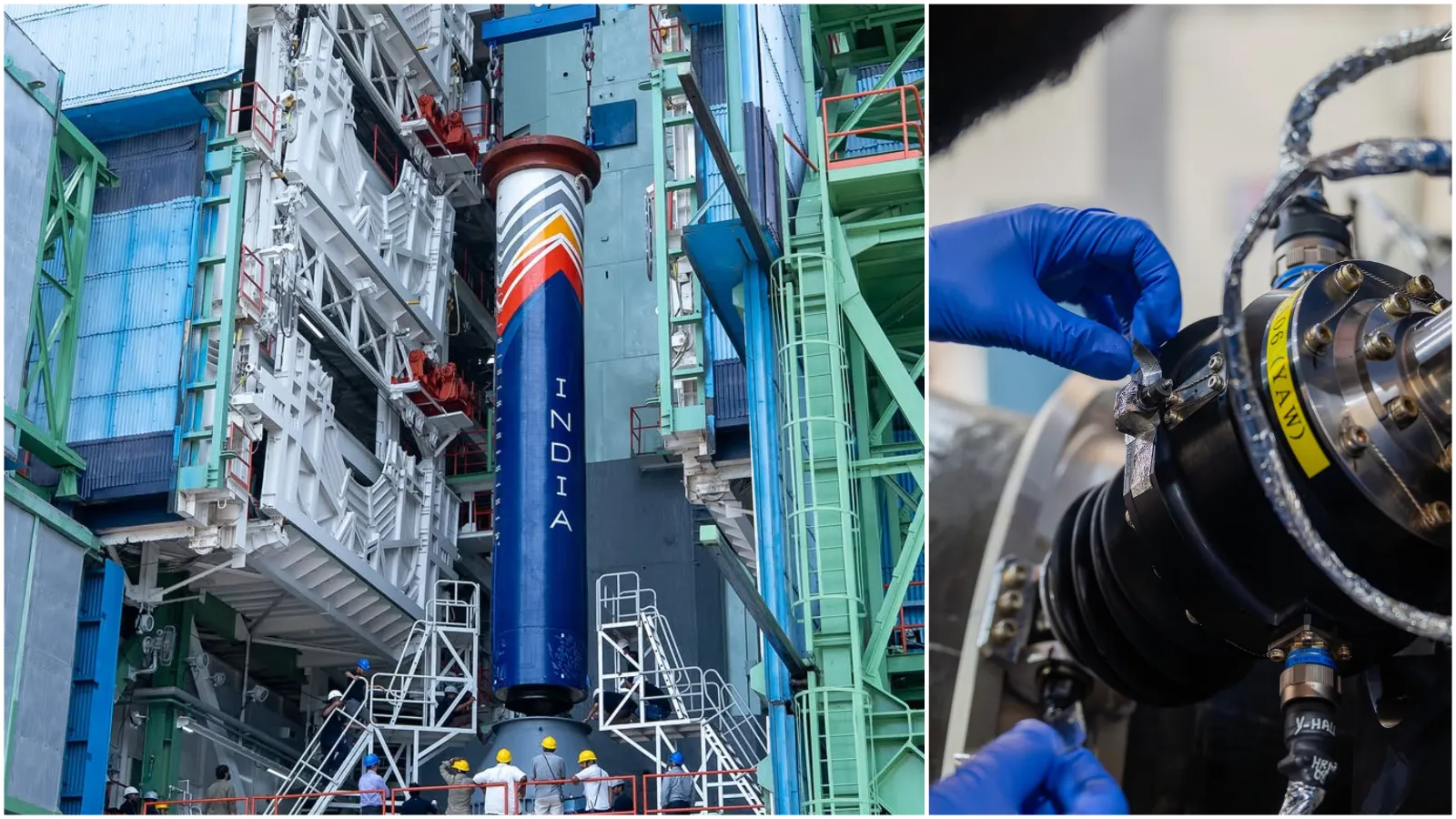
India’s first privately-developed orbital rocket, Vikram-1, is scheduled for launch on July 18 as part of Mission Aagaman, marking a significant milestone in the country’s commercial space sector.
The launch will be conducted by Skyroot Aerospace, a Hyderabad-based space technology company that has emerged as one of India’s leading private rocket developers. Vikram-1 is designed as a small-lift-launch vehicle (SLLV) capable of carrying satellite payloads to low Earth orbit.
India’s space sector has undergone substantial liberalisation over the past five years. The Department of Space removed regulatory barriers to allow private companies to design, manufacture, and launch orbital vehicles, fundamentally reshaping the landscape of Indian space activities historically dominated by ISRO.
Skyroot Aerospace has positioned itself at the forefront of this private space revolution. The company’s Vikram series represents a family of launch vehicles designed to serve the growing global demand for small-satellite launch services. Vikram-1 carries payloads of around 300-500 kg to low Earth orbit, a capacity range that aligns with the emerging needs of Earth observation, communication, and scientific research satellite operators.
The vehicle employs solid-rocket booster technology for its lower stages, a design choice that simplifies launch logistics and reduces infrastructure requirements compared to liquid-fuelled alternatives. This approach reflects India’s extensive experience with solid rocket propulsion, developed through decades of DRDO missile programmes and ISRO’s satellite launch vehicle systems.
Mission Aagaman will serve as a crucial validation flight for Vikram-1’s design and operational readiness. The test will generate critical data on vehicle performance, guidance system accuracy, and payload deployment mechanisms. Success will position Skyroot Aerospace to capture a share of the competitive global small-launch-vehicle market, where multiple commercial operators are competing for contracts from satellite operators seeking affordable, responsive access to space.
The launch reflects India’s broader strategic objective of developing indigenous space-launch capabilities across both government and private sectors. By fostering competition and innovation in the private domain, India seeks to reduce launch costs, accelerate technological development, and establish itself as a reliable provider of launch services in the global marketplace.
Skyroot Aerospace has already demonstrated technological maturity through earlier suborbital test flights and engine qualification tests. The July launch represents the next critical step toward operational deployment of India’s first private orbital launch system.
-

-

-

-