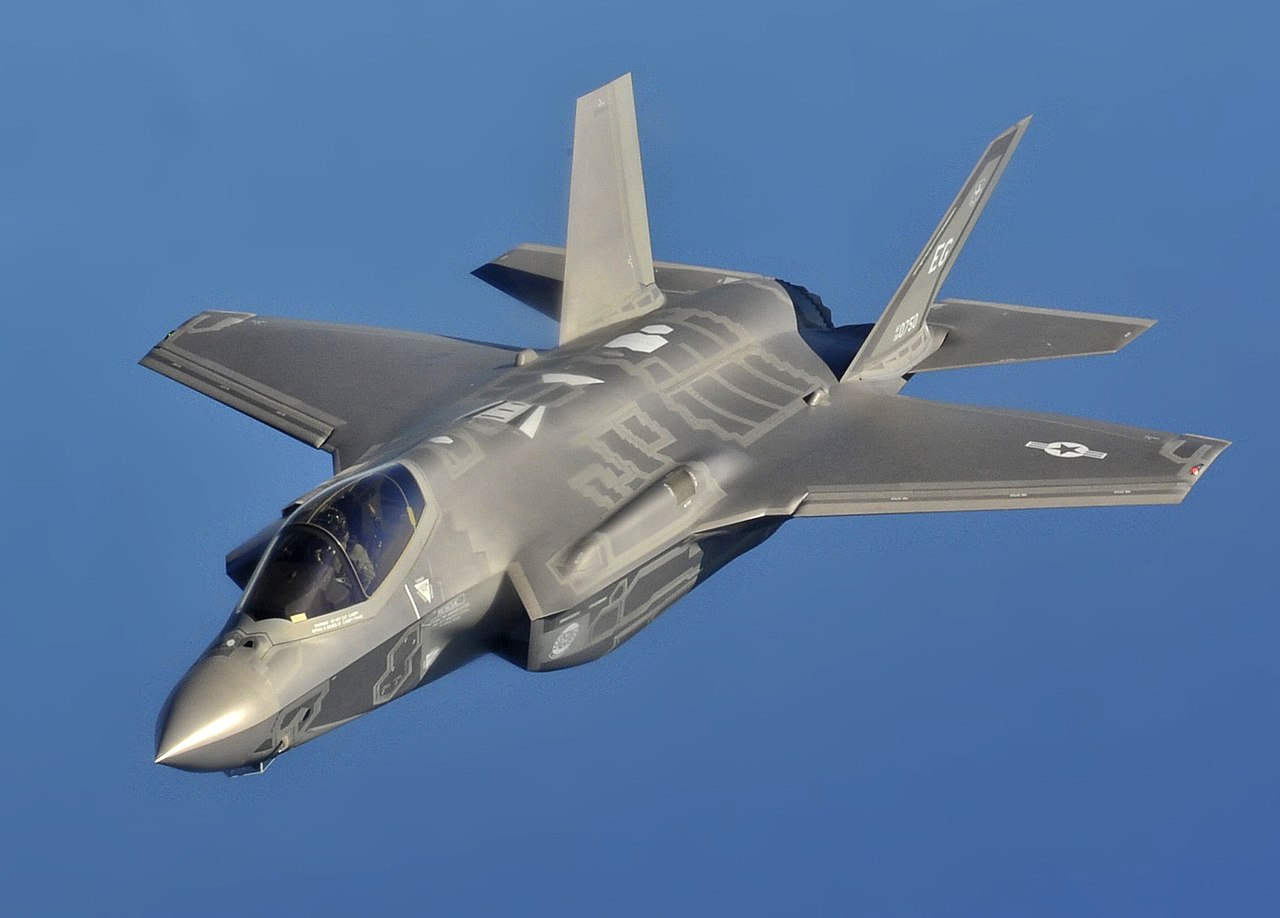
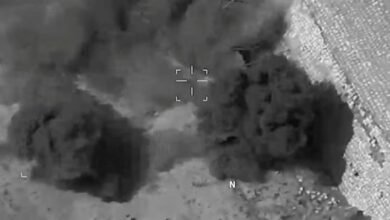
The United States has conducted strikes against Iranian radar and drone control facilities, prompting the Islamic Revolutionary Guard Corps (IRGC) to claim a retaliatory strike on an American military installation, according to reports monitored on Tuesday.
The IRGC claimed its forces targeted a base it linked to the US attack on Sirik Island, though independent verification of the Iranian claim remains pending. The sequence of strikes underscores the escalating military posturing in the Gulf region and broader US-Iran tensions.
US targeting of Iranian air defence and reconnaissance infrastructure reflects a consistent operational pattern aimed at degrading Tehran’s ability to track American aircraft and coordinate drone operations across the region. Radar installations and command-control nodes form the backbone of Iran’s integrated air defence system, which relies on a layered architecture combining older Soviet-era platforms with domestically produced systems.
Iran has invested substantially in indigenous radar and air defence development through its Defence Ministry and affiliated research organizations. The country’s air defence network includes the Khordad and Raptor air defence systems, along with older Hawk and S-200 platforms inherited from the pre-1979 era. These systems have been upgraded and networked to provide redundancy across Iran’s airspace.
Drone control facilities represent another critical dimension of Iran’s operational capability. The IRGC operates an expanding fleet of unmanned aerial vehicles, including the Shahed family of loitering munitions and surveillance drones that have been employed in regional conflicts. Loss of command-and-control infrastructure would degrade Iran’s ability to coordinate drone swarms and conduct coordinated aerial operations.
The Sirik Island facility, located in the Strait of Hormuz region, sits at a strategically critical juncture controlling one of the world’s most important maritime chokepoints. Control of air defence and surveillance assets in this area affords any power significant leverage over regional maritime traffic and military operations in the Persian Gulf.
The Iranian claim of a counter-strike reflects Tehran’s doctrine of demonstrated retaliation following perceived US aggression. However, the absence of independent confirmation of damage or impact at the targeted American facility suggests either minimal effect or a symbolic response designed to preserve domestic political credibility.
These exchanges occur within a broader context of US-Iran military posturing that has intensified following the collapse of nuclear diplomacy in 2018. American Central Command (CENTCOM) maintains a substantial forward presence across the Gulf region, with bases in Qatar, Bahrain, and the UAE providing staging areas for air operations deep into Iranian territory.
-

-
-
-