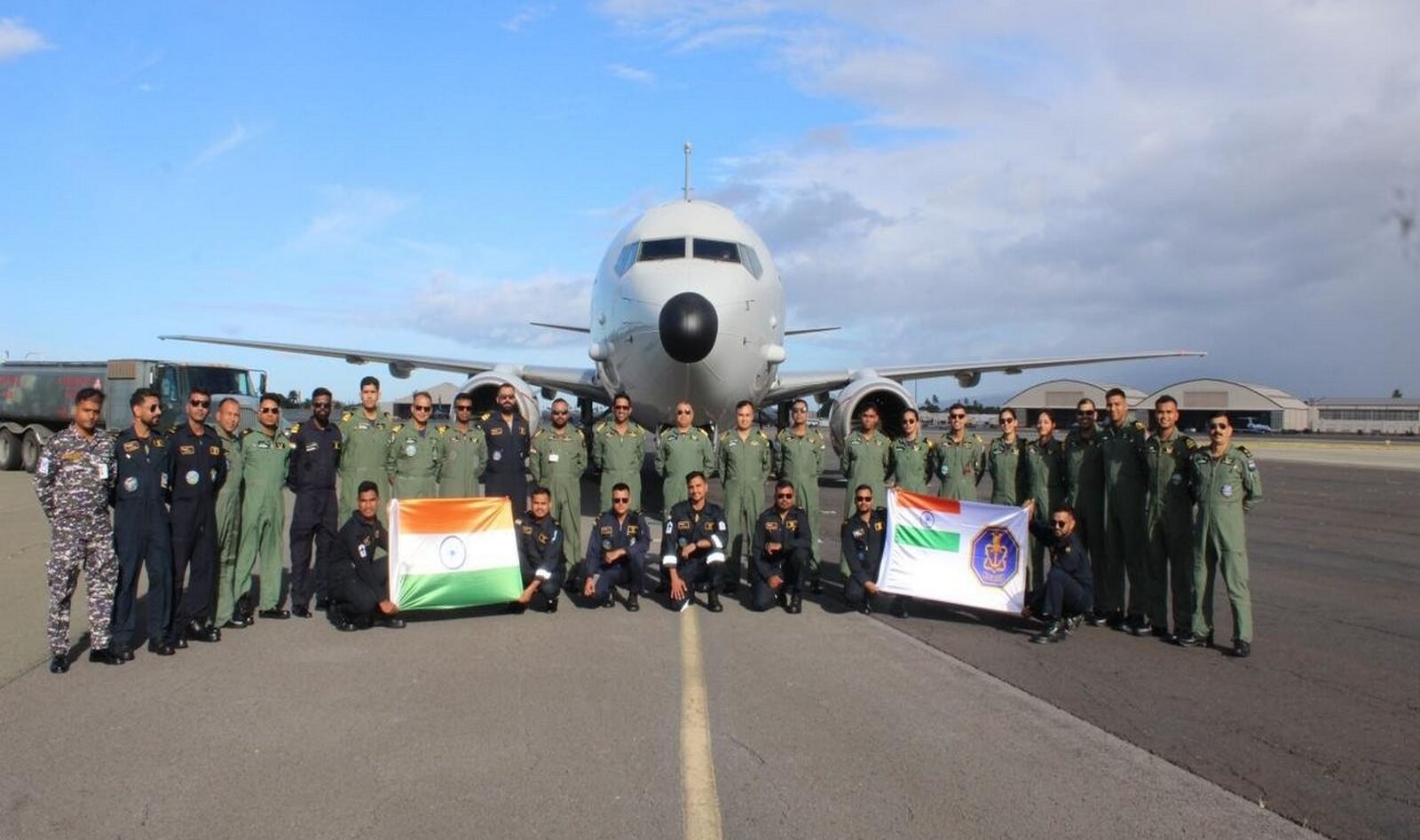
US Envoy Sergio Gor has welcomed the Indian Navy’s participation and leadership role at RIMPAC 2026, the biennial maritime exercise scheduled to be held in Hawaii, highlighting the shared commitment between India and the United States to deepen defence cooperation in the Indo-Pacific region.
RIMPAC, formally the Rim of the Pacific Exercise, is the world’s largest international maritime warfare exercise. Conducted biennially by the US Navy’s Pacific Fleet, it brings together surface combatants, submarines, and maritime patrol aircraft from numerous allied and partner nations to exercise integrated operations across contested waters.
India’s participation in RIMPAC underscores the Indian Navy’s growing role in maintaining maritime security and freedom of navigation in the Indo-Pacific. The Indian Navy has been a consistent participant since 2014, when it first joined the exercise with guided-missile frigates and support vessels. The Navy’s involvement reflects New Delhi’s strategic pivot toward the Indo-Pacific and alignment with the US-led rules-based maritime order.
The 2026 edition will continue this engagement framework. RIMPAC exercises enable participating navies to conduct coordinated operations, test interoperability protocols, and demonstrate collective capability in anti-submarine warfare, air defence, and surface engagement scenarios. For the Indian Navy, these exercises provide opportunities to refine tactics alongside technologically advanced fleets and validate doctrinal developments.
India’s enhanced standing in RIMPAC reflects the broader India-US defence partnership. Over the past decade, bilateral defence engagement has expanded significantly through the framework of the Defence Technology and Trade Initiative (DTTI), regular service-to-service dialogues, and strategic agreements including the Logistics Exchange Memorandum of Agreement (LEMOA) and Communications Compatibility and Security Agreement (COMCASA).
The Navy’s participation in RIMPAC 2026 is part of a wider canvas of Indo-Pacific engagements. Alongside bilateral exercises like Malabar with the US and Japan, and Quad-led maritime initiatives, India’s presence in multinational forums reinforces its commitment to regional stability. These exercises also provide platforms for India to project its naval capabilities and influence maritime governance discussions.
For the Indian Navy, participation in such high-tempo, blue-water exercises supports force development and modernisation priorities outlined in the Maritime Security Strategy and the Integrated Defence Staff’s maritime doctrine. Experience gained in advanced escort operations and multi-domain coordination contributes to crew training and operational readiness across the fleet.
-

-

-

-