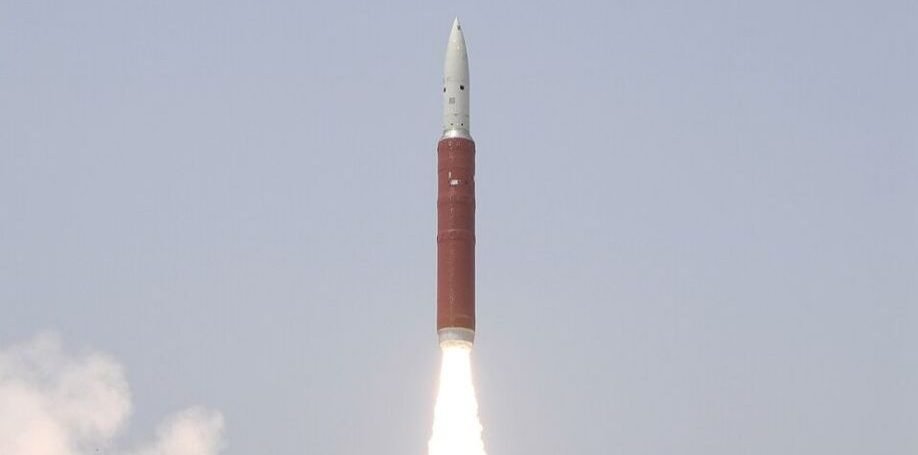
India has issued a Notice to Airmen (NOTAM) for a 2,530-kilometre range spanning the Bay of Bengal off the Odisha coast, signalling the conduct of a strategic missile test by the Defence Research and Development Organisation (DRDO).
NOTAMs are standard international safety protocols issued to alert aircraft and maritime traffic of military test activities in designated airspace and sea zones. The 2,530-kilometre range indicates a long-range ballistic or cruise missile trial, consistent with India’s pattern of testing strategic weapons systems in the Bay of Bengal corridor.
The test corridor off Odisha has served as the primary launch site for India’s long-range missile programmes, including the Agni series of ballistic missiles and the BrahMos cruise missile family. The state’s coastal geography, combined with established range infrastructure at facilities such as the Integrated Test Range (ITR) at Chandipur, makes it the preferred venue for high-altitude and long-range weapons validation.
India’s strategic missile testing programme is central to its deterrence posture and forms a critical component of the country’s defence modernisation roadmap. DRDO conducts regular flight tests of ballistic and cruise missile variants to validate design improvements, guidance systems, and warhead integration capabilities.
The Agni family represents the backbone of India’s land-based strategic arsenal, with variants ranging from intermediate to intercontinental range. The Agni-V, capable of striking targets over 5,000 kilometres away, and the newer Agni-VI under development, reflect India’s emphasis on extending strike capability and reducing reaction times. Parallel to ballistic missile development, the BrahMos programme, a joint Indo-Russian venture, has produced supersonic cruise missiles deployed across all three services.
Long-range missile tests also validate emerging technologies such as manoeuvrable reentry vehicles, advanced guidance systems, and counter-measures against air defence networks. Each test generates operational data that informs fleet upgrades and doctrine refinement for the Indian Army’s Strategic Forces Command, which operates India’s nuclear arsenal.
Testing cycles intensify during periods of heightened border tension or strategic competition in the region. India’s demonstrated capability to conduct frequent, reliable long-range strikes remains a key signalling tool in its strategic communications with adversaries and a confidence-building measure for allied nations.
-

-

-
-