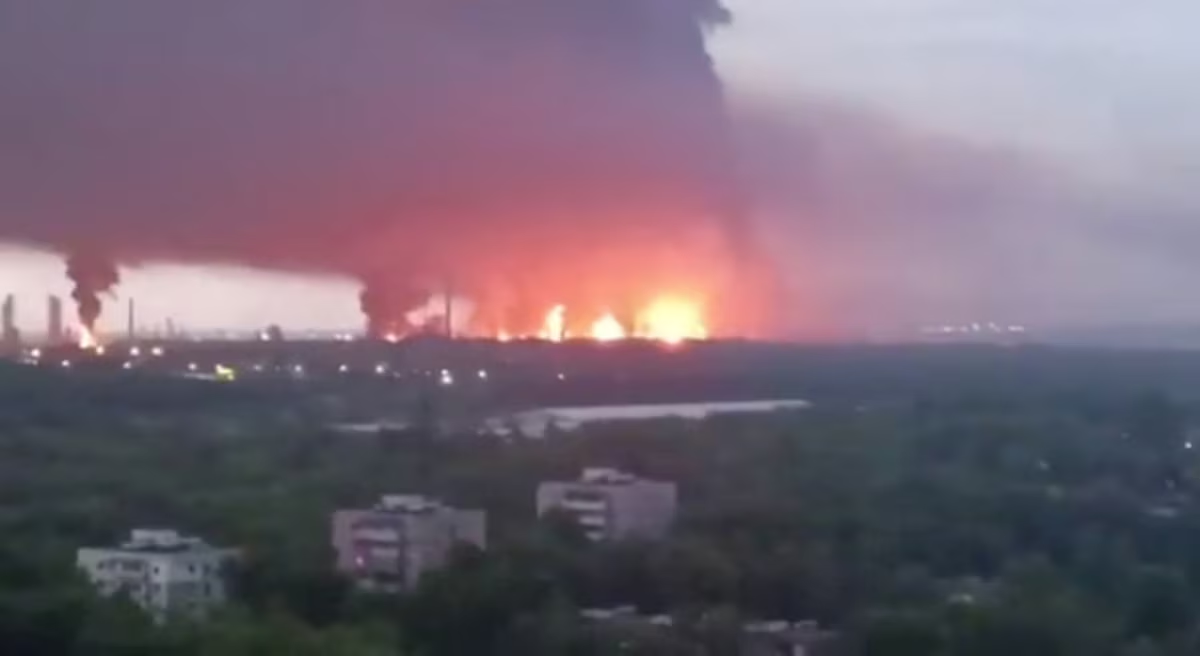
Ukrainian drone strikes have damaged a major Rosneft oil refinery that supplies fuel to Russian military airfields and operational units, according to UNITED24 Media. The attack underscores the expanding role of unmanned systems in modern asymmetric warfare and the vulnerability of critical energy infrastructure to precision strikes.
The Rosneft facility targeted supplies jet fuel and diesel to Russian air force bases and ground forces engaged in the Ukraine conflict. Such strikes on rear-area logistics nodes have become a hallmark of Ukrainian strategy, degrading Moscow’s ability to sustain sustained air operations and ground mobility.
Ukraine’s drone campaign reflects a broader shift in 21st-century military doctrine that India’s defence establishment has closely studied. Armed forces worldwide, including the Indian military, have recognised that large, expensive platforms are increasingly vulnerable to smaller, cheaper unmanned systems. This realisation has driven significant changes in force structuring, air defence doctrine, and the acceleration of counter-UAS programmes across navies and armies.
India’s defence research establishment has invested heavily in indigenous drone development and counter-drone technologies. The DRDO has fielded systems like the Rustom UAV for surveillance and reconnaissance, while the armed forces have integrated commercial and military drones into operational planning. Simultaneously, air defence networks are being upgraded to detect and neutralise hostile unmanned platforms at standoff ranges.
The Ukraine conflict has validated several principles that shape Indian strategic thinking. First, integrated air defence systems combining radars, short-range guns, and directed energy weapons are essential against drone threats. Second, operational resilience requires dispersal of critical infrastructure and hardening of vulnerable nodes. Third, indigenous development of UAV and counter-UAS capabilities reduces dependency on foreign suppliers and ensures continuity of capability in times of geopolitical stress.
Indian defence planners have also noted that countries heavily dependent on centralised fuel storage and distribution face acute vulnerability. This has accelerated India’s efforts to diversify and disperse its own strategic oil reserves and military logistics infrastructure across the country, reducing concentration risk from precision strikes on key nodes.
The evolving drone warfare seen in Ukraine continues to inform acquisition priorities for the Indian Army, Navy, and Air Force, shaping both offensive and defensive procurement roadmaps in coming defence budgets.
-

-

-

-