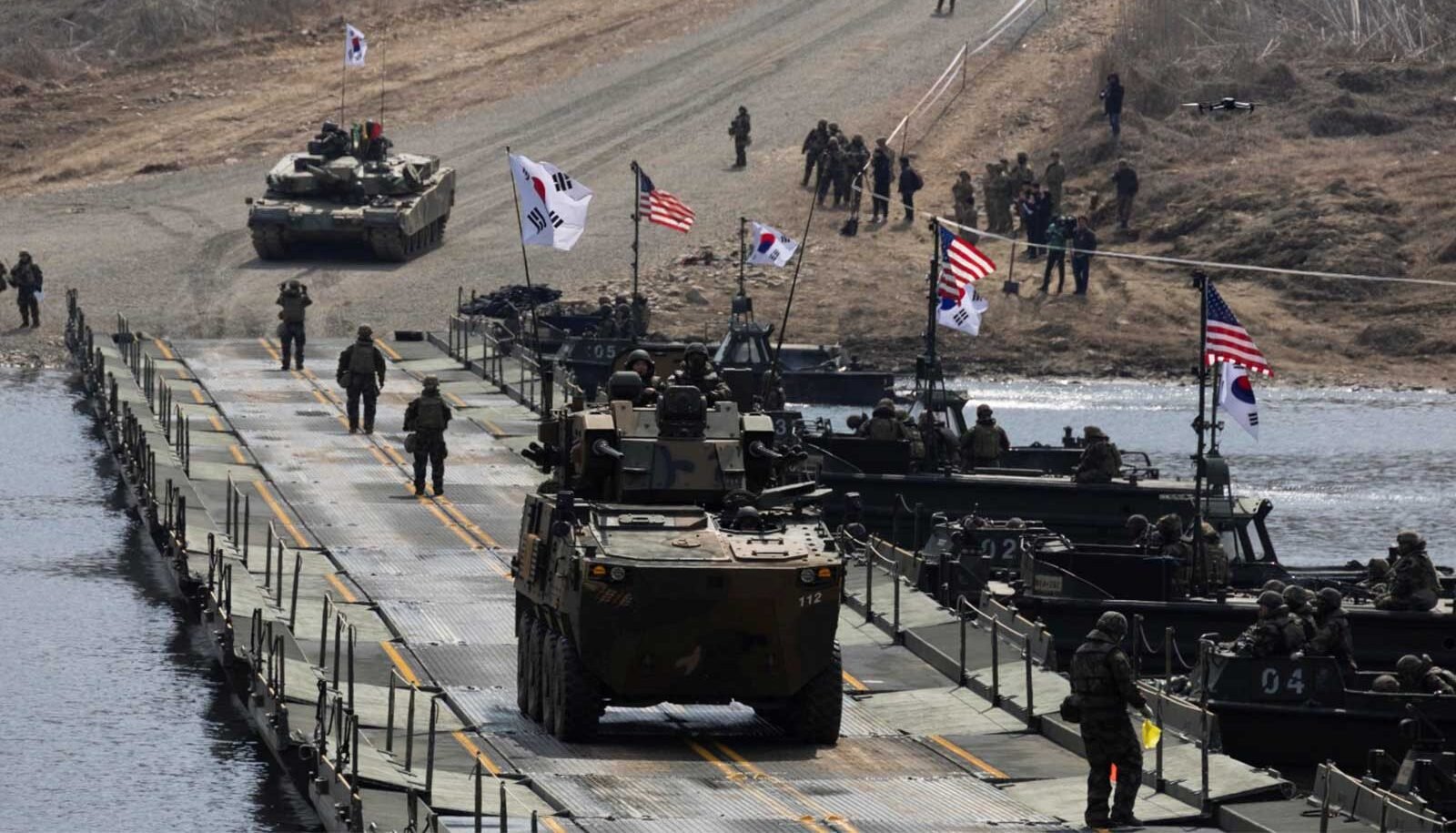
South Korea and the United States have agreed to reduce their annual Ulchi Freedom Shield joint military exercise from 11 days to five, following an order from President Donald Trump to substantially scale back American participation, according to South Korea’s Joint Chiefs of Staff and a Pentagon official on Wednesday.
The exercise, which began on August 17, will now conclude on Friday, August 21, rather than the originally scheduled August 27. The allies will also curtail some joint field training exercises, with portions of the programme either cancelled or converted into computer simulations.
South Korea’s Defence Minister Ahn Gyu-back said the second phase of the exercise, which would have focused on counteroffensive operations, will be cancelled. The first phase, currently underway, concentrates on defensive operations and simulated responses to potential North Korean attacks. The second phase’s focus on counteroffensive scenarios is particularly sensitive to Pyongyang’s leadership.
A US Department of Defense official stated that the American military had substantially reduced the exercise and associated live-training events, while efforts would continue to preserve essential readiness and training objectives. South Korea’s military said the allies are discussing measures to maintain their combined defence posture.
Ulchi Freedom Shield is primarily a computer-simulated command-post exercise designed to enhance allied capability to respond to a potential North Korean military attack, while associated field training exercises test response mechanisms in the field. These drills, along with a comparable springtime exercise called Foal Eagle, form the backbone of the US-South Korea alliance’s operational coordination and have been conducted annually for decades.
Trump has cited his “very good relationship” with North Korean leader Kim Jong Un as rationale for the reduction, noting that Kim has responded to recent American outreach efforts. The President has not disclosed details of the contact. Military analysts and security experts have expressed concern that prolonged reductions in such exercises could degrade the readiness of South Korean and American forces, particularly as military commanders rotate regularly through assignments and lose institutional familiarity with coordinated response procedures.
-

-
-
-