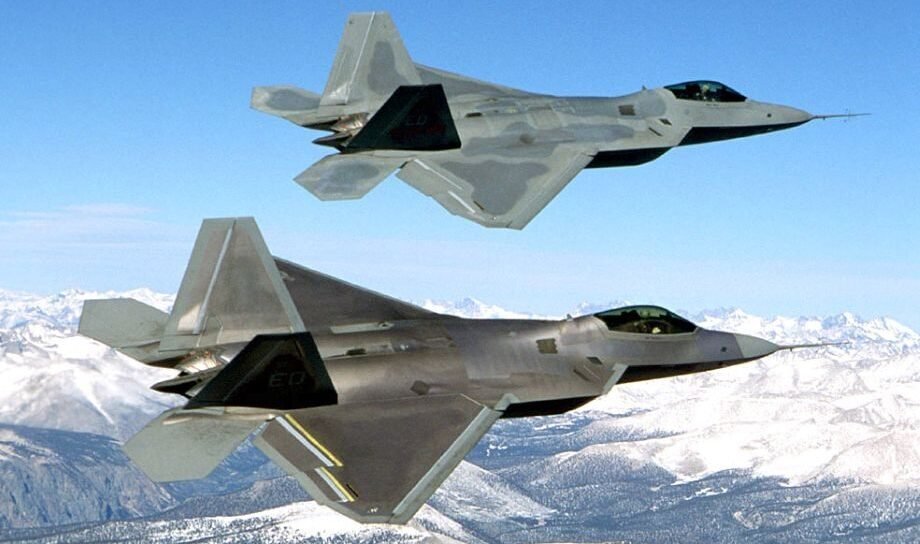
The US Air Force’s F-22 Raptor remains one of the world’s most advanced fifth-generation stealth fighters, but a recent procurement requirement has drawn attention to an unexpected aspect of its technology. Despite decades of advances in military aviation and computing, the aircraft still requires storage cards based on formats introduced during the 1990s.
According to a procurement notice issued by the US Department of the Air Force on November 16, 2026, the F-22 programme is seeking potential suppliers for flash-storage cards with a minimum capacity of 256 megabytes. The requirement specifies older PC Standard 95 Type II flash ATA cards and CompactFlash cards with compatible adapters. The notice is intended to identify suppliers capable of providing components for the aircraft’s micro-Data Transfer Cartridge (mDTC) system.
The requirement highlights the difficulties involved in maintaining sophisticated military aircraft that were designed around older hardware architectures. While modern commercial computers and storage devices offer significantly greater capacity and faster data-transfer speeds, replacing components in a combat aircraft is not as straightforward as upgrading a regular computer.
The F-22 uses its data-transfer cartridge system to move information between ground-based maintenance equipment and onboard systems. These cartridges also support maintenance activities by allowing specialists to retrieve stored aircraft information and investigate technical problems. Consequently, any replacement component must remain compatible with the aircraft’s existing interfaces, software and operational requirements.
CompactFlash technology was introduced in 1994, making its continued appearance in the F-22’s procurement requirements particularly notable. However, the use of older storage formats does not mean that the entire aircraft operates with outdated technology. Instead, it demonstrates how individual legacy components can remain necessary within a complex military platform long after newer commercial alternatives become available.
Replacing such equipment requires extensive engineering assessments, integration work and testing. A modern component may offer better performance, but it cannot simply be installed without confirming that it functions correctly with existing aircraft systems. Changes to hardware and software can also require additional testing and certification, increasing costs and extending upgrade schedules.
The F-22 programme is not standing still. The US Air Force continues to modernise the aircraft through its Raptor Agile Capability Release programme, which introduces improvements to sensors, communications, data links and survivability. The Pentagon’s FY2026 budget documentation also identifies investments in upgraded navigation, communications and sensor capabilities.
The Department of Defense’s FY2025 operational testing report further confirms that the Air Force is progressing through successive software and capability releases. Release 4 testing was completed during FY2025, while Release 5 software was under development. Sensor Enhancement capabilities are planned for a future Release 6 upgrade.
The latest storage-card requirement therefore reveals a wider challenge facing the US military: keeping advanced aircraft operational while managing ageing electronic components and maintaining compatibility with established systems. For the F-22 Raptor, preserving access to specialised legacy hardware remains an important part of sustaining its operational capabilities alongside continued modernisation efforts.
-

-

-

-