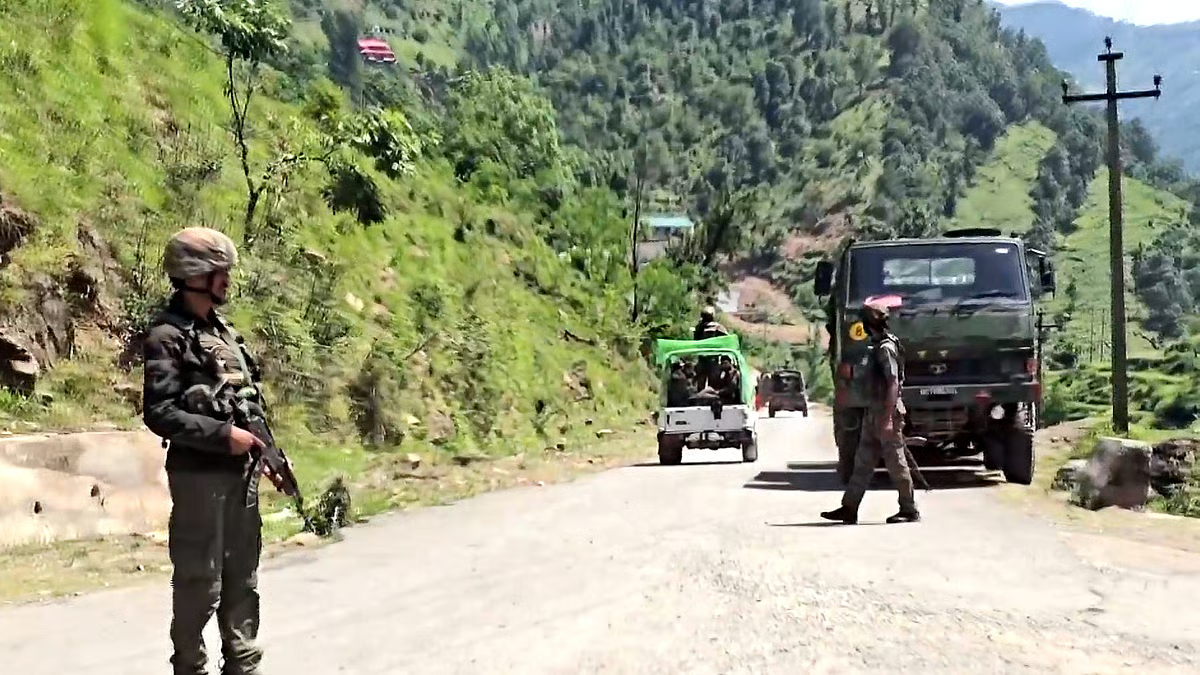
Security forces have entered the fourth day of Operation Sheruwali in Rajouri district, Jammu and Kashmir, with intensified search and cordon operations across multiple locations in the region, according to reports.
The operation, which began earlier this week, represents a sustained counter-terrorism effort by Army units and paramilitary forces operating in the Rajouri sector. Anti-terror operations in this district have historically focused on suspected militant hideouts in the forested and mountainous terrain that borders the Line of Control.
Rajouri district has remained a persistent operational theatre for Indian security forces. The sector’s geography, marked by dense forests and difficult terrain in areas like Mankote and Sunderbani, creates both tactical challenges and concealment opportunities for militant groups attempting infiltration from across the LoC.
Operation Sheruwali’s continuation into Day 4 indicates security forces have either sustained contact with suspected militants or are conducting systematic sweeps of suspected hideout locations. Ground operations in this region typically involve coordination between the Jammu-based Army commands, Central Reserve Police Force, and Jammu and Kashmir Police units tasked with counter-insurgency duties.
The Rajouri sector has witnessed periodic militant activity and infiltration attempts over the past two years. Operations of this intensity and duration usually signal credible intelligence inputs regarding militant presence or recent cross-LoC movement. Extended search operations allow forces to systematically dominate territory and disrupt supply lines used by militant groups.
Counter-terrorism operations in Rajouri differ significantly from those in south Kashmir’s urban environments. The district’s sprawling rural and forested areas require different tactical approaches, emphasizing cordon-and-search methodology supported by aerial reconnaissance and human intelligence networks developed among local populations.
The intensity of Day 4 operations underscores the security establishment’s commitment to preventing militant consolidation in areas adjacent to the LoC. Such sustained operations serve dual purposes: degrading active militant presence while also signaling deterrence against potential infiltrators planning cross-LoC movement during operational windows.
Security forces maintain standing protocols for counter-terror operations across Jammu and Kashmir’s three regions: Srinagar-based Army commands manage the Kashmir Valley, Samba-based formations cover the Jammu plains and foothills, and operations like Sheruwali fall under operational frameworks coordinated through Jammu-based sector headquarters responsible for the Rajouri-Poonch belt.
-

-

-

-