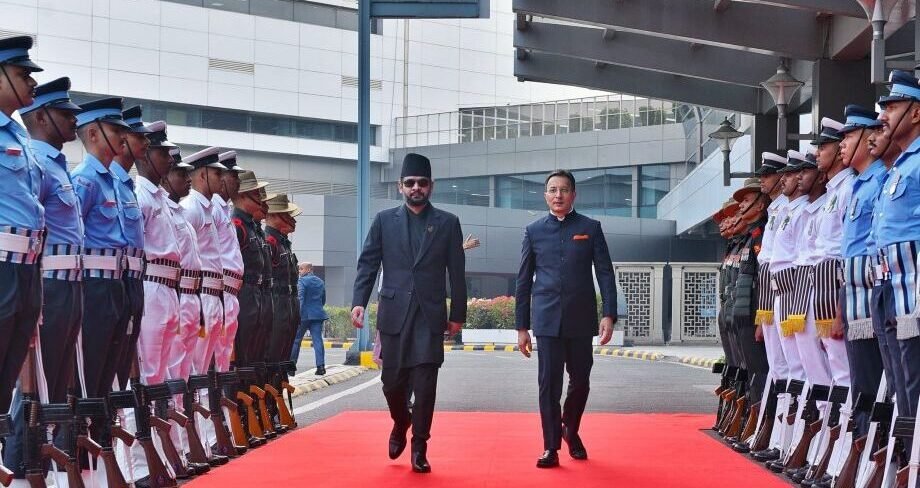
Nepal Prime Minister Balendra Shah’s two-day state visit to India is drawing attention to the growing importance of relations between the two neighbouring countries. Arriving in New Delhi on November 22 at the invitation of Indian Prime Minister Narendra Modi, Shah is undertaking his first official bilateral foreign visit since assuming office in March 2026. The visit is expected to provide fresh momentum to diplomatic engagement and cooperation across several important sectors.
Shah received a warm welcome upon his arrival at Indira Gandhi International Airport, where Indian Minister of State for Commerce and Industry Jitin Prasada and senior diplomatic officials were present. His visit comes at a significant time for Nepal, which is working to strengthen its economy, rebuild infrastructure following devastating floods and expand international partnerships.
During his first official engagement in New Delhi, Shah met India’s External Affairs Minister S. Jaishankar on November 22. Their discussions covered several dimensions of Nepal-India relations, including trade, transit, connectivity, energy, commerce, education, culture, sports and people-to-people exchanges. Jaishankar highlighted India’s special friendship with Nepal and expressed his interest in Shah’s upcoming discussions with Prime Minister Modi.
The main focus of the visit is expected to be the high-level meeting between Modi and Shah on November 23. Both leaders are scheduled to review the existing bilateral partnership and explore opportunities for deeper cooperation in infrastructure, economic development, energy security and regional connectivity. The discussions are also expected to address matters of mutual interest in the wider regional and international environment.
Infrastructure and connectivity remain important priorities for both countries. Proposed railway expansion, improved cross-border transportation links and additional air connectivity could help facilitate trade, tourism and movement between India and Nepal. The proposed Ayodhya-Janakpur passenger rail connection is among the important initiatives receiving attention during the visit, reflecting the cultural and economic significance of closer transportation links.
Energy cooperation is another major area of mutual interest. Nepal possesses considerable hydropower potential, while India remains an important market for electricity exports. Both countries have been working to expand cross-border power trade and transmission infrastructure. Further cooperation in this sector could support Nepal’s economic development while contributing to India’s growing energy requirements.
Economic assistance and post-disaster reconstruction are also expected to feature prominently in the discussions. Nepal continues to address the damage caused by severe flooding in August 2026, which affected communities, transportation networks, electricity infrastructure and agricultural areas. India, as Nepal’s neighbouring country and a major development partner, is an important participant in regional recovery and reconstruction efforts.
The visit also includes an economic engagement involving Nepal’s Finance Minister Swarnim Wagle, who participated in a Nepal-India Business Roundtable on November 22. The meeting provided an opportunity to engage Indian business leaders, investors and entrepreneurs and encourage greater investment in Nepal.
Beyond immediate economic priorities, Shah’s visit reflects the importance of maintaining stable diplomatic relations between the two countries. India and Nepal share historical, cultural, geographical and economic connections, making cooperation essential for regional stability and development.
As the two prime ministers meet in New Delhi, the outcomes of their discussions could help establish new priorities for India-Nepal cooperation. Greater coordination in infrastructure, energy, investment and regional connectivity would offer opportunities for both countries to strengthen their long-standing partnership and address emerging challenges together.
-
-

-
-