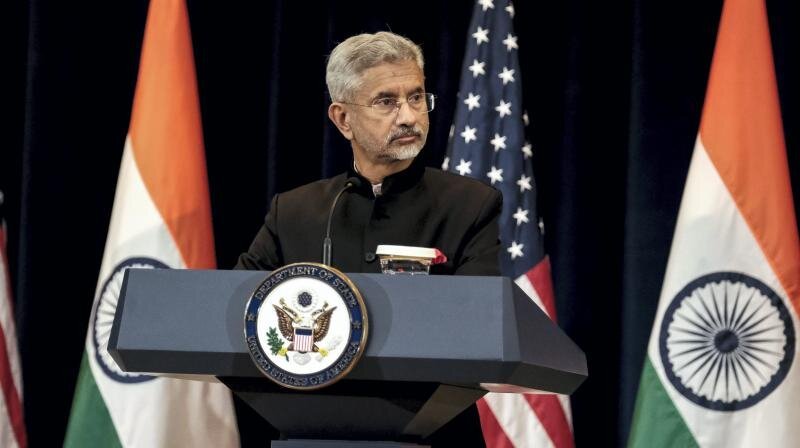
External Affairs Minister S. Jaishankar has emphasised India’s ‘Make in India’ approach during talks with US Secretary of State Marco Rubio, underscoring New Delhi’s commitment to indigenous defence manufacturing and technology partnership within the bilateral security framework.
The emphasis on domestic production comes as India and the United States deepen their defence industrial cooperation under the Quad framework and bilateral agreements. India’s push for local manufacturing reflects broader government policy to reduce reliance on imported military hardware and build a self-reliant defence ecosystem.
India’s ‘Make in India’ defence strategy has accelerated under the Defence Production Policy 2018 and the subsequent 2023 update, which prioritises domestic design and development of critical platforms. The initiative encompasses everything from small arms ammunition to advanced platforms like the Tejas light combat aircraft, naval frigates under the P17A programme, and artillery systems such as the M777 howitzer variants being licence-produced at Ordnance Factory Board units.
The Rubio engagement reflects India’s calibrated approach to US defence partnerships. While India values access to American advanced technology and platforms, New Delhi insists on co-development clauses and technology transfer provisions that enable Indian private sector and DRDO participation. This stance has shaped recent Indo-US defence deals, including the Naval Multi-Role Helicopter programme with Sikorsky and joint ventures in semiconductor and critical mineral supply chains vital to defence manufacturing.
India’s defence import bill remains substantial, with the US among the top three suppliers alongside Russia and Israel. However, the trajectory is shifting toward joint manufacturing. HAL and private firms now produce F/A-18 Super Hornet components, while Hindustan Aeronautics is positioned for potential Predator drone assembly. OFB units produce artillery, small arms, and ammunition for export, with growing partnerships in helicopter engines and naval systems.
The ‘Make in India’ pitch to Rubio signals India’s expectation that future US defence cooperation should enhance domestic manufacturing capability rather than simply expand import dependency. This aligns with India’s broader strategic autonomy doctrine and the government’s target of a $25 billion defence export industry by 2030.
Such messaging also positions India as a reliable manufacturing partner for the US-led supply chain diversification away from China, particularly in critical defence components where India offers both cost advantage and strategic alignment within the Quad framework.
-

-
-

-